
Most homeowners believe drains only need attention when water backs up or unpleasant odours appear. This reactive approach often leads to expensive emergency repairs and significant property damage. Regular drain inspection is essential for Poole properties, where ageing infrastructure and heavy rainfall create unique drainage challenges. Professional inspections detect hidden issues before they escalate, saving thousands in repair costs whilst protecting your property from flooding and structural damage. Understanding why routine inspection matters helps you make informed decisions about maintaining your drainage system’s health and avoiding costly surprises.
Table of Contents
- Key takeaways
- Why regular drain inspection matters for Poole homeowners
- How drain inspections are carried out: techniques and tools
- Common drainage problems detected during inspections and their consequences
- Scheduling and benefits of regular drain inspections for long-term maintenance
- Professional drain inspection and unblocking services in Poole
- Frequently asked questions about drain inspection
Key Takeaways
| Point | Details |
|---|---|
| Early detection saves costs | Regular drain inspections catch issues before they escalate, reducing the need for major repairs. |
| Poole climate matters | Poole’s heavy rainfall and ageing piping make routine inspections essential for protecting homes. |
| CCTV uncovers hidden faults | Professional CCTV surveys reveal hidden faults inside pipes that would otherwise go unseen. |
| Annual inspection plan | Scheduling annual inspections provides a proactive maintenance plan and reduces emergency callouts. |
Why regular drain inspection matters for Poole homeowners
Poole’s coastal location brings heavy rainfall throughout the year, placing constant pressure on residential drainage systems. When combined with the area’s mix of Victorian-era properties and modern developments, drainage networks face unique challenges that make regular inspection essential rather than optional.
Local drainage systems must cope with several demanding conditions. Heavy autumn and winter rainfall overwhelms drains already compromised by summer debris accumulation. Older properties feature clay and cast iron pipes prone to cracking and root intrusion. Coastal soil conditions accelerate pipe deterioration through increased moisture exposure. These factors create perfect conditions for drainage problems to develop silently until they cause significant damage.
Common drainage issues found during Poole inspections include:
- Grease and fat build-up restricting water flow
- Tree root intrusion through pipe joints and cracks
- Collapsed or fractured pipes from ground movement
- Sediment and debris accumulation reducing capacity
- Corroded pipe sections weakening structural integrity
Routine inspection prevents up to 90% of costly drainage repairs by catching these issues whilst they remain manageable. Early detection means simple clearing procedures instead of extensive excavation work. You avoid emergency callouts, property flooding, and the disruption of major repair projects.
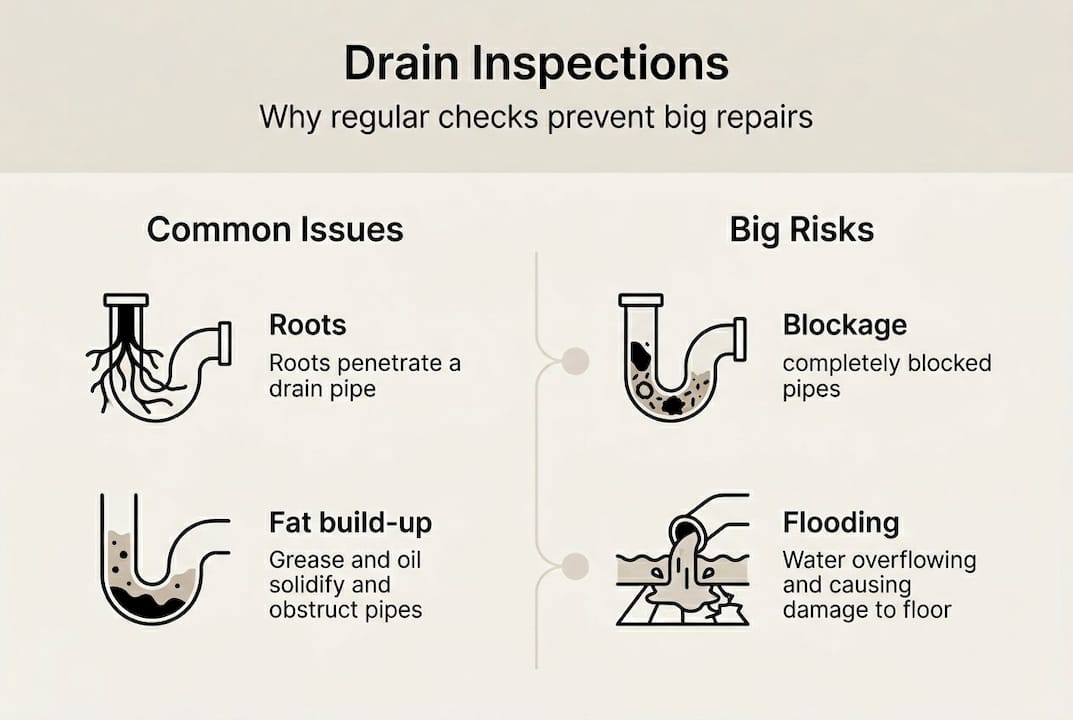
Think of drain inspection as similar to servicing your car. Regular checks identify worn components before they fail completely, preventing breakdowns and expensive replacements. The same principle applies to your drainage system, where small investments in inspection protect against major expenses.
Pro Tip: Schedule annual drain inspections each spring, after winter storms have tested your system. This timing catches storm damage early and prepares drains for summer usage when garden runoff increases.
Understanding the role of drainage inspection helps you appreciate why this preventative approach saves money long term. Professional inspections provide detailed reports showing your drainage system’s condition, allowing you to plan maintenance strategically rather than react to emergencies. For Poole homeowners facing common drainage issues, regular inspection offers peace of mind alongside financial protection.
How drain inspections are carried out: techniques and tools
Modern drain inspections combine visual assessment with advanced technology to provide comprehensive drainage system analysis. Understanding these methods helps you appreciate the value professional inspections deliver and why they outperform DIY attempts.
Professional drain surveys begin with external assessment of visible drainage components, checking manholes, gullies, and access points for obvious issues. Inspectors then deploy specialist equipment to examine internal pipe conditions where problems typically develop unseen.
A professional CCTV drain survey follows these steps:
- Initial site assessment identifies access points and drainage layout
- High-resolution cameras mounted on flexible rods enter the drainage system
- Operators navigate cameras through pipes whilst recording footage
- Real-time monitoring reveals blockages, damage, and structural issues
- Detailed reports document findings with timestamps and location markers
- Recommendations outline necessary repairs or maintenance actions
CCTV drain surveys offer a non-invasive way to identify hidden drainage issues accurately, eliminating guesswork from drainage assessment. This technology transformed drainage inspection from exploratory excavation to precise diagnosis.
| Inspection method | Traditional rod and dye | CCTV technology |
|---|---|---|
| Accuracy | Limited to accessible sections | Complete internal visualisation |
| Invasiveness | Often requires excavation | Non-invasive camera insertion |
| Cost | Lower initial but higher if excavation needed | Higher upfront but prevents unnecessary digging |
| Time required | Several hours to days | 1-2 hours for typical property |
| Problem identification | General location only | Precise positioning and nature |
CCTV technology provides definitive answers about drainage condition. Cameras reveal crack locations, blockage composition, and pipe material condition with clarity impossible through traditional methods. This precision guides targeted repairs, ensuring you only pay for necessary work rather than speculative excavation.
Pro Tip: Request footage copies from your CCTV survey. These recordings provide valuable documentation for insurance claims and help future contractors understand your drainage layout without repeated inspections.
Local specialists offering CCTV drain surveys for Poole homes understand regional drainage configurations and common local issues. Their experience with Poole’s infrastructure means faster, more accurate assessments. Following a drain CCTV survey tutorial helps you understand what inspectors look for and how to interpret survey reports.
Choosing CCTV drain inspection in Poole ensures your drainage assessment uses current technology whilst benefiting from local expertise. This combination delivers thorough inspection results that inform smart maintenance decisions.
Common drainage problems detected during inspections and their consequences
Drainage inspections regularly uncover issues that homeowners never suspected existed. These hidden problems develop gradually, causing damage long before visible symptoms appear. Understanding what inspections find helps you recognise warning signs and appreciate why early detection matters.
Grease and fat build-up ranks among the most common discoveries during drain surveys. Kitchen waste water carries oils that solidify inside pipes, gradually narrowing the passage until blockages form. This process happens slowly, with drainage becoming progressively slower before complete failure occurs. Early detection allows simple clearing before solidified deposits require intensive jetting or chemical treatment.
Tree root intrusion affects many Poole properties, particularly older homes with mature gardens. Roots seek moisture and nutrients, finding both inside drainage pipes. They enter through tiny cracks or joints, then expand rapidly once inside. Blockages, pipe damage, and infiltration issues are among the most frequent findings in Poole homes, with root intrusion causing some of the most severe structural damage.
Collapsed pipes represent serious drainage failures that inspections catch before complete system breakdown. Ground movement, heavy vehicle traffic, or deteriorated materials cause pipes to crack and eventually collapse. Water cannot flow through collapsed sections, creating immediate flooding risks. Inspection identifies weakening pipes before collapse occurs, allowing planned repairs instead of emergency excavation.
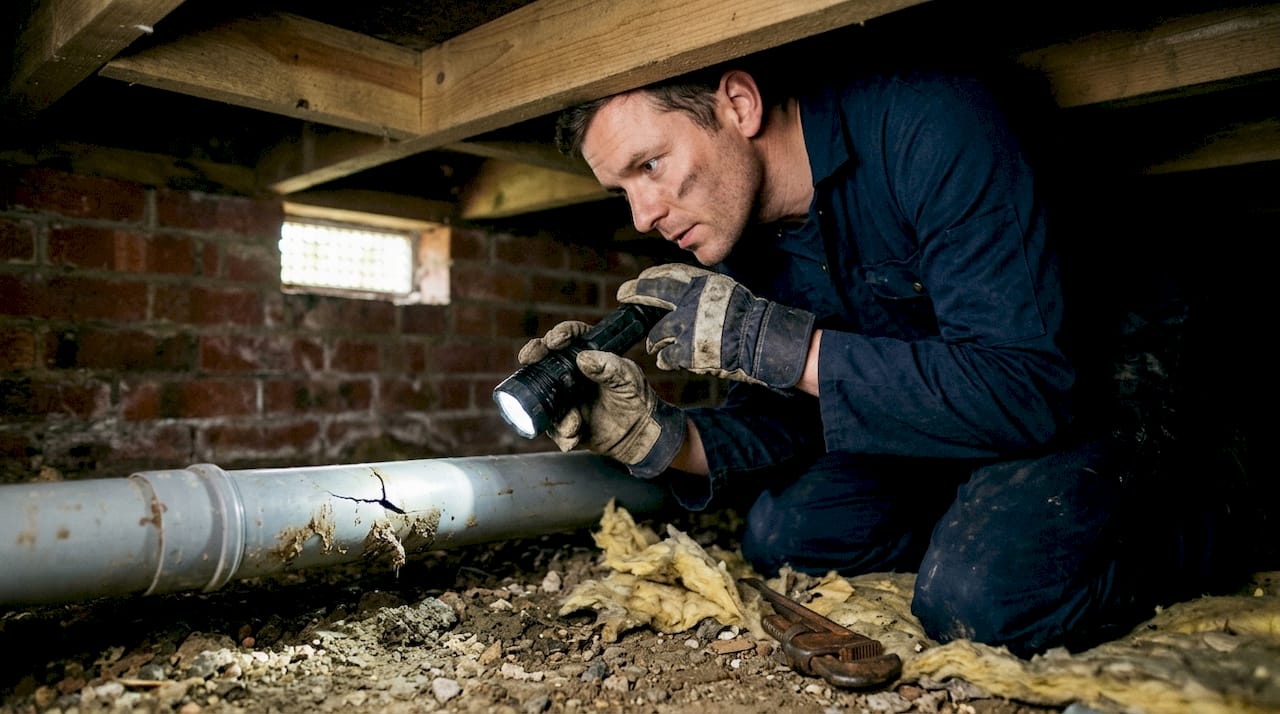
Sediment accumulation reduces drainage capacity gradually. Soil, sand, and debris wash into drains during storms, settling in low points and slow-flowing sections. Over time, these deposits restrict water flow and create stagnant areas where further blockages develop easily.
Homeowners should watch for these drainage problem indicators:
- Slow-draining sinks, baths, or toilets suggesting partial blockages
- Gurgling sounds from drains indicating air trapped by restrictions
- Unpleasant odours from drains or outside inspection chambers
- Damp patches in gardens or near property foundations
- Multiple fixtures draining slowly simultaneously
- Water backing up when using certain appliances
Untreated drainage problems escalate quickly once they reach critical points. Slow drainage becomes complete blockage. Small cracks expand into collapsed sections. Minor root intrusion develops into major structural damage. Each progression multiplies repair costs and increases property damage risks.
Complete drain failure causes flooding that damages flooring, walls, and foundations. Sewage backup creates health hazards requiring professional decontamination. Collapsed drains necessitate excavation that disrupts gardens, driveways, and landscaping. Emergency repairs cost significantly more than planned maintenance, often arriving at the worst possible times.
Regular drain surveys for Poole homeowners catch these issues whilst simple solutions remain effective. Understanding why drain inspections prevent costly repairs motivates proactive maintenance that protects both property and budget.
Scheduling and benefits of regular drain inspections for long-term maintenance
Establishing a regular inspection schedule transforms drainage maintenance from reactive crisis management to proactive system care. Knowing when to inspect and what benefits to expect helps you maintain drainage health efficiently.
Recommended inspection timing for optimal drainage maintenance:
- Annual routine inspection each spring after winter weather stress
- Post-storm inspection following severe weather events or flooding
- Pre-purchase inspection when buying property to assess drainage condition
- Symptom-triggered inspection when slow drainage or odours appear
- Post-repair inspection to verify work quality and system function
- Five-yearly comprehensive survey for properties over 20 years old
Scheduled drain inspections significantly reduce emergency unblocking incidents and extend drain lifespan by maintaining optimal system condition. Regular inspection creates a maintenance history that helps identify developing patterns and predict future needs.
The financial benefits of regular inspection become clear when comparing maintenance costs against emergency repairs. Planned maintenance allows you to budget for drainage work and choose convenient timing. Emergency repairs arrive unexpectedly, often requiring immediate payment at premium rates.
| Cost comparison | Regular inspection programme | Emergency-only approach |
|---|---|---|
| Annual inspection cost | £150-£250 | £0 |
| Average repair costs | £300-£800 (planned, minor) | £1,500-£4,000 (emergency, major) |
| Frequency of major repairs | Every 8-10 years | Every 3-5 years |
| Total 10-year cost | £2,000-£3,500 | £4,500-£12,000 |
| Property damage risk | Minimal | High |
Beyond direct cost savings, regular inspection protects property value and prevents damage that affects home comfort and safety. Maintained drainage systems last 15-20 years longer than neglected ones, delaying expensive replacement projects. Insurance claims for drainage-related damage often face scrutiny when maintenance records are absent, potentially affecting coverage.
Using local Poole drainage experts ensures inspectors understand regional challenges and can respond quickly when issues arise. Local specialists recognise common problems affecting Poole properties and provide realistic maintenance recommendations based on area-specific conditions.
Pro Tip: Maintain a drainage logbook recording inspection dates, findings, and repairs. This documentation proves valuable when selling your property and helps new contractors understand your system’s history.
Committing to drainage inspection for Poole homes establishes a protective routine that prevents costly surprises. Following a drain inspection checklist for Poole homeowners ensures comprehensive coverage of all drainage components during each assessment.
Professional drain inspection and unblocking services in Poole
Maintaining healthy drains requires professional expertise that combines modern technology with local knowledge. Poole’s unique drainage challenges demand specialists who understand regional infrastructure and can respond swiftly when problems arise.

Our comprehensive drainage inspection services for Poole homes utilise advanced CCTV technology to reveal your drainage system’s true condition. We provide detailed reports highlighting current issues and potential concerns, allowing you to make informed maintenance decisions. Whether you need routine inspection or suspect developing problems, our local team delivers thorough assessments backed by years of Poole drainage experience.
When inspection reveals blockages or damage, our drain unblocking procedures restore full drainage function quickly and effectively. We match treatment methods to blockage types, ensuring efficient clearing without unnecessary pipe stress. For urgent situations, our emergency drain unblocking workflow guarantees rapid response when drainage failure threatens your property.
Frequently asked questions about drain inspection
Why do drains need regular inspection?
Drains need regular inspection because problems develop silently inside pipes where you cannot see them. Tree roots, cracks, and blockages worsen gradually until they cause complete drainage failure. Annual inspections catch these issues early when simple repairs remain effective, preventing expensive emergency work.
How often should I have my drains inspected?
Most properties benefit from annual drainage inspections, ideally each spring after winter weather. Properties with mature trees, older drainage systems, or previous blockage history should consider six-monthly inspections. Always inspect after severe storms or when you notice slow drainage developing.
What does a CCTV drain survey reveal?
CCTV surveys show internal pipe condition with high-definition footage revealing cracks, blockages, root intrusion, and structural damage. Cameras identify exact problem locations and assess overall system health. Survey reports include footage, written findings, and repair recommendations based on observed conditions.
Can I inspect my own drains effectively?
Whilst you can check visible drainage components like gullies and manholes, effective inspection requires specialist CCTV equipment to examine internal pipe conditions. Professional surveys provide comprehensive assessment impossible with basic tools. DIY inspection misses hidden problems that cause expensive failures.
How much does professional drain inspection cost?
Professional CCTV drain surveys typically cost £150-£250 for standard residential properties in Poole. This investment prevents repair costs averaging £1,500-£4,000 by catching problems early. Many specialists offer inspection packages combined with maintenance services for better value.
What happens if inspection finds problems?
Inspection reports detail any issues discovered and recommend appropriate solutions. Minor problems like small blockages often receive immediate clearing during the survey visit. Significant issues require quotes for repair work, which you can schedule conveniently rather than facing emergency situations. Following step-by-step unblocking guides helps you understand repair processes and make informed decisions about necessary work.