
Recurring drainage problems can quickly turn homeownership in Poole into a stressful experience, especially if your property dates back to the Victorian or Edwardian eras. Many of these older homes hide unseen issues in their pipes that simple guesswork or traditional repairs cannot address. A CCTV drain survey gives you an inside look at your drainage system without disruption, revealing hidden faults so you can make informed repair decisions and protect your investment.
Table of Contents
- CCTV Drain Survey Explained For Poole Homes
- Types Of CCTV Drain Surveys And Key Features
- Step-By-Step Process Of A Drain Inspection
- Common Issues Identified And Reporting Benefits
- Pricing, Misconceptions, And Risks To Avoid
Key Takeaways
| Point | Details |
|---|---|
| CCTV Drain Surveys Reveal Hidden Issues | CCTV drain surveys are essential for identifying blockages, cracks, and other structural problems in older properties, particularly in Poole. |
| Cost-Effective Preventative Measure | The average survey cost of £300-600 can prevent much larger repair bills ranging from £3,000-10,000 due to unforeseen drainage issues. |
| Actionable Reports for Repairs | Survey reports provide clear recommendations for repairs prioritising severity, assisting homeowners in making informed decisions. |
| Types of Surveys Address Specific Problems | Different CCTV survey types, such as structural condition and mis-connection identification, cater to distinct issues, ensuring tailored services for homeowners. |
CCTV drain survey explained for Poole homes
A CCTV drain survey uses a small camera to inspect the inside of your pipes without digging. The camera travels through your drainage system, showing exactly what’s happening beneath your property. It reveals blockages, cracks, root ingress, and structural damage that would otherwise remain hidden.
Poole’s aging properties often have drainage systems from decades past. Victorian and Edwardian homes frequently experience problems that only become visible through camera inspection. Understanding what a CCTV survey does helps you make informed decisions about your property’s drainage health.
Why Poole homeowners need this service
Your responsibility covers private drains within your property boundary, whilst water companies maintain lateral drains outside your property. When problems occur in your section, you need accurate diagnosis before spending money on repairs. Guessing the problem location wastes thousands of pounds.
Common issues CCTV surveys detect in Poole include:
- Tree roots penetrating clay pipes (extremely common in Poole)
- Cracked or collapsed sections from age and ground movement
- Misaligned joints allowing soil infiltration
- Accumulation of fat, grease, and debris
- Broken lateral connections to the main sewer
CCTV surveys cost around £300-600 for a standard residential survey, but prevent unnecessary excavation costs that could reach £3,000-10,000.
How the survey works
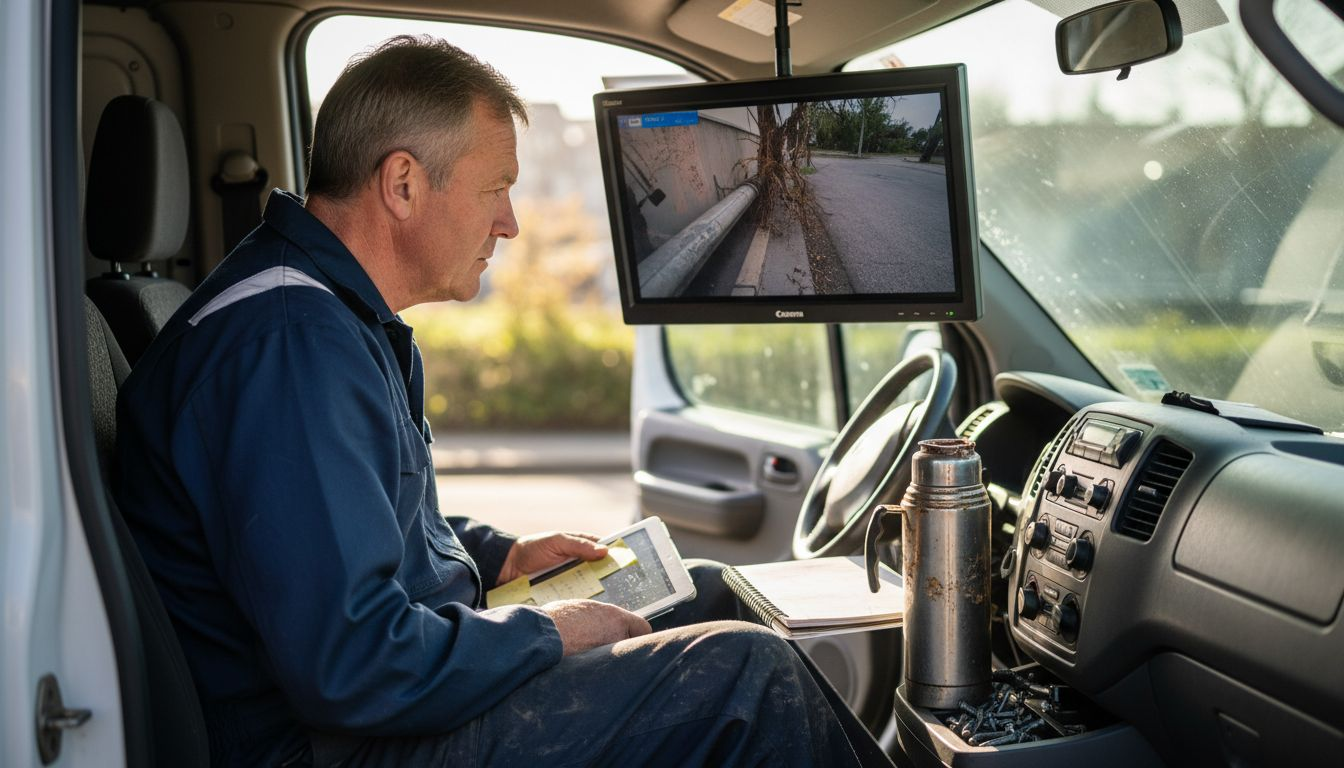
The process is straightforward and non-invasive. A technician inserts a flexible rod with an attached camera into your drainage system through an access point or manhole. The camera transmits live footage to a monitor above ground, allowing the technician to navigate through your pipes.
As the camera moves, it records everything happening inside the pipes. The technician notes:
- Exact location of defects (measured from the starting point)
- Severity of each problem encountered
- Direction of pipes and connections
- General condition of pipe material
- Presence of water flow or standing liquid
The survey produces a detailed report with still images and footage showing problem areas. This documentation proves invaluable when planning repairs or claiming on insurance.
Understanding building regulations
Approved drainage system standards specify pipe sizes, protection requirements, and inspection chamber placement. CCTV surveys help verify your system meets these standards. If you’re planning renovations or extensions, the survey confirms whether upgrades are needed.
Poole properties often breach modern building standards simply through age. The survey identifies what requires updating to bring your drainage into compliance.
What happens after the survey
You receive clear recommendations for action. Minor issues get priority, whilst serious defects demand immediate attention. The report guides decision-making about repair urgency and methods. You can then get competitive quotes for fixing identified problems.
Some issues allow time for planning. Others cannot wait. The survey evidence removes guesswork from the equation.
Pro tip: Request the survey footage saved to a USB drive—this proves invaluable if you later sell your property, as buyers and their surveyors can review the exact condition of your drainage system.
Types of CCTV drain surveys and key features
Not all CCTV drain surveys are the same. Different types address different problems, and understanding which one you need saves money and time. Poole homeowners benefit from knowing what options exist before booking a survey.
Here’s a summary of the different CCTV drain survey types available for Poole homes:
| Survey Type | Main Purpose | Typical Use Case | Key Advantage |
|---|---|---|---|
| Structural Condition Survey | Finds cracks and defects | Older properties, routine maintenance | 95% problems detected |
| Mis-connection Identification | Tracks incorrect pipe connections | Extensions, compliance checks | Prevents fines and pollution |
| Mapping Survey | Documents ownership/responsibility | Unclear boundaries, legal disputes | Clarifies repair liability |
| Infestation Detection | Locates pest entry points | Recurring infestations, rat issues | Supports pest control actions |
Standard structural condition surveys
This is the most common survey type for residential properties. A structural condition survey examines the physical state of your pipes. The camera documents cracks, breaks, deterioration, and joint failures throughout your system.
You receive a detailed report showing:
- Pipe condition at each location
- Severity ratings for identified defects
- Exact measurements from entry points
- Still images of problem areas
- Recommendations for repair urgency
A structural survey typically costs £300-600 and reveals 95% of drainage problems affecting Poole homes.
Mis-connection identification surveys
Some properties have incorrect pipe connections that send foul water where it shouldn’t go. Mis-connection identification surveys detect when surface water or wastewater diverts to wrong locations. This becomes critical if you’re extending your property or the Environment Agency investigates drainage compliance.
These surveys trace connections through your system to ensure each pipe reaches the correct destination. Finding mis-connections early prevents costly fines and remedial work.
Ownership and responsibility mapping
Confusion often exists about which drains you own and which belong to water companies. A mapping survey documents your private drainage network’s exact route, depth, and connections to public sewers. This clarifies your legal responsibility for repairs.
Poole’s older properties particularly benefit from this survey type. Property boundaries have shifted through decades, and historical records sometimes contradict reality. The camera footage provides definitive proof.
Infestation detection surveys
Rats and other pests exploit damaged pipes to enter properties. An infestation detection survey identifies entry points where vermin could access your home. The survey shows breaks, cracks, and gaps large enough for pests to squeeze through.
If pest control has struggled to solve your problem, CCTV often reveals why. Sealing or relining the pipes becomes necessary after treatment.
Key features all professional surveys share
Regardless of survey type, certified operators ensure consistent quality. Professional CCTV systems require proper maintenance, regular testing, and operator training to deliver reliable results.
Expect these features in any professional survey:
- High-definition camera equipment
- Digital recording of the entire survey
- Detailed written report with images
- Operator certification or professional qualifications
- Insurance coverage for the work
- Access to recorded footage for future reference
Cheap surveys using outdated equipment miss defects that modern cameras catch. Poole drainage specialists use HD cameras capable of detecting hairline cracks invisible to older technology.
Pro tip: Ask the surveyor which type of survey you need before booking—explaining your specific concern (tree damage, recurring blockages, property sale) helps them recommend the most cost-effective option for your situation.
Step-by-step process of a drain inspection
Understanding what happens during a CCTV drain inspection removes anxiety and sets realistic expectations. The process follows a logical sequence designed to access your pipes safely and document everything systematically.
Step 1: Initial site visit and assessment
The technician arrives and locates your drainage access points. These typically include outside inspection chambers, gullies, or toilet connections. They assess which entry point offers the best access for the camera.
During this stage, the technician also checks:
- Ground conditions and weather
- Potential hazards or obstacles
- Property layout and pipe routing
- Any previous drainage issues you’ve reported
This groundwork determines the survey strategy and estimated duration.
Step 2: Camera preparation and insertion
The technician positions the camera unit and feeds the flexible rod into your drainage system. Inspection chamber access points provide safe entry for the equipment. The camera is then carefully threaded through your pipes.
The technician controls the rod from the surface, navigating it through your drainage network whilst monitoring live video on a screen.
The entire process typically takes 30-90 minutes depending on pipe length, number of connections, and defect severity.
Step 3: Live video inspection and recording
As the camera travels through your pipes, the technician watches for problems in real time. The system continuously records everything the camera sees. The technician notes:
- Exact locations where defects appear
- Severity of each issue identified
- Pipe diameter and material type
- Water flow and debris patterns
- Direction changes and connections
You can watch the footage on the monitor if you wish, though some homeowners prefer not to see what’s inside their pipes.
Step 4: Defect documentation and flagging
When the camera encounters problems, the technician marks them precisely. Digital meters track distance from the starting point, creating an accurate map of your drainage system. Each defect receives a severity rating based on repair urgency.
Common issues documented include:
- Cracks and fractures
- Root intrusions
- Pipe collapse or misalignment
- Grease and debris blockages
- Joint failures or separations
Step 5: Complete survey and equipment removal
The technician continues until the camera reaches the main sewer or its furthest accessible point. Once complete, the equipment is carefully withdrawn and cleaned. The system is checked to confirm all recordings captured successfully.
Step 6: Professional report generation
Within 5-7 working days, you receive a detailed written report. This includes still photographs from problem areas, a summary of findings, severity ratings, and repair recommendations. Many reports include a schematic map showing your pipe layout and defect locations.
The report guides your next steps, whether that’s emergency repairs or planning preventative maintenance.
Pro tip: Request a copy of the entire survey footage on USB—this proves invaluable if you need a second opinion from another drainage specialist or when selling your property to provide buyers with documented condition evidence.
Common issues identified and reporting benefits
CCTV surveys reveal drainage problems that remain invisible until they become emergencies. Understanding what technicians find helps you prioritise repairs and avoid costly damage. Poole’s older properties consistently show patterns of wear that modern systems don’t experience.
Structural defects and deterioration
Cracks and fractures develop when pipes shift, freeze, or corrode over decades. Clay pipes used in Victorian properties are especially vulnerable. Water seeping through cracks causes ground subsidence and soil contamination around your property.
Other structural issues include:
- Pipe displacement from ground movement
- Collapsed sections blocking water flow
- Corrosion eating through pipe walls
- Joint separation allowing infiltration
- Misaligned pipes creating bottlenecks
These problems worsen gradually. Catching them early prevents catastrophic failure.
Blockages from roots and debris
Tree roots cause approximately 40% of drainage problems in Poole. Roots sense moisture and force their way through joints and cracks. Once inside, they form dense mats that trap grease and debris.
Common blockage causes also include cooking oils solidifying in pipes, wet wipes clumping despite “flushable” labels, and accumulation of hair and soap residue. Understanding what causes blockages helps you prevent recurrence after repairs.
Mis-connections and pollution risks
Some older Poole properties have surface water incorrectly connected to foul sewers. This overloads treatment plants during rainfall. Conversely, foul water sometimes discharges to surface drains, polluting watercourses. CCTV surveys expose these dangerous mistakes.
Mis-connections can result in Environment Agency enforcement action and £50,000+ fines if discovered during property inspections or environmental audits.
Pest entry points and infestations
Broken pipes larger than 3mm allow rats to enter your home. The camera identifies exactly where these gaps exist. Sealing or relining the pipes eliminates pest access, whilst treatment addresses existing infestations.
Key reporting benefits for Poole homeowners
A CCTV report provides:
- Evidence for insurance claims: Documented pipe condition supports claims for damage related to drainage failure
- Property transaction transparency: Buyers and their surveyors see documented condition before purchase
- Repair planning: Severity ratings guide which problems need immediate attention versus planned maintenance
- Cost estimates: Detailed defect location helps plumbers provide accurate repair quotes
- Lender confidence: Banks accept CCTV reports as proof of property drainage status
- Liability clarity: Documentation shows whether problems are your responsibility or belong to water companies
The written report becomes a reference document for future technicians. When you eventually sell, you provide definitive proof of drainage condition.
Pro tip: Keep your CCTV report and footage archived safely—property buyers, surveyors, plumbers, and insurance companies may request them years later, and having digital copies prevents loss if the original document deteriorates.
Pricing, misconceptions, and risks to avoid
CCTV drain surveys cost between £300-600 for standard residential properties in Poole. The investment prevents far costlier repairs later. Understanding what you’re paying for helps you spot dodgy operators and make informed decisions.
Realistic pricing for Poole properties
Basic surveys cost around £300-400 for straightforward access and short pipe runs. More complex properties with multiple connections, longer distances, or difficult access typically cost £500-600. Emergency call-outs outside business hours attract premiums of 20-40%.
Factors affecting price include:
- Distance from technician’s base location
- Ease of drainage access
- Total length of pipes to inspect
- Report detail level requested
- Urgency and timing of survey
Avoiding the survey to save £400 often leads to emergency repairs costing £3,000-10,000. The maths are straightforward.
To help you anticipate costs and select qualified operators, here is a comparison of survey pricing and service quality:
| Survey Level | Approximate Cost | Report Detail | Equipment Quality |
|---|---|---|---|
| Basic Survey | £300-400 | Short summary, few images | Standard-definition camera |
| Comprehensive Survey | £500-600 | Full report, mapped defects | High-definition camera |
| Emergency Survey | £600+ | Immediate findings, fast response | HD camera, out-of-hours fee |
| Uncertified Operator | £200-300 | Minimal documentation | Outdated technology |
Common misconceptions that cost money
Many Poole homeowners believe visual inspection is sufficient. It isn’t. Underground problems remain completely invisible until they fail catastrophically. You cannot see tree roots inside pipes or hairline cracks causing seepage.
Another misconception: “My drains work fine, so they must be okay.” Pipes can function whilst slowly deteriorating. By the time symptoms appear, damage is often advanced. Early detection through CCTV prevents this scenario.
Some homeowners assume all drainage surveys are identical. They’re not. Certified drainage surveyors produce thorough, detailed reports. Uncertified operators may miss critical defects or provide incomplete documentation.
The cheapest survey rarely offers the best value—poorly trained operators using old equipment miss problems that proper surveys catch.
Risks from cutting corners
Using unqualified technicians exposes you to several dangers. Incomplete surveys may miss serious defects until they become emergencies. Poor documentation fails to support insurance claims or property transactions. Inadequate equipment cannot detect fine cracks or early-stage root ingress.
Budget operators sometimes:
- Skip thorough pipe inspection
- Provide minimal written reports
- Miss drainage problems entirely
- Offer no follow-up support
- Use outdated camera technology
You then pay again for a proper survey when problems emerge.
What proper value looks like
Expect professionals to deliver:
- Initial site assessment and access planning
- HD camera inspection of all accessible pipes
- Digital recording of complete survey
- Detailed written report with photographs
- Severity ratings for identified defects
- Repair recommendations and urgency guidance
- Schematic map of your drainage system
- USB copy of survey footage
This comprehensive approach costs slightly more upfront but provides documentation supporting future decisions for years.
Pro tip: Obtain written quotes from at least two drainage specialists before booking—compare what’s included in their survey package, not just the headline price, as cheaper quotes often omit report details or follow-up documentation you’ll need later.
Protect Your Poole Property with Expert CCTV Drain Surveys and Rapid Repairs
Discovering hidden drainage issues such as cracked pipes, root ingress or mis-connections can feel overwhelming, especially in Poole’s historic homes with ageing infrastructure. A professional CCTV drain survey is the key to uncovering these invisible problems early, avoiding costly emergency excavations and structural damage. Our specialists understand the unique challenges of Poole properties and deliver precise inspections using modern HD camera technology to pinpoint defects with clear defect location and severity ratings.
Blocked Drains Poole offers comprehensive CCTV surveys combined with fast, reliable repair solutions tailored for both residential and commercial clients. Our transparent pricing and 24/7 emergency service ensure peace of mind when drainage problems threaten your home or business. Don’t wait for a blockage or pest infestation to escalate when expert help is just a few clicks away.
Take control today with professional CCTV drain surveys and trusted drainage repairs from a local team who put your property first.

Ready to uncover hidden drainage faults and protect your investment in Poole? Visit Blocked Drains Poole now for transparent quotes and rapid scheduling. Secure your property from costly damage before small issues become major headaches.
Frequently Asked Questions
What is a CCTV drain survey and how does it work?
A CCTV drain survey uses a small camera to inspect the inside of your drainage pipes. The camera is inserted through access points and provides live footage to technicians, allowing them to identify blockages, cracks, and other issues without the need for excavation.
Why should homeowners consider a CCTV drain survey?
Homeowners should consider a CCTV drain survey to accurately identify drainage problems before they escalate. This service helps detect hidden issues such as root intrusion, misaligned pipes, and structural damage, saving money on costly repairs in the long run.
How much does a CCTV drain survey typically cost?
A standard CCTV drain survey costs between £300 and £600 for residential properties. This initial investment can prevent far more expensive repairs that may arise from undetected drainage issues.
What types of problems can a CCTV drain survey detect?
CCTV drain surveys can identify various problems, including cracks and fractures in pipes, tree root intrusions, blockages from grease and debris, mis-connections in the drainage system, and pest entry points that could lead to infestations.