
Drainage problems affect thousands of Poole homeowners annually, often escalating from minor inconveniences to costly emergencies when left unaddressed. Understanding the typical issues plaguing residential drainage systems empowers you to recognise warning signs early and take decisive action. From stubborn blockages to structural failures, each problem demands specific diagnostic approaches and repair strategies. This guide explores the most frequent drainage challenges facing Poole properties and presents practical, proven solutions to restore proper flow and protect your home’s infrastructure.
Table of Contents
- Understanding The Root Causes Of Common Drainage Issues
- How Cctv Drain Surveys Improve Diagnosis And Repair
- Common Examples Of Drainage Problems And Their Fixes
- Preventative Maintenance: The Best Defence Against Drainage Issues
- Reliable Drain Unblocking And Repair Services In Poole
- Frequently Asked Questions
Key takeaways
| Point | Details |
|---|---|
| Multiple blockage causes | Drain blockages result from organic debris, grease build-up, hair accumulation, and structural pipe damage working together |
| CCTV surveys save money | Professional camera inspections reduce repair time by 25% and excavation costs by 30% through precise diagnosis |
| Prevention beats repair | Regular inspections and routine cleaning prevent emergency callouts and extend your drainage system’s working life |
| Professional expertise matters | Specialist unblocking services use proven techniques to resolve complex drainage issues safely and permanently |
Understanding the root causes of common drainage issues
Drainage problems rarely stem from a single source. The primary cause of drain blockages combines organic debris like leaves and food waste, inorganic materials including hair and grease, plus structural issues such as pipe damage or root intrusion. This complex interaction makes diagnosis challenging without proper expertise.
Organic matter enters your drainage system constantly. Leaves from autumn storms wash into gullies, whilst food particles slip past kitchen sink strainers. These materials decompose slowly, creating sticky residues that trap other debris and gradually narrow pipe diameter. Garden waste poses particular problems during seasonal changes when Poole’s trees shed heavily.
Inorganic blockages prove equally troublesome. Hair combines with soap scum to form dense clumps in bathroom drains. Cooking fats solidify as they cool, coating pipe walls and catching passing debris. Many homeowners underestimate how quickly these substances accumulate, especially in older properties with narrower pipework common throughout Poole’s historic neighbourhoods.
Structural problems compound these issues significantly. Ageing clay pipes crack under ground movement, whilst tree roots exploit tiny fractures to infiltrate drainage systems seeking moisture. A drain CCTV survey tutorial reveals how these hidden damages create perfect conditions for blockages to form and persist.
Pro Tip: Watch for multiple slow-draining fixtures simultaneously, as this pattern typically indicates a main drain blockage rather than isolated pipe problems requiring different repair approaches.
Consider these common contributing factors:
- Inadequate fall angles in older installations allowing debris to settle
- Insufficient pipe diameter for modern water usage patterns
- Poorly maintained external gullies collecting garden debris
- Incorrect disposal habits flushing unsuitable materials
The Chartered Institute of Plumbing and Heating Engineering emphasises that understanding these interconnected causes helps homeowners make informed decisions about maintenance schedules and repair priorities. Recognising warning signs early prevents minor issues escalating into major drainage failures requiring extensive excavation work.
“Drainage systems function as integrated networks where problems in one section quickly affect the entire system, making early intervention crucial for cost-effective repairs.”
How CCTV drain surveys improve diagnosis and repair
Modern drainage diagnostics rely heavily on camera technology to eliminate guesswork. CCTV drain surveys enable targeted repairs and prevent unnecessary excavation by revealing exact blockage locations, pipe conditions, and structural defects without disturbing your property.
Traditional diagnosis methods involved educated guesses based on symptoms, often leading to exploratory excavation that damaged gardens and driveways unnecessarily. Camera surveys transform this approach completely. Technicians insert flexible cables with high-resolution cameras into your drainage system, transmitting live footage that pinpoints problems with centimetre accuracy.
This precision delivers measurable benefits. Research shows CCTV surveys reduce repair time by 25% compared to traditional methods, whilst cutting excavation costs by 30% through targeted intervention. For Poole homeowners, this means less disruption to daily life and significantly lower repair bills when addressing drainage failures.
The technology excels at detecting hidden damages invisible from ground level. Hairline cracks in pipe joints, root intrusions at connection points, and displaced pipe sections all appear clearly on survey footage. A CCTV drain survey in Poole typically takes one to two hours depending on system complexity, providing comprehensive documentation of your drainage network’s condition.
Survey findings guide repair strategy selection precisely:
- Minor cracks may require simple sealing rather than replacement
- Root intrusions indicate specific cutting and treatment needs
- Collapsed sections demand targeted excavation at exact locations
- Scale build-up suggests high-pressure jetting as the optimal solution
Pro Tip: Request survey footage recordings for your records, as these provide valuable baseline documentation for insurance claims and future maintenance planning.
The guide to CCTV drain surveys explains how modern cameras feature built-in locators that transmit signals to surface receivers, marking exact problem positions on your property. This eliminates the need for extensive excavation to locate faults, preserving landscaping and hardstanding whilst reducing labour costs substantially.
Camera surveys also identify developing problems before they cause emergencies. Early-stage root penetration, minor joint displacement, and gradual scale accumulation all appear during routine inspections, allowing preventative repairs that cost far less than emergency callouts. Many Poole homeowners now schedule annual surveys as part of comprehensive property maintenance programmes.
Common examples of drainage problems and their fixes
Poole properties experience distinct drainage challenges reflecting the area’s mix of historic and modern housing stock. Understanding typical problems and their solutions helps you respond appropriately when issues arise.
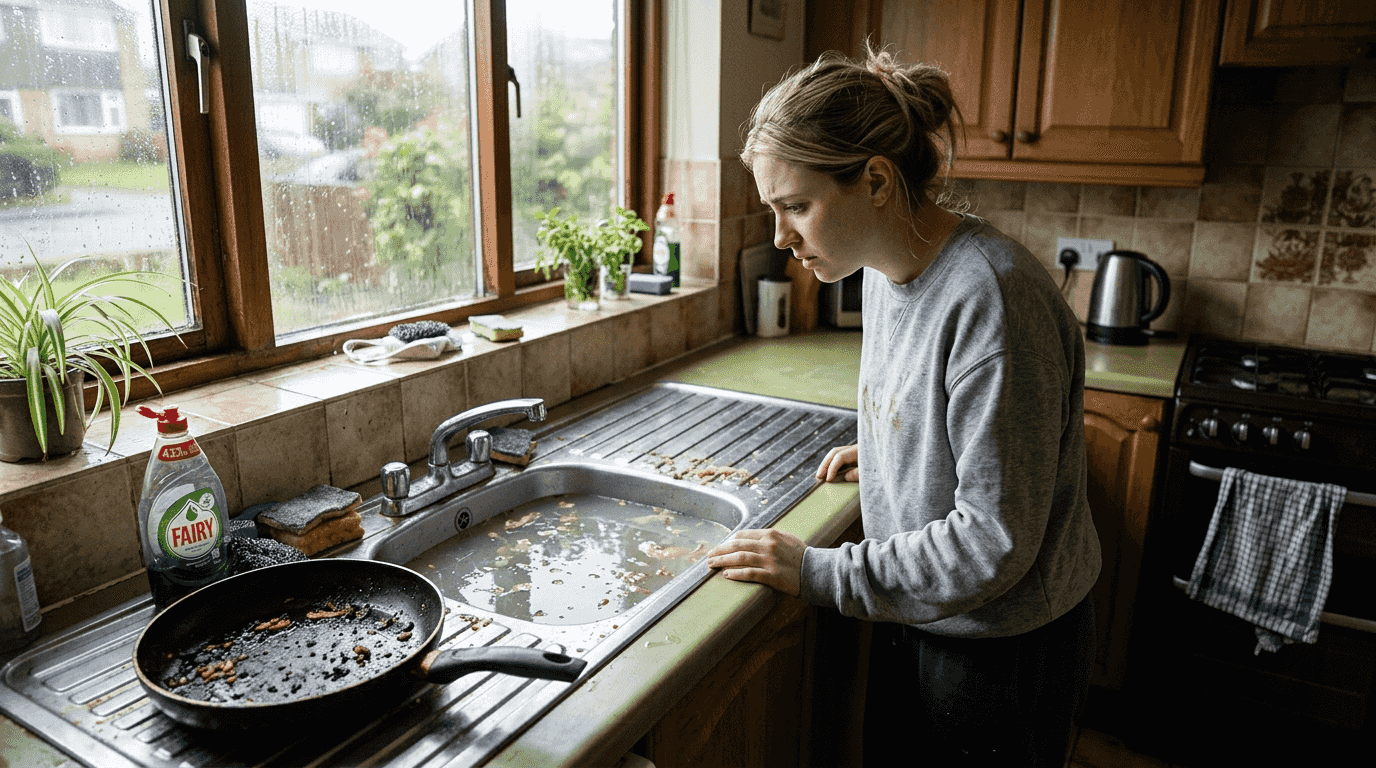
Kitchen drain blockages from grease accumulation top the list of common complaints. Cooking fats pour down sinks as liquids but solidify in cooler pipes, gradually building thick deposits that trap food particles and soap residue. Professional high-pressure water jetting removes these deposits effectively, whilst biological treatments help maintain clear pipes between deep cleans.
Tree root intrusion affects many properties in Poole’s leafy residential areas. A study found 60% of domestic blockages involve combined organic, inorganic, and structural factors, with roots frequently contributing to structural damage. Roots exploit tiny cracks in clay pipes, expanding inside to create dense masses that block flow completely. Mechanical cutting removes existing growth, whilst chemical root barriers prevent regrowth near vulnerable pipe sections.
Collapsed or shifted drain sections occur particularly in older properties where ground settlement affects rigid clay pipework. These failures create low spots where debris accumulates, causing persistent blockages despite repeated clearing attempts. Excavation and replacement remain necessary for severe collapses, though modern no-dig relining techniques offer less disruptive alternatives for partially damaged pipes.
Foreign object blockages surprise many homeowners. Children’s toys, sanitary products, and excessive toilet paper create unexpected obstructions requiring professional removal. These items often lodge at pipe bends or junction points, catching passing debris and forming secondary blockages that worsen rapidly.
Pro Tip: Keep a drainage diagram showing inspection chamber locations and main pipe runs, as this information proves invaluable during emergency callouts and helps technicians respond more efficiently.
The following table summarises common drainage problems and appropriate repair approaches:
| Problem Type | Primary Cause | Typical Solution | Prevention Method |
|---|---|---|---|
| Grease blockage | Cooking fat disposal | High-pressure jetting | Grease trap installation |
| Root intrusion | Tree proximity | Mechanical cutting plus barriers | Regular camera inspections |
| Collapsed pipe | Age and settlement | Excavation or relining | Periodic structural surveys |
| Foreign objects | Improper disposal | Professional extraction | User education |
| Scale build-up | Hard water deposits | Chemical descaling | Water softener systems |
The drain unblocking procedure 2026 follows systematic steps to identify blockage type and select appropriate clearing methods. Simple blockages respond to plunging or drain rods, whilst stubborn obstructions require professional equipment including electro-mechanical machines and high-pressure jetters.
Many drainage problems benefit from combined approaches. Root-damaged pipes may need both mechanical clearing and structural repair to prevent recurrence. The drain repair guide DIY solutions explains which tasks suit homeowner intervention and which demand professional expertise for safety and effectiveness.
Preventative maintenance: the best defence against drainage issues
Proactive drainage care delivers substantial cost savings compared to reactive emergency repairs. Property managers should implement preventative programmes including regular inspections and cleaning to minimise blockage and damage risks.
Scheduled inspections catch developing problems early. Annual camera surveys reveal minor cracks before they become major failures, root intrusions whilst still manageable, and scale accumulation requiring attention. This forward-looking approach prevents the dramatic failures that cause flooding, property damage, and expensive emergency callouts during evenings or weekends.
Routine cleaning maintains optimal flow capacity. Professional drain cleaning removes accumulating debris, grease deposits, and mineral scale that gradually reduce pipe diameter. Many Poole homeowners schedule six-monthly or annual cleaning depending on property age, occupancy levels, and historical drainage performance. Properties with mature trees nearby often benefit from more frequent attention.
The financial case for prevention proves compelling. Emergency drainage repairs typically cost three to five times more than scheduled maintenance due to premium callout charges, rushed work schedules, and additional damage from sudden failures. Preventative care spreads costs predictably across years whilst extending drainage system lifespan significantly.
Comprehensive maintenance programmes should include:
- Annual CCTV surveys documenting system condition
- Bi-annual high-pressure cleaning of main drains
- Quarterly inspection chamber checks and cleaning
- Immediate investigation of any slow-draining fixtures
- Seasonal gully clearing before autumn and winter
The drain inspection essentials Poole homeowners guide details what professional inspections should cover and how to interpret findings. Understanding inspection reports helps you prioritise repairs and budget appropriately for necessary work.
Maintenance extends beyond professional services. Simple homeowner actions significantly reduce blockage risks. Installing sink strainers catches food particles before they enter drains. Disposing of cooking fats in bins rather than sinks prevents grease accumulation. Using drain guards in showers traps hair effectively. These small habits collectively make substantial differences to drainage system health.
“Regular maintenance transforms drainage from a reactive emergency service into a manageable aspect of property care, delivering predictable costs and reliable performance throughout the year.”
The drain inspections prevent costly repairs article quantifies potential savings. Properties with documented maintenance programmes experience 70% fewer emergency callouts and 50% lower total drainage costs over five-year periods compared to reactive-only approaches. These statistics demonstrate clear value for homeowners and property managers alike.
Reliable drain unblocking and repair services in Poole
When drainage problems exceed DIY capabilities, professional expertise ensures safe, lasting solutions. Specialist services combine advanced diagnostic tools with proven repair techniques to resolve even the most stubborn blockages efficiently.

Modern drain unblocking procedure 2026 standards emphasise precision diagnosis before intervention. Camera surveys identify exact problem locations and types, allowing technicians to select optimal clearing methods from the first attempt. This targeted approach minimises property disruption whilst maximising repair effectiveness.
Emergency response capabilities prove crucial during drainage crises. The emergency drain unblocking workflow prioritises rapid attendance to prevent flooding damage and restore normal function quickly. Twenty-four-hour availability means help arrives when you need it most, not just during convenient business hours.
Regular maintenance packages offer comprehensive protection for your drainage investment. The drain cleaning workflow Poole homes combines scheduled inspections with preventative cleaning to maintain optimal system performance year-round. These programmes deliver peace of mind alongside tangible cost savings through early problem detection.
Frequently asked questions
What are the most common causes of drain blockages in homes?
Drain blockages typically result from combinations of organic waste like food particles and leaves, inorganic materials including hair and grease, plus structural problems such as pipe cracks or root intrusion. These factors often work together, with initial debris accumulation creating conditions for more serious blockages. Understanding these causes helps you adopt better disposal habits and recognise when professional inspection becomes necessary.
How does a CCTV drain survey help in fixing drainage issues?
CCTV surveys pinpoint exact blockage locations and pipe damage without excavation, reducing repair time by 25% and excavation costs by 30% through targeted intervention. Camera footage reveals hidden problems like hairline cracks and root intrusions invisible from ground level. This precision eliminates guesswork, allowing technicians to select optimal repair methods and minimise property disruption whilst delivering lasting solutions.
Can I prevent drainage problems with regular maintenance?
Regular inspections and cleaning significantly reduce blockage risks by catching developing problems early before they cause failures. Properties with documented maintenance programmes experience 70% fewer emergency callouts and 50% lower total drainage costs over five years. Scheduled care extends system lifespan whilst providing predictable costs instead of unexpected emergency expenses during inconvenient times.
When should I call a professional instead of attempting DIY repairs?
Call professionals when blockages persist after basic plunging, multiple fixtures drain slowly simultaneously, or you notice sewage odours or standing water near drains. These symptoms indicate main drain problems or structural damage requiring specialist equipment and expertise. Attempting complex repairs without proper tools risks causing additional damage and potentially exposing you to health hazards from sewage contact.