
Persistent drainage problems can quickly unravel the comfort of any Poole home, especially when ageing Victorian or Edwardian pipework is hiding unseen damage and blockages. For homeowners, understanding what a proper drainage inspection involves is vital for safeguarding foundations and meeting the strict requirements of the Building Regulations 2010. Trusted local experts use a blend of experience and modern technology to reveal issues sometimes missed for decades, offering personalised solutions for the area’s unique, historic challenges. A thorough drainage inspection is your first step toward lasting peace of mind.
Table of Contents
- What Is A Drainage Inspection?
- Different Types Of Drainage Inspections
- How The Drainage Inspection Process Works
- When And Why Inspections Are Essential
- Costs, Risks, And Common Issues In Poole
Key Takeaways
| Point | Details |
|---|---|
| Importance of Drainage Inspections | Regular drainage inspections help identify issues early, preventing costly repairs and ensuring compliance with building regulations. |
| CCTV Camera Surveys | Opt for CCTV surveys over basic visual inspections for a comprehensive assessment of your drainage system’s internal condition. |
| Types of Drainage Systems | Understanding whether your property has a combined or separate drainage system informs the inspection approach required to address potential issues. |
| Cost Implications | Investing in a drainage inspection can save you from extensive repair costs later, making it essential for homeowners, especially in older properties. |
What Is a Drainage Inspection?
A drainage inspection is a systematic assessment of your home’s foul and surface water drainage systems to ensure they function properly and comply with building regulations. It checks everything from pipes beneath your property to the point where wastewater exits to public sewers or private treatment systems.
Poole’s older housing stock presents unique drainage challenges that modern inspections address effectively. Many Victorian and Edwardian properties still rely on original pipework that’s vulnerable to root ingress, subsidence, and deterioration.
Why This Matters for Your Property
Drainage inspection serves several critical purposes:
- Identifies blockages, cracks, and structural damage before they become emergencies
- Verifies compliance with Building Regulations 2010 and local authority guidance
- Detects root ingress damaging pipes underground
- Assesses whether drainage routes comply with regulatory standards and won’t conflict with your foundation
- Reveals misaligned or broken sections that could cause sewage backup
- Confirms adequate slope and capacity for wastewater removal
What the Inspection Actually Covers
A comprehensive drainage inspection examines your entire system from start to finish.
It begins inside your home, tracing all pipes from soil stacks and appliances downwards. It then follows the network through your property to external pipework, gully traps, and finally to the connection point with the public sewer or treatment plant.
Modern inspections use specialist equipment to see what’s happening inside pipes without excavation. This non-invasive approach saves money and your garden.
A proper inspection reveals problems hiding beneath your property—issues that can cost thousands if left unchecked.
The Modern Inspection Process
Today’s drainage surveys combine visual assessment with technology.
Inspectors typically use CCTV cameras inserted into pipes to capture real-time footage of interior conditions. This shows cracks, blockages, displaced joints, and root damage clearly. Static images and video footage provide evidence of problems and their severity.
The surveyor then produces a detailed report mapping your drainage system and highlighting any issues found. This becomes essential documentation for insurance, conveyancing, or planning repairs.
Pro tip: Request a CCTV drainage survey rather than a basic visual inspection—the camera footage provides irrefutable evidence of problems and helps prioritise which repairs to tackle first.
Different Types of Drainage Inspections
Drainage inspections vary depending on your system type and what needs assessing. Understanding which inspection suits your property helps you get the right diagnosis for drainage problems.
Poole homes typically feature either combined or separate drainage systems, each requiring slightly different inspection approaches. Combined systems carry both foul water and rainwater through the same pipes, whilst separate systems keep them distinct. Your inspection type depends largely on which system your property uses.
Combined Versus Separate Systems
The type of system running beneath your home determines inspection priorities.
Combined systems merge foul and surface water drainage, making blockages more problematic during heavy rainfall. When leaves and debris clog these pipes, sewage can back up into your home. Separate systems reduce this risk by routing rainwater independently, though they require more pipework.
Newer Poole developments now install separate systems to reduce network strain and environmental impact. If your property was built after 2010, you likely have separate drainage. Older properties almost always feature combined systems.
Knowing your system type shapes how your inspector approaches the survey and what issues they prioritise.
Visual Inspections
Basic visual inspections examine accessible drainage components without specialist equipment.
Inspectors check gully traps, covers, and external pipework for obvious damage or blockages. They assess slope, connections, and whether water drains properly. This approach costs less but reveals only surface-level problems.
Visual inspections work well for straightforward assessments or routine maintenance checks. However, they cannot identify blockages or damage inside pipes.
CCTV Camera Surveys
Camera-based surveys provide the most comprehensive view of your drainage system.
A small CCTV camera attached to a flexible rod travels through your pipes, capturing real-time video footage of interior conditions. The surveyor watches on a monitor, identifying cracks, blockages, root ingress, and misaligned joints immediately.
This method reveals problems hiding inside pipes that visual inspections miss completely. The surveyor produces a detailed map of your drainage system with highlighted problem areas marked.
Sustainable Drainage Assessments
Modern inspections increasingly evaluate sustainable drainage systems managing rainwater.
These assessments examine permeable pavements, swales, and soakaways designed to reduce flooding and environmental impact. Inspectors verify these systems meet planning requirements and function properly. This becomes important when surveying properties with modern water management features.
Poole’s drainage network faces increasing pressure from development and climate change. Sustainable systems help alleviate this burden.
Here is a concise comparison of common drainage inspection types and their main characteristics:
| Inspection Type | Coverage Level | Best For | Typical Cost Range |
|---|---|---|---|
| Visual Inspection | Surface components only | Routine checks or new builds | £150–£300 |
| CCTV Camera Survey | Full internal inspection | Older or complex drainage systems | £400–£800 |
| Sustainable Drainage Check | Modern surface water systems | Homes with SUDS features | £200–£500 (indicative) |
Pro tip: Request a CCTV survey for older Poole properties rather than visual inspection alone—camera footage reveals hidden damage inside combined drainage pipes that could cost thousands to fix if missed.
How the Drainage Inspection Process Works
A drainage inspection follows a structured process designed to identify problems and verify your system functions properly. Understanding each stage helps you know what to expect when a surveyor visits your Poole property.
The process begins with preparation and builds through several assessment phases. Each stage serves a specific purpose in creating a complete picture of your drainage health.
Pre-Inspection Preparation
Before the surveyor arrives, they need basic information about your property.
You’ll typically provide details about your home’s age, construction type, and any previous drainage problems. The surveyor reviews your property layout to plan their route through the system. They may ask about recent blockages, slow drains, or unusual smells.
This preparation stage identifies what the surveyor should focus on during their visit.
Initial Visual Assessment
The inspection begins with an external walk-around of your property.
The surveyor examines accessible drainage components like gully traps, inspection covers, and downpipes. They check for obvious damage, subsidence signs, or blockages visible from above ground. They assess the slope of external pipework and whether water flows correctly.
This stage reveals surface-level problems before moving to more detailed investigation.
CCTV Camera Survey
For comprehensive assessment, the surveyor deploys a CCTV camera into your drainage system.
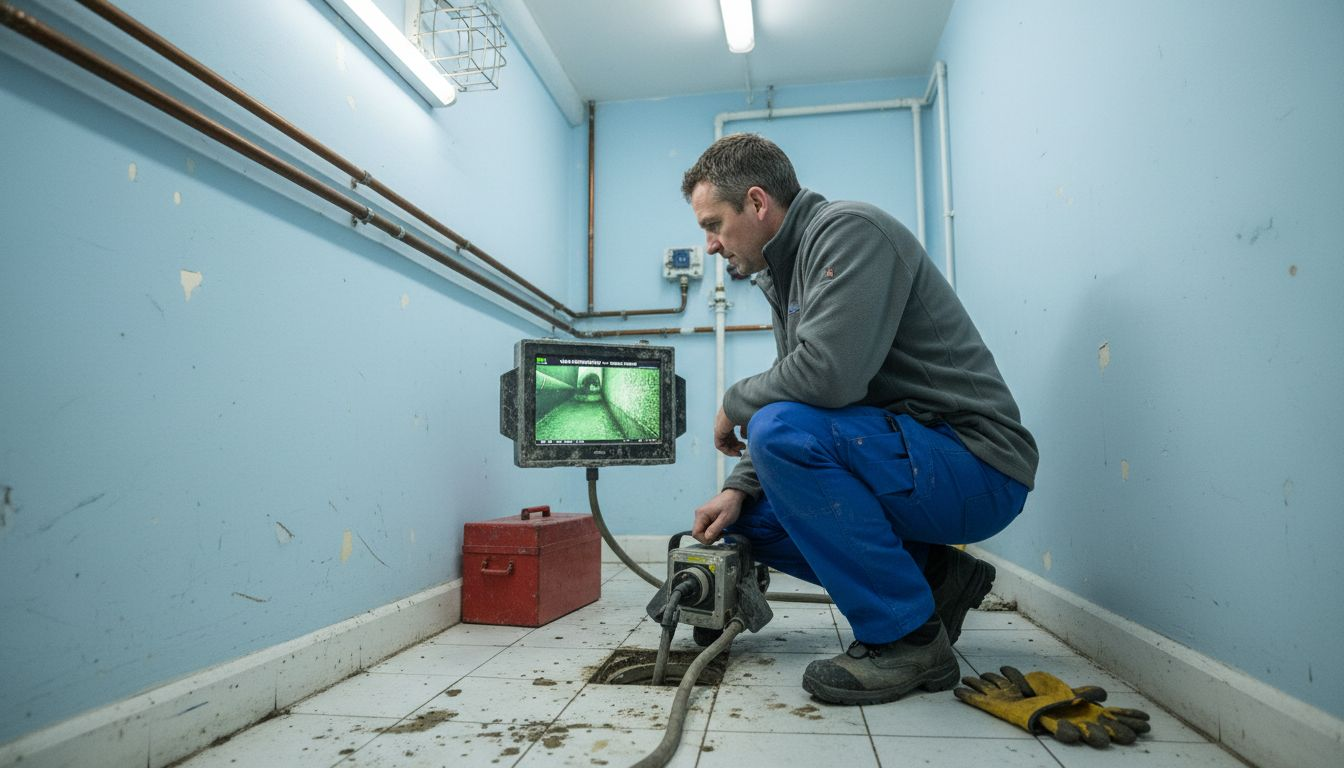
A flexible rod with an attached camera travels through your pipes whilst the surveyor monitors live footage on a screen. The camera captures the interior condition of every pipe section, identifying cracks, blockages, root ingress, and misaligned joints. The surveyor notes pipe depth, alignment, and junction integrity throughout the system.
This reveals hidden damage that visual inspection cannot detect.
Testing and Verification
Inspectors may conduct testing to verify your drainage system’s integrity.
Air or water testing checks whether pipes maintain airtight seals and reveal leaks. Dye testing traces water flow and identifies blockages. These tests confirm the system functions as designed.
A CCTV survey with testing provides definitive evidence of problems, not assumptions or guesses about what lies beneath.
Detailed Report Production
After the survey, the surveyor compiles comprehensive findings into a detailed report.
The report includes:
- A mapped layout of your entire drainage system
- Video footage or still images from problem areas
- Severity ratings for any issues identified
- Recommended repairs or maintenance actions
- Cost estimates for addressing problems
This documentation becomes valuable for insurance claims, property sales, or planning repairs.
Follow-Up Actions
Once you receive your report, decisions follow about necessary repairs.
Some issues require immediate attention; others can wait. The surveyor typically prioritises problems by severity and urgency. You’ll know exactly what needs fixing and why before paying for work.
Pro tip: Ask the surveyor to provide their report in digital format with video clips—this lets you view problem areas yourself and helps contractors understand exactly what repairs are needed before quoting.
When and Why Inspections Are Essential
Drainage inspections aren’t optional luxuries—they’re critical safeguards for your property. Knowing when to schedule one protects your home from expensive damage and health hazards.
Poole homeowners face specific scenarios where inspections become urgent. Understanding these situations helps you act before minor problems become financial disasters.
Before Purchasing a Property
A drainage survey should be part of your survey before buying any home, especially older Poole properties.
Hidden drainage problems can cost thousands to repair after you’ve signed the paperwork. A surveyor’s report reveals blockages, cracks, or misaligned pipes the seller may not disclose. This inspection protects your investment and reveals true property condition.
Most mortgage lenders now require drainage surveys for older properties. Without one, you’re buying problems blindly.
When Selling Your Home
Buyers increasingly demand drainage surveys before completing purchases.
Providing a recent survey demonstrates your property’s drainage health and builds buyer confidence. It removes a common objection during negotiations. Properties with documented good drainage condition sell faster and sometimes at better prices.
If your survey reveals issues, you can address them before listing or discount accordingly. Transparency beats surprises.
After Persistent Blockages
Repeated blockages signal underlying problems requiring investigation.
A single blockage might just be debris. Three blockages in six months indicates a structural issue—collapsed pipes, root ingress, or misalignment. A CCTV survey identifies the root cause, preventing endless emergency call-outs.
Ignoring recurring blockages means paying for emergency repairs repeatedly instead of fixing the cause once.
During Property Renovations
If you’re planning significant building work, especially near drainage systems, inspection becomes essential.
Renovation work can damage pipes accidentally. Inspections ensure systems comply with regulatory frameworks before and after work. This protects your renovation investment and prevents building control issues.
Building control often requires updated drainage surveys for renovation projects.
When Subsidence Is Suspected
Drainage problems and subsidence connect directly.
Broken pipes leak water into soil beneath your home, triggering subsidence. Alternatively, ground movement cracks drainage pipes. A survey identifies whether drainage issues cause or result from subsidence, guiding repair strategies.
Following Flooding Events
After heavy rainfall or localised flooding, drainage inspection becomes urgent.
Flood damage often indicates drainage system failure. A post-flood survey identifies whether your system managed surface water correctly or contributed to problems. This information guides future flood prevention measures.
Routine Maintenance Intervals
Even without obvious problems, periodic inspections protect your system long-term.
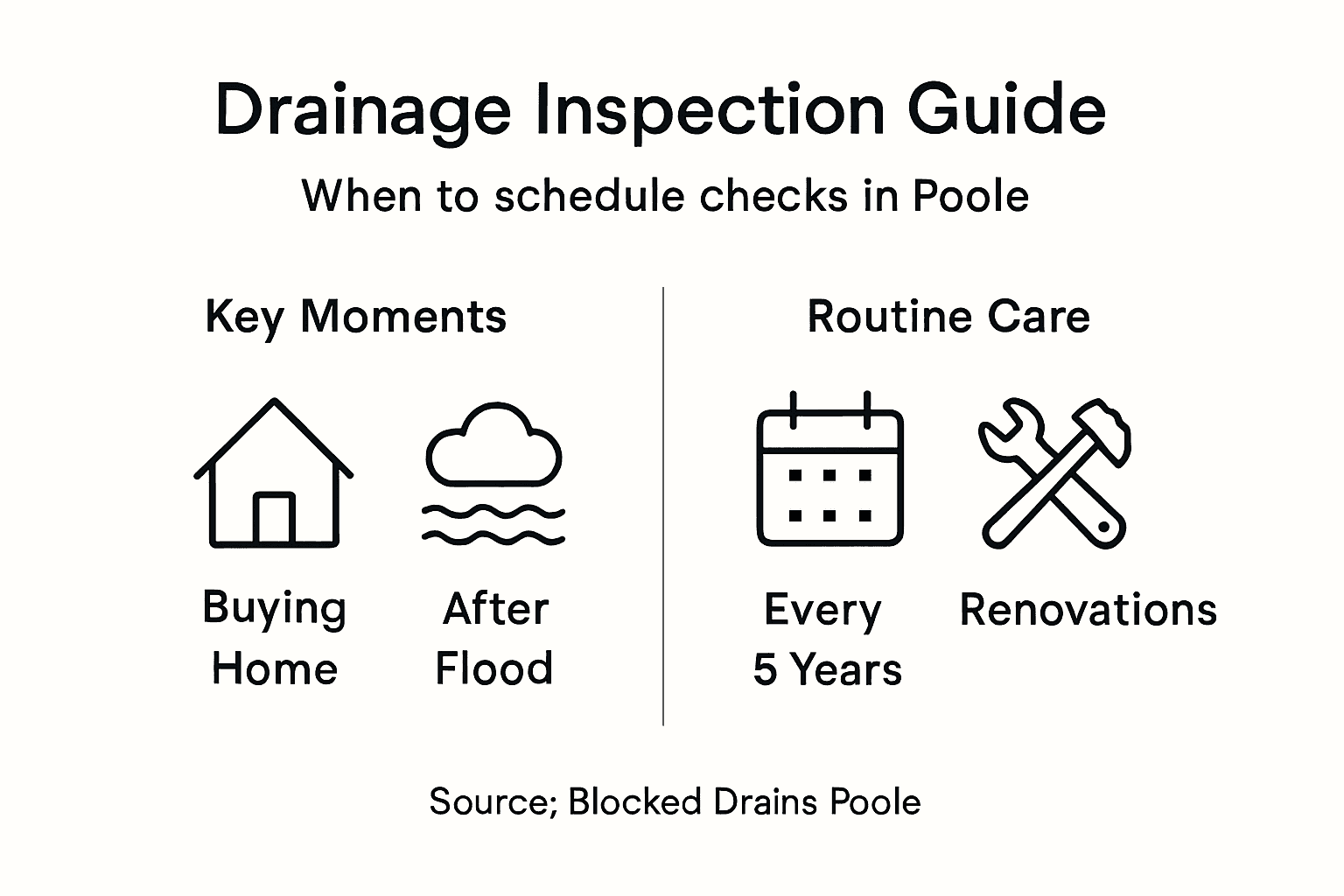
Experts recommend surveys every 5–10 years for older properties, especially Victorian or Edwardian homes with combined systems. Early detection prevents catastrophic failures.
Pro tip: Schedule your drainage inspection during dry weather when water levels are lowest—surveyor cameras get clearer footage and you receive more accurate assessments of actual damage versus temporary blockages.
Costs, Risks, and Common Issues in Poole
Drainage problems in Poole carry real financial and safety consequences. Understanding typical costs, risks, and issues specific to the area helps you make informed decisions about inspection and repairs.
Poole’s Victorian and Edwardian housing stock creates unique drainage challenges. Combined systems, aged pipes, and clay soil conditions make problems more likely here than in newer developments elsewhere.
Typical Inspection Costs
Drainage inspection costs vary depending on the survey type and your property’s complexity.
Basic visual inspections typically cost £150–£300, taking 1–2 hours. CCTV surveys range from £400–£800 for standard residential properties, with more complex systems costing more. Emergency call-outs outside normal hours attract premium pricing.
Investment in inspection now prevents exponentially higher repair costs later. A £500 survey might reveal problems costing £5,000 to fix, making early detection invaluable.
Repair Costs for Common Problems
Once identified, drainage repairs vary dramatically in expense.
Simple blockage clearing costs £150–£400. Root removal or chemical treatment ranges from £400–£1,200. Pipe relining—a trenchless repair technique—costs £1,500–£3,500 per section. Full pipe replacement requires excavation and costs £3,000–£8,000+ depending on depth and length.
Delayed repairs compound costs significantly.
Financial Risks of Neglect
Ignoring drainage problems creates cascading expenses and property damage.
Repeated emergency repairs accumulate quickly. Sewage backups damage flooring, carpets, and fixtures. Subsidence from leaking pipes can render homes unmortgageable. Flood damage and environmental pollution add substantial liability costs affecting your neighbourhood and insurance premiums.
Many insurers deny claims for damage from neglected drainage systems.
A single sewage backup into your home costs £8,000–£15,000 to clean professionally—drainage inspection is cheap insurance.
Common Poole Drainage Issues
Certain problems appear repeatedly in Poole properties:
- Root ingress: Pipes crack, allowing tree roots to penetrate and block flow
- Clay soil subsidence: Poole’s heavy clay shifts with moisture, breaking pipes
- Combined system overload: Heavy rainfall overwhelms older merged systems
- Corroded cast iron: Victorian pipework deteriorates internally, reducing capacity
- Misaligned joints: Ground movement displaces pipes at connection points
- Sediment accumulation: Inadequate slope causes silt buildup in older pipes
These issues require targeted solutions, not generic approaches.
Below is a summary of common Poole drainage issues, highlighting their local cause and likely impact:
| Issue | Typical Cause | Impact on Property |
|---|---|---|
| Root ingress | Mature trees near old pipes | Persistent blockages |
| Clay soil subsidence | Ground movement after rain | Cracked, displaced pipes |
| Combined system overload | Heavy rainfall in old systems | Sewage backup risk |
| Corroded cast iron pipes | Pipe age and moisture | Reduced flow capacity |
Safety and Compliance Risks
Drainage works involve health and safety hazards including excavation dangers and utility strikes, requiring proper risk assessment and qualified personnel. Untrained DIY attempts at drain work create serious injury risks. Professional inspectors carry insurance and follow safety regulations protecting you legally.
Pro tip: Request a detailed cost estimate from your surveyor before commissioning repairs—knowing whether you’re facing £500 or £5,000 in costs helps prioritise which problems to address first and plan your budget accordingly.
Protect Your Poole Home with Expert Drainage Inspections Today
Older Poole properties face unique drainage challenges such as root ingress, subsidence caused by clay soil, and ageing combined drainage systems that can quickly escalate into costly and disruptive problems. Ignoring signs like repeated blockages or sewage backups risks expensive repairs, environmental damage, and unsettling your home life. Understanding the value of a thorough CCTV camera survey and professional drainage inspection can help you pinpoint hidden cracks, misaligned joints, and compliance issues before they worsen.
At Blocked Drains Poole, we specialise in addressing these exact issues for residential and commercial clients in Poole and Dorset. Our experienced team uses advanced CCTV technology alongside reliable repair solutions, such as pipe relining, tailored for Victorian and Edwardian pipework vulnerabilities. With transparent pricing, no call-out fees, and 24/7 emergency response, we prioritise your peace of mind and property protection.
Act now to safeguard your investment and avoid costly emergency call-outs:
Ensure your drainage system remains compliant, free-flowing, and damage-free by booking a comprehensive inspection with us. Learn more about how we tackle drainage problems uniquely faced by Poole homes on our main service page. Don’t wait for the next blockage or flood to disrupt your life. Contact Blocked Drains Poole today for a reliable survey and expert advice you can trust.
Frequently Asked Questions
What is a drainage inspection?
A drainage inspection is a systematic assessment of a home’s drainage systems, checking for proper function and compliance with building regulations. It examines pipes from within the property to their exit point, identifying any issues that could cause costly damage.
Why are drainage inspections important for older homes?
Older homes often have original pipework that can be vulnerable to issues like root ingress and deterioration. A drainage inspection helps identify potential problems before they become emergencies, saving homeowners significant repair costs.
How does a CCTV drainage survey work?
A CCTV drainage survey uses a small camera attached to a flexible rod to capture real-time video footage of the inside of drainage pipes. This method allows surveyors to identify blockages, cracks, and misaligned joints without the need for excavation.
When should homeowners schedule a drainage inspection?
Homeowners should schedule a drainage inspection before purchasing a property, when selling their home, after experiencing persistent blockages, during significant renovations, or following flooding events to ensure the drainage system is functioning properly.