
Persistent drainage problems can make property maintenance in Poole stressful. When water pools in the garden or unpleasant smells linger indoors, it is often difficult to pinpoint the cause without professional help. Understanding a drain survey report lets homeowners unravel hidden issues beneath their property and weigh up repairs before making costly decisions. This guide breaks down what a drain survey report involves, why it matters, and how it can steer informed next steps for peace of mind.
Table of Contents
- What Is A Drain Survey Report?
- Types Of Drain Surveys Explained
- How Drain Survey Reports Are Created
- Common Issues Identified In Surveys
- Costs, Risks And Next Steps For Homeowners
Key Takeaways
| Point | Details |
|---|---|
| Importance of Drain Surveys | Drain survey reports are essential for identifying hidden issues in a property’s drainage system, helping homeowners in Poole prevent costly repairs. |
| Types of Drain Surveys | Various methods, including CCTV and sonar surveys, offer tailored insights into drainage conditions, facilitating better maintenance planning. |
| Cost Considerations | Drain survey costs generally range from £100 to £400, representing a strategic investment in the upkeep of property infrastructure. |
| Follow-Up Actions | After receiving a report, homeowners should promptly address identified issues to prevent escalation and potential structural damage. |
What Is a Drain Survey Report?
A drain survey report is a comprehensive diagnostic assessment of a property’s underground drainage infrastructure, providing homeowners in Poole with critical insights into their drainage system’s condition. These detailed documents are typically generated using advanced CCTV inspection technologies that reveal hidden issues within pipes and underground networks.
The primary purpose of a drain survey report is to uncover potential problems that might compromise a property’s drainage system. These investigations capture precise visual evidence of structural conditions, identifying potential defects such as:
- Blockages caused by debris or root intrusion
- Structural cracks or pipe damage
- Potential leakage points
- Misaligned or broken pipe sections
- Sediment build-up affecting water flow
Professional drain surveys go far beyond simple visual inspections. Utilising specialised camera equipment, technicians can navigate through complex pipework, recording high-resolution footage that provides a detailed map of underground drainage systems. This technology allows for microscopic examination of pipe conditions, revealing issues that would remain undetected through traditional inspection methods.
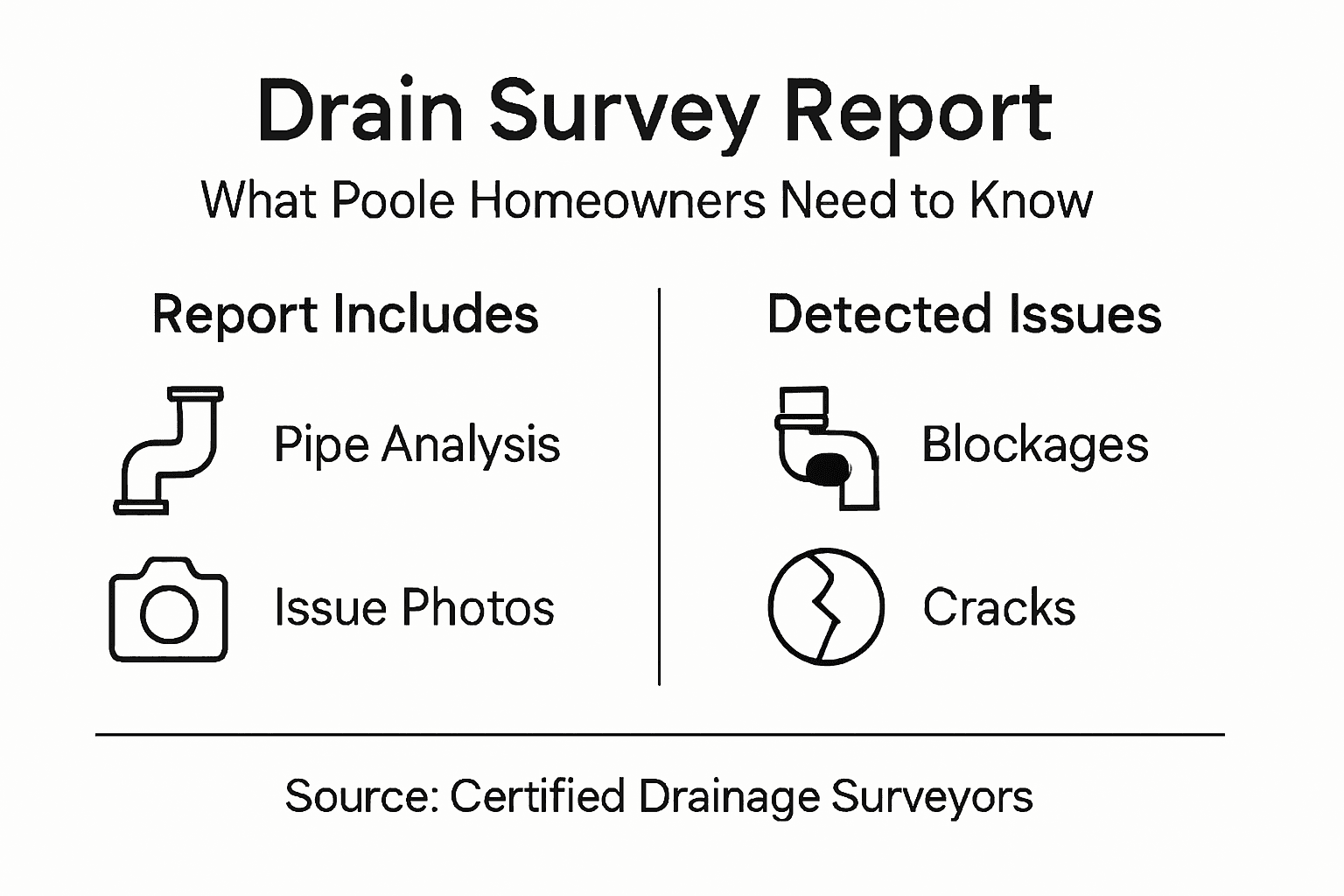
Homeowners receive a comprehensive report that typically includes an executive summary, detailed pipe-by-pipe analysis, risk assessments, and professional recommendations for maintenance or repair. These documents serve multiple purposes, from informing property purchase decisions to planning preventative maintenance strategies for Poole’s unique drainage infrastructure.
Pro tip: Request a digital copy of your drain survey report and store it securely for future reference, as it can be invaluable during property transactions or when planning renovation work.
Types of Drain Surveys Explained
Drain surveys in Poole encompass a range of specialised techniques designed to diagnose and assess underground drainage systems with remarkable precision. Drainage inspection technologies have evolved significantly, offering homeowners and professionals multiple approaches to understanding their property’s hidden infrastructure.
The most common types of drain surveys include:
- CCTV Drain Surveys: Utilising advanced camera technologies to provide visual inspections of pipe interiors
- Sonar Surveys: Using sound waves to detect sediment build-up and potential blockages
- Laser Surveys: Creating detailed 3D mapping of drainage system structures
- Root Intrusion Surveys: Identifying and assessing tree root penetration in drainage networks
- Manhole Inspections: Examining critical access points for potential structural issues
Each survey type serves a distinct purpose, allowing drainage professionals to diagnose specific challenges within underground pipe systems. CCTV surveys, for instance, provide real-time visual evidence of pipe conditions, revealing hidden defects that might otherwise go unnoticed. These non-invasive inspection methods enable technicians to assess drainage infrastructure without extensive excavation.
Drain mapping represents another crucial survey technique, particularly valuable for homeowners in Poole’s diverse property landscape. This method comprehensively documents the underground layout of drainage systems, revealing pipe connections, potential weak points, and historical modifications that could impact future maintenance or renovation plans.
The following table summarises the main advantages of each drain survey method for Poole homeowners:
| Survey Method | Primary Benefit | Best Used For |
|---|---|---|
| CCTV Inspection | Clear internal visuals | Detecting blockages or fractures |
| Sonar Survey | Non-visual blockage detection | Locating sediment or hidden obstructions |
| Laser Mapping | Precise structural mapping | Planning drainage modifications |
| Root Intrusion Scan | Targeted risk identification | Assessing tree root impact |
| Manhole Inspection | Access point integrity check | Verifying manhole condition |
Pro tip: Request a comprehensive survey that combines multiple inspection techniques to gain the most thorough understanding of your property’s drainage system.
How Drain Survey Reports Are Created
Creating a comprehensive drain survey report involves a meticulous multi-stage process that combines advanced technological tools with expert professional analysis. CCTV drain survey techniques enable drainage specialists to capture detailed visual evidence of underground pipe conditions with remarkable precision.
The drain survey report creation typically follows these key stages:
- Pre-Survey Preparation
- Gathering property drainage layout information
- Identifying potential access points
- Selecting appropriate inspection equipment
- Inspection Process
- Inserting specialised camera equipment into drainage systems
- Navigating through pipe networks
- Recording high-resolution video footage
- Documenting specific pipe characteristics and potential defects
Technicians use sophisticated robotic camera systems that can traverse complex underground networks, capturing crystal-clear visual documentation of drainage infrastructure. These cameras are equipped with powerful lighting and high-definition recording capabilities, allowing them to reveal minute details such as hairline cracks, slight misalignments, or early signs of structural degradation.
After the physical inspection, drainage experts compile a comprehensive report that typically includes:
- Detailed video footage
- Photographic evidence of specific issues
- Technical analysis of pipe conditions
- Risk assessments and potential repair recommendations
- Graphical representations of drainage system layout
Pro tip: Request a digital and physical copy of your drain survey report, ensuring you have a permanent record for future property maintenance and potential insurance purposes.
Common Issues Identified in Surveys
Drain surveys in Poole routinely uncover a range of potentially serious underground infrastructure problems that could compromise property integrity and drainage functionality. Drainage inspection techniques enable professionals to detect critical issues before they escalate into costly repairs.
The most frequently encountered drainage problems include:
- Root Intrusion: Tree roots penetrating and damaging pipe structures
- Structural Fractures: Cracks, breaks, or misalignments in drainage pipes
- Pipe Corrosion: Gradual deterioration of pipe materials
- Blockage Build-up: Accumulation of debris, sediment, and foreign materials
- Pipe Displacement: Sections of pipework that have shifted from original alignment
Understanding the severity of these issues requires expert interpretation. Microscopic pipe defects can rapidly transform into significant structural problems if left unaddressed. For instance, a small root intrusion might initially appear minor but can progressively expand, causing extensive pipe damage and potential ground settlement around drainage networks.
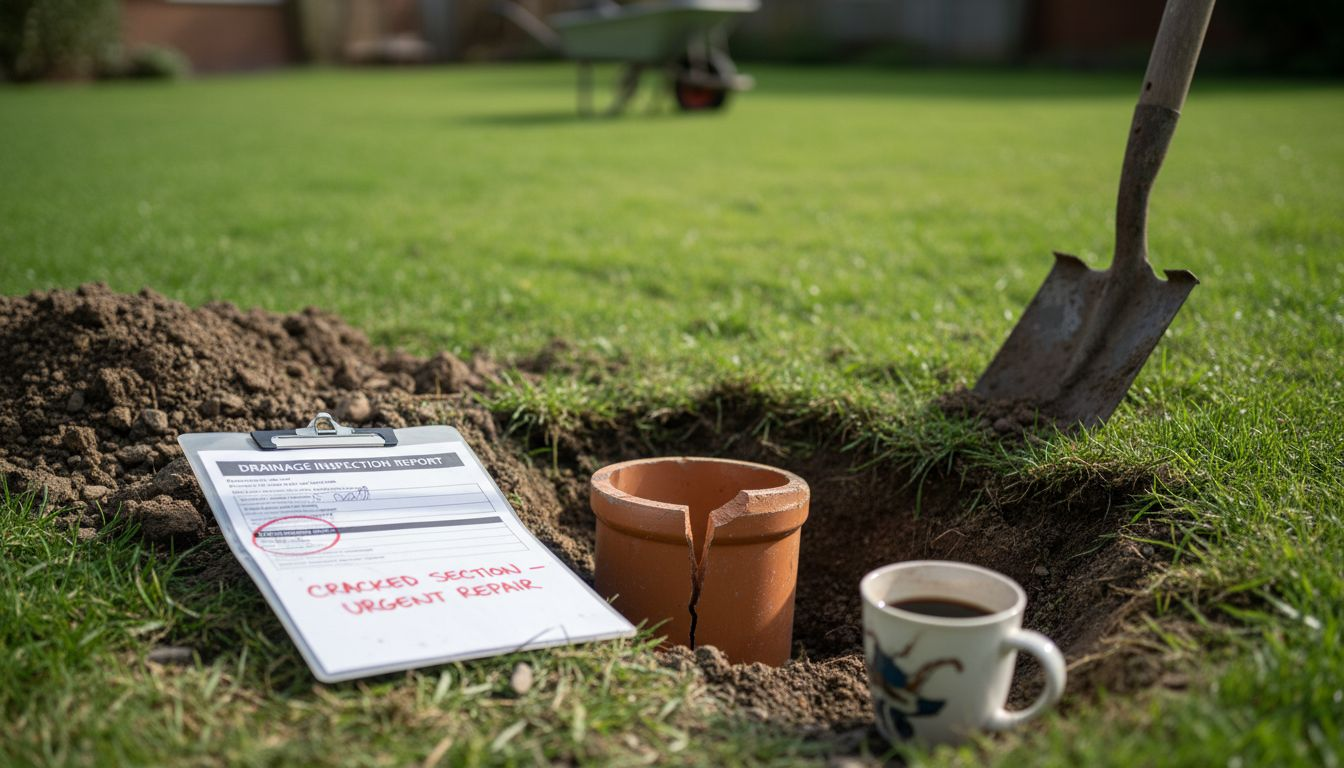
Some drainage issues present more immediate risks to Poole homeowners. Structural pipe fractures can lead to ground instability, potential water contamination, and unexpected sewage leakages. Blockages represent another critical concern, potentially causing backup of wastewater, unpleasant odours, and potential health hazards if not promptly investigated and remediated.
Pro tip: Schedule regular drainage surveys every 2-3 years to catch potential issues early and prevent expensive, extensive repair work.
Costs, Risks and Next Steps for Homeowners
Understanding the financial implications of drain surveys is crucial for Poole homeowners seeking to protect their property’s infrastructure. Drain survey costs typically range between £100 and £400, depending on property characteristics and survey complexity, representing a strategic investment in long-term property maintenance.
Key financial considerations include:
-
Survey Type Pricing
-
Basic CCTV surveys: £85 – £235
-
Comprehensive property surveys: £350 – £450
-
Additional detailed reporting costs
-
Potential Risk Factors
-
Emergency repair expenses
-
Structural damage mitigation
-
Insurance claim implications
-
Property value preservation
Homeowners face significant risks by delaying drainage investigations. Undetected drainage issues can escalate rapidly, potentially causing substantial structural damage that far exceeds the initial survey investment. Minor pipe defects might transform into extensive problems requiring complete drainage system replacement, with repair costs potentially reaching thousands of pounds.
After receiving a drain survey report, homeowners should consider these critical next steps:
Below is a quick reference for key costs, risks and recommended homeowner actions after receiving a drain survey report:
| Aspect | Key Insight | Homeowner Action |
|---|---|---|
| Survey Costs | Typically £100–£400 | Budget for future inspections |
| Delay Risks | Higher repair costs, property damage | Schedule prompt interventions |
| Insurance Impact | May affect claim eligibility | Keep reports for documentation |
| Post-Survey Actions | Prioritise and address risks | Obtain quotes and repair swiftly |
- Review the comprehensive report thoroughly
- Consult with professional drainage specialists
- Prioritise recommended repairs
- Obtain multiple repair quotes
- Schedule timely intervention for identified issues
Pro tip: Request a written breakdown of all potential repair costs and recommended timelines immediately after receiving your drain survey report.
Protect Your Poole Home with Expert Drain Survey Solutions
A detailed drain survey report reveals hidden threats like root intrusion, pipe fractures and blockages that can cause costly damage to your property if ignored. When faced with these issues, having a trusted local expert to interpret findings and act swiftly is vital. At Blocked Drains Poole, we specialise in comprehensive drainage inspections and repairs tailored to Poole’s unique and ageing underground networks. Our professional CCTV surveys and rapid response team help you stay ahead of problems before they escalate.
Do not let drainage faults impact your home comfort or property value. Issues detected in your report are easier and cheaper to fix with prompt action. Explore our drainage services for clear pricing and no call-out fees, supported by expert advice and modern repair techniques. Protect your investment by contacting Poole’s trusted specialists today.
Take control of your drainage health now. Visit Blocked Drains Poole and book your detailed drain survey or emergency inspection. Early diagnosis means effective solutions and peace of mind for you and your family.
Frequently Asked Questions
What is included in a drain survey report?
A drain survey report typically includes an executive summary, detailed pipe-by-pipe analysis, risk assessments, photographic evidence of specific issues, and professional recommendations for maintenance or repair.
What types of issues can a drain survey detect?
Common issues detected in drain surveys include blockages from debris or tree roots, structural cracks or pipe damage, potential leakage points, and sediment build-up affecting water flow.
How often should I get a drain survey conducted?
It is recommended to schedule regular drain surveys every 2-3 years to identify potential issues early and prevent expensive repairs.
What are the potential costs of a drain survey?
Costs for drain surveys typically range from £100 to £400, depending on the survey type and property characteristics, making it a strategic investment in property maintenance.