
TL;DR:
- Understanding drainage terminology empowers homeowners to communicate effectively and avoid unnecessary costs.
- Modern drainage methods like relining and jetting are less invasive, faster, and more cost-effective.
- Proper report explanation and record-keeping help prevent disputes and ensure timely, appropriate repairs.
Drainage problems rarely arrive with a manual. One minute you’re calling a local engineer about a slow sink, and the next you’re nodding along to words like “soakaway”, “rodding point”, and “patch repair” as if you’ve been in the trade for years. That confusion is not just uncomfortable. It costs money. When homeowners in Poole misunderstand what a drainage professional is describing, they risk agreeing to unnecessary works, missing urgent issues, or getting the wrong quote entirely. This guide cuts through the jargon, gives you the vocabulary you need, and puts you firmly in control of your next drainage conversation.
Table of Contents
- What do common drainage industry terms actually mean?
- Why industry language matters for home drainage problems
- The most important terms for modern drain unblocking and repair
- How to decode drainage reports, invoices, and quotes
- Mistakes to avoid when discussing drainage with your service provider
- The truth about drainage jargon: It’s a customer’s power tool
- Get help with expert drainage support in Poole
- Frequently asked questions
Key Takeaways
| Point | Details |
|---|---|
| Know the basics | Understanding drainage terms empowers you to make better, faster decisions when issues occur. |
| Translate reports | Always decode technical phrases in reports and quotes before approving any work. |
| Modern solutions exist | Ask about less disruptive techniques like CCTV surveys and relining when repairing drains. |
| Communication prevents errors | Clear language between you and service providers stops costly mistakes in drainage repairs. |
| Expert support is available | Local Poole experts can help demystify jargon and resolve drainage issues quickly. |
What do common drainage industry terms actually mean?
With the key challenge established, let’s pinpoint exactly what these mysterious drainage terms mean in plain language. Drainage terminology explained is essential for effective communication between homeowners and engineers, yet most people are never taught these words. Here are the ones you’ll encounter most often in Poole:
- Inspection chamber: A covered access point, usually found in your garden or driveway, that allows engineers to inspect or clear your drains without digging.
- CCTV survey: A CCTV drain survey involves pushing a small camera through your pipework to film what’s happening inside. Think of it as a medical scan for your drains.
- Soakaway: A pit filled with rubble or gravel, buried in your garden, that allows rainwater to drain slowly into the surrounding soil.
- Lateral drain: The section of pipe that runs from your property boundary to the public sewer. It’s your responsibility up to the boundary.
- Rodding point: A small access cap in your pipework that lets engineers insert rods to clear blockages without opening a full inspection chamber.
| Industry term | Plain English meaning |
|---|---|
| Inspection chamber | Underground access hatch for drains |
| CCTV survey | Camera inspection of your pipes |
| Soakaway | Underground pit for rainwater drainage |
| Lateral drain | Your private pipe to the public sewer |
| Rodding point | Small access point for clearing blockages |
When a surveyor visits your Poole property for a blocked drain, they may open an inspection chamber first to assess the flow. If they can’t see the cause, they’ll likely recommend a CCTV survey. Knowing what these terms mean helps you ask the right questions and understand what you’re paying for.
Pro Tip: When the engineer arrives, ask them to point out each part of your drainage system on-site and use plain language. Most professionals are happy to explain, and it ensures you’re both on the same page from the start.
Why industry language matters for home drainage problems
Understanding terms is one thing. Knowing why it matters during real emergencies or call-outs is what truly saves time and money. Consider three common Poole scenarios:
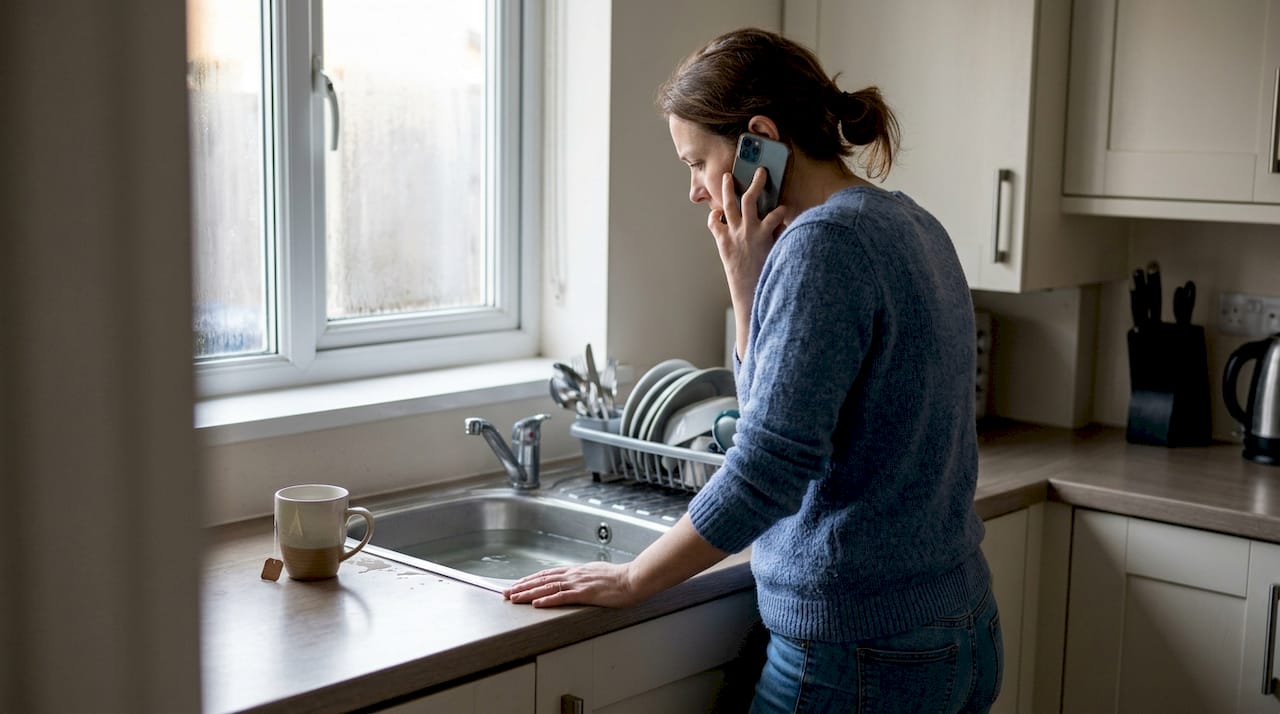
Scenario one: A blocked kitchen drain. You call an engineer and describe “water backing up in the sink.” Without knowing the term “grease trap” or “lateral drain,” you might not realise the engineer is referring to a different part of your system entirely, leading to a second visit and an extra charge.
Scenario two: Bad odours from drains. Sewer backup smells can indicate a broken seal, a blocked vent pipe, or a collapsed section. Each has a different fix and a different cost. Not knowing the vocabulary means you can’t challenge a quote or verify the diagnosis.
Scenario three: A drain survey for a home purchase. Surveyors produce reports full of codes and abbreviations. If you don’t understand what “root ingress” or “displaced joint” means, you may not realise the seller should be addressing these before completion.
The drain survey process confirms that clear communication accelerates diagnosis and repair of drainage faults, reducing both time on-site and overall cost.
“Miscommunication between homeowners and drainage engineers is one of the most common reasons simple problems escalate into expensive ones.”
- Delays caused by unclear descriptions
- Extra call-out visits due to wrong diagnosis
- Insurance claims rejected over incorrect terminology
- Unnecessary works approved without understanding the scope
Pro Tip: When getting quotes, always ask the engineer to define any term you don’t recognise. Cross-check it against your own notes. If two providers use different words for the same thing, confirm they’re quoting for identical works.
The most important terms for modern drain unblocking and repair
Now that you see the importance of clear language, let’s build your knowledge of the terms you’re most likely to hear during actual drainage works in Poole today. CCTV and trenchless technologies are commonly used in modern drainage maintenance, replacing many of the old dig-and-replace methods.
Here are six terms to know before any engineer arrives:
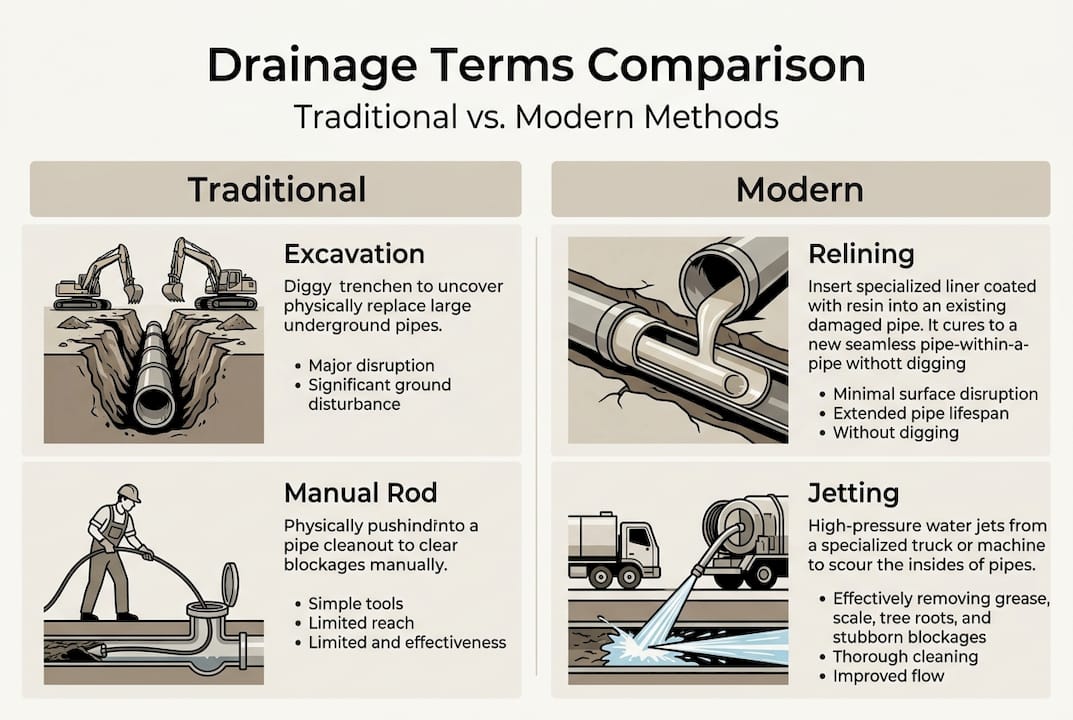
- Relining: A process where a new pipe lining is inserted inside your existing damaged pipe, sealing cracks and restoring flow without digging. Explore the full range of drain repair types to understand when relining is the right choice.
- CCTV inspection: A camera survey used to locate blockages, damage, or root ingress inside pipes. A drain CCTV tutorial can show you exactly what engineers look for.
- High-pressure jetting: Using a powerful water jet to blast away grease, scale, and debris from inside pipes. Far more effective than rodding for stubborn blockages.
- Pipework: A general term for all the pipes in your drainage system, from the small ones under your sink to the larger ones running beneath your garden.
- Sewer mapping: Creating a diagram of your drainage layout, showing where pipes run, where they connect to the public sewer, and where access points are located.
- Patch repair: Fixing a small, localised section of damaged pipe rather than replacing the whole run. Cost-effective when damage is contained.
| Traditional method | Modern alternative | Key benefit |
|---|---|---|
| Full pipe excavation | Relining | No digging required |
| Manual rodding | High-pressure jetting | Clears stubborn blockages faster |
| Visual inspection only | CCTV survey | Pinpoints exact fault location |
| Full pipe replacement | Patch repair | Fixes only the damaged section |
Pro Tip: Always ask your provider whether a non-intrusive repair technique is suitable before agreeing to any excavation. Modern methods often cost less and cause far less disruption to your garden or driveway.
How to decode drainage reports, invoices, and quotes
Hearing the right terms is one step. Decoding the paperwork that follows is just as important. Homeowners often struggle to understand drainage reports and documentation, yet these documents contain critical information about the condition of your property.
| Abbreviation or phrase | What it actually means |
|---|---|
| Root ingress | Tree roots have grown into your pipes |
| Displaced joint | Two pipe sections have shifted apart |
| Remedial works required | Repairs are needed, often urgently |
| WC | Toilet (water closet) |
| SVP | Soil vent pipe, the vertical pipe carrying waste from toilets |
| Surcharging | Water in the pipe is rising above its normal level |
Watch out for these red-flag phrases in any report or quote:
- “Urgent remedial work required” means action is needed now, not eventually.
- “Structural defect noted” suggests the pipe may be at risk of collapse.
- “Infiltration observed” means groundwater is entering your drainage system, which can overload it.
- “Debris accumulation” is often a sign of a recurring blockage that needs more than a one-off clear.
Before agreeing to any works, follow these steps. First, read the report in full and note every term you don’t understand. Second, ask the provider to explain each flagged item in plain language. Third, request photos or video footage to support any diagnosis. Fourth, get a second quote if the works are significant.
Pro Tip: Store every drainage report, invoice, and photo in a dedicated folder, either physical or digital. When you sell your property or make an insurance claim, this paperwork can save you thousands.
Mistakes to avoid when discussing drainage with your service provider
Finally, let’s ensure you’re not caught out by mistakes that are all too common in Poole drainage scenarios. Miscommunication is a leading cause of unresolved drainage problems, and avoiding these errors puts you in a far stronger position.
Here are the five most common mistakes:
- Not asking for definitions. If an engineer uses a term you don’t recognise, ask immediately. There’s no embarrassment in it, and it prevents costly misunderstandings later.
- Skipping written confirmation. Always ask for a written scope of works before any job begins. A verbal agreement is almost impossible to dispute.
- Not requesting photos. Before and after photos of the drainage issue give you evidence of what was found and what was done. Reputable providers offer these as standard.
- Agreeing to works without understanding the urgency. Some issues are genuinely urgent. Others can wait. Ask your engineer to clarify which category your problem falls into.
- Failing to document correspondence. Keep records of every email, text, and call. If a dispute arises, your records are your strongest tool.
“A homeowner who understands what’s being described is a homeowner who can make confident, informed decisions about their property.”
Pro Tip: After any explanation from an engineer, repeat back your understanding in your own words. Something like, “So what you’re saying is the pipe has cracked and needs relining rather than replacing?” This confirms agreement and prevents any confusion later.
The truth about drainage jargon: It’s a customer’s power tool
Here’s a perspective that most articles won’t offer: professionals actually prefer working with informed clients. When you know what a lateral drain is, when you understand the difference between jetting and relining, the job moves faster, the quote is more accurate, and the outcome is better for everyone involved.
Many homeowners assume jargon is designed to keep them in the dark. In reality, it’s simply the shorthand that engineers use amongst themselves. When you learn it, you step into that conversation as an equal. You can compare CCTV providers with confidence, challenge a quote that doesn’t add up, and avoid being upsold on works you don’t need.
Mastering drainage terminology doesn’t take long. A handful of key terms, used correctly, protects your budget, speeds up repairs, and gives you genuine authority over decisions about your own property. That’s not a small thing. For a Poole homeowner dealing with ageing Victorian pipework or root ingress from mature trees, it could be the difference between a quick fix and a drawn-out, expensive ordeal.
Get help with expert drainage support in Poole
If you’d rather not go it alone, Poole’s leading drainage support is just a click away. Armed with the terminology from this guide, you’re already better prepared for any conversation with a drainage professional. But when the problem is urgent or the paperwork is overwhelming, having a trusted local expert makes all the difference.
Our team at Blocked Drains Poole communicates clearly, provides written reports, and never charges call-out fees. Whether you need drain unblocking solutions, straightforward unblock drains advice, or a full drainage inspection service for your Poole property, we’re here to help. Get in touch today for a no-obligation quote and plain-language support from engineers who know Poole’s drainage infrastructure inside out.
Frequently asked questions
What is a CCTV drainage survey and when is it needed?
A CCTV drainage survey uses a camera to inspect inside pipes, making it ideal for diagnosing persistent blockages and checking pipe integrity before buying a home. It’s the most reliable way to see exactly what’s happening inside your drains without any digging.
How can I tell what a drainage report means?
Use this guide to check the definitions of any unfamiliar terms, then ask your service provider to explain anything still unclear before approving repairs. Drainage documents often contain technical terms that require clarification, so never feel obliged to sign off without understanding the full picture.
Why do professionals use so much jargon?
Industry jargon helps engineers quickly describe problems and solutions to one another, but you should always ask for a plain-language explanation to ensure you understand what’s being proposed. Any reputable provider will be happy to oblige.
Are modern drain unblocking methods less disruptive than traditional ones?
Yes. Modern trenchless techniques like relining and high-pressure jetting often fix problems without digging up your garden or driveway. They’re faster, cleaner, and frequently more cost-effective than older excavation-based approaches.
What is the role of a soakaway?
A soakaway is a drainage feature that helps rainwater soak into the ground, commonly found in Poole gardens to prevent surface water from pooling. It’s a passive system that works silently beneath your lawn, but it can become blocked or fail over time.