
When your contractor mentions foul water systems or SuDS features during a drainage consultation, do you nod along whilst secretly wondering what these terms actually mean? You’re not alone. Many Poole homeowners face confusion around drainage terminology, leading to miscommunication with professionals and sometimes costly mistakes when selecting services. Understanding the language of drainage empowers you to make informed decisions about maintenance, repairs, and upgrades for your property. This guide explains essential drainage terms in plain language, helping you navigate conversations with contractors confidently and protect your home from water damage.
Table of Contents
- Understanding Different Types Of Drainage Systems
- What Are Sustainable Drainage Systems (Suds) And Stormwater Management?
- Common Drainage Issues And Why Terminology Matters For Repairs
- How To Use Drainage Terminology To Communicate Effectively With Professionals
- How We Help Poole Homeowners With Drainage Issues
- FAQ
Key takeaways
| Point | Details |
|---|---|
| Surface water systems | These manage rainwater from roofs and driveways, keeping it separate from sewage to prevent overflow during storms. |
| Foul water drainage | This carries waste from toilets, sinks, and appliances to treatment facilities, requiring different maintenance than surface systems. |
| Combined sewers | Older Poole properties often use single pipes for both rainwater and sewage, increasing flood risk during heavy rainfall. |
| SuDS benefits | Sustainable drainage systems reduce flooding and pollution by managing rainwater naturally through permeable surfaces and retention features. |
| Terminology matters | Knowing correct drainage terms helps you communicate effectively with contractors and avoid unnecessary repairs or expenses. |
Understanding different types of drainage systems
Every property in Poole relies on one or more drainage systems to manage water safely. Knowing which type serves your home helps you identify problems quickly and discuss solutions accurately with professionals.
Surface water drainage handles rainwater from roofs, driveways, patios, and gardens. These systems channel water into soakaways, storm drains, or watercourses. Your gutters, downpipes, and yard drains are all part of this network. When surface water systems fail, you’ll notice pooling water, waterlogged lawns, or flooding during storms. Regular clearing of gullies and checking downpipe connections prevents most surface water issues.
Foul water drainage carries waste from your toilets, sinks, showers, washing machines, and dishwashers. This wastewater flows through dedicated pipes to sewage treatment works or septic tanks. Unlike surface systems, foul drainage requires careful gradient design to ensure waste moves efficiently without blockages. The pipes must maintain a minimum fall, and any disruption to this gradient causes slow drainage or backups. Foul systems need protection from inappropriate items like wet wipes, cooking fats, and sanitary products that cause stubborn blockages.
Combined sewer systems carry both surface and foul water in a single pipe, often found in older urban areas. Many properties in central Poole use combined systems installed decades ago when separate networks weren’t standard practice. Whilst convenient during construction, combined sewers face serious challenges during heavy rainfall. The single pipe must handle both sewage and stormwater simultaneously, leading to capacity problems. When overwhelmed, these systems can overflow, releasing untreated sewage into rivers or causing backups into properties.
Understanding your drainage type influences maintenance priorities and helps you evaluate drainage solutions for Poole homes more effectively. Modern properties typically feature separate systems, but if your home was built before the 1970s, you likely have combined drainage. Checking your property deeds or consulting a drainage survey clarifies which system serves your home. This knowledge proves invaluable when planning extensions, landscaping changes, or addressing persistent drainage problems. For comprehensive guidance on different configurations, review this combined drainage system guide tailored for homeowners.
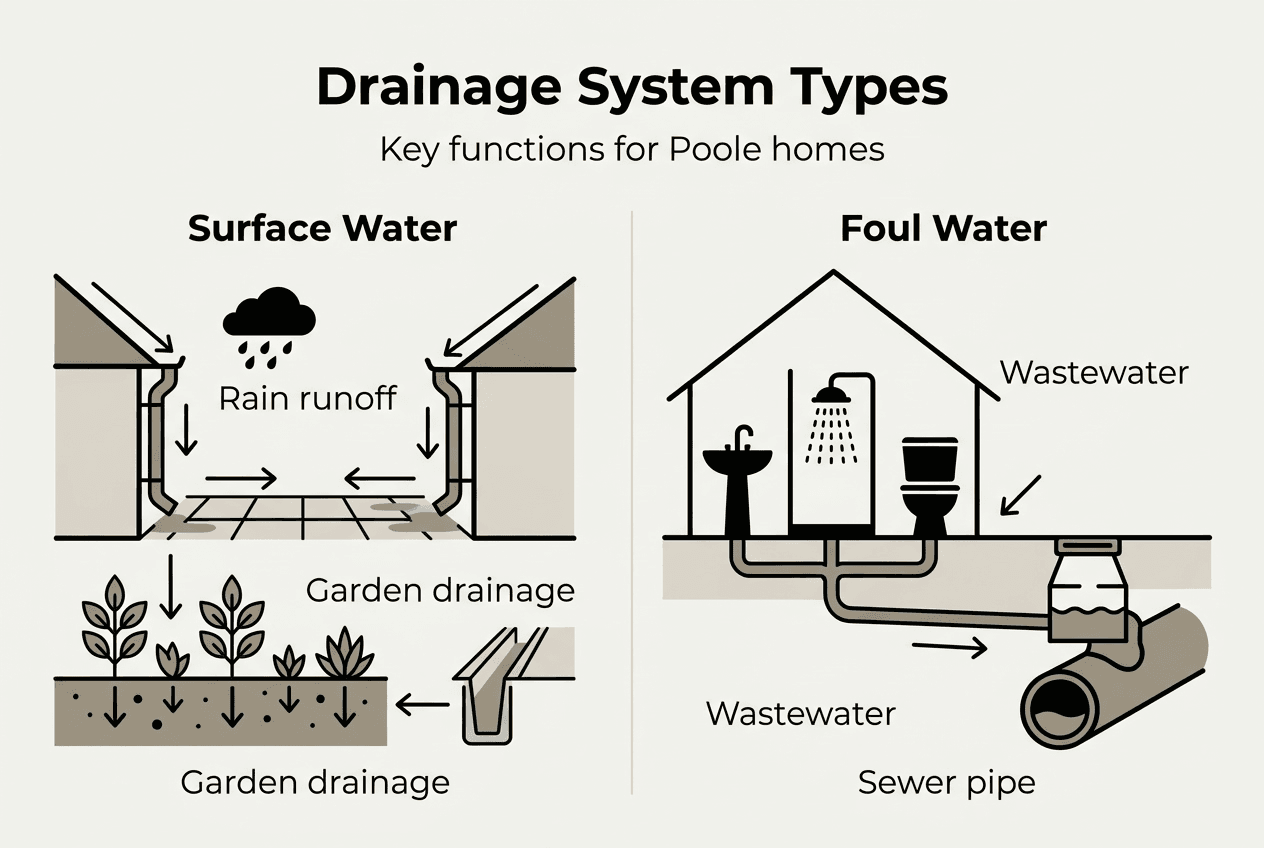
| System type | Primary function | Common problems | Key components |
|---|---|---|---|
| Surface water | Manages rainwater runoff | Blocked gullies, overwhelmed soakaways | Gutters, downpipes, gullies, soakaways |
| Foul water | Carries sewage and wastewater | Blockages from grease, roots, foreign objects | Inspection chambers, soil pipes, vent stacks |
| Combined sewer | Handles both rainwater and sewage | Capacity overload, flooding during storms | Single pipe network, overflow points |
What are sustainable drainage systems (SuDS) and stormwater management?
Climate change brings heavier rainfall to the UK, making traditional drainage approaches less effective. Sustainable Drainage Systems (SuDS) mimic natural water cycles to manage runoff locally, reducing pressure on sewers and preventing flooding.
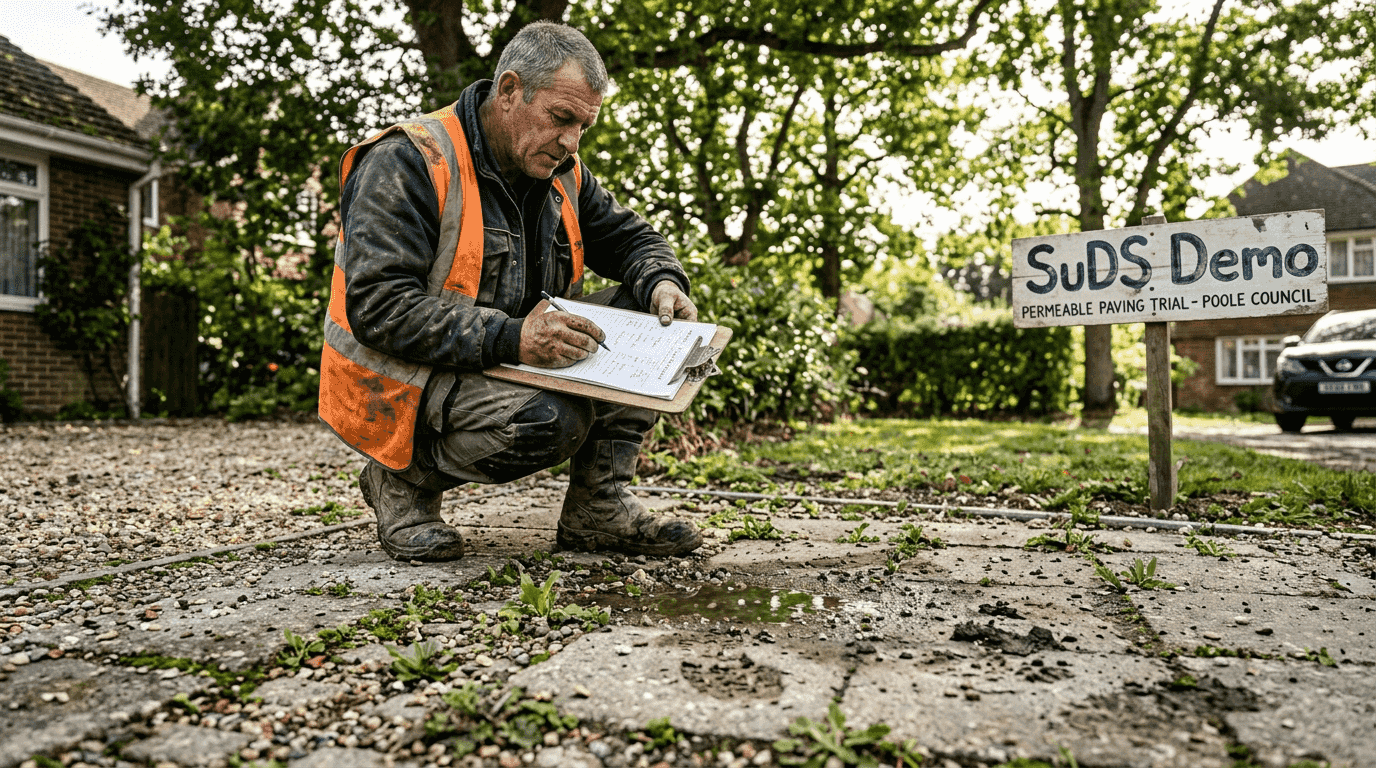
SuDS aim to mimic natural drainage processes, reducing the risk of flooding and pollution. Instead of rushing rainwater straight into drains, SuDS slow it down, filter it, and allow natural absorption. This approach protects your property whilst supporting environmental health. You’ll find SuDS features in modern developments across Poole, and retrofitting them to older properties is increasingly popular.
Common SuDS components include:
- Permeable paving allows rainwater to soak through driveways and patios rather than running off into drains
- Green roofs absorb rainfall, insulate buildings, and create wildlife habitats
- Retention ponds temporarily store stormwater, releasing it slowly to prevent downstream flooding
- Swales are shallow vegetated channels that convey and filter runoff naturally
- Rain gardens collect water from downpipes, supporting moisture-loving plants whilst reducing runoff volume
- Soakaways enable rainwater to percolate into the ground gradually
Stormwater management matters because conventional systems struggle with sudden deluges. When heavy rain overwhelms sewers, untreated water escapes through emergency overflows, polluting rivers and beaches. Properties near capacity-limited systems face flooding risks. SuDS reduce these problems by keeping rainwater out of sewers entirely. UK planning policy now encourages developers to manage runoff on-site before discharging to public systems, making SuDS knowledge essential for homeowners planning extensions or landscaping projects.
Pro Tip: When discussing drainage improvements with contractors, ask whether drainage solutions for Poole homes could incorporate SuDS features like permeable surfaces or rain gardens. These additions often qualify for reduced surface water charges from your water company.
Beyond flood prevention, SuDS offer pollution reduction and cost benefits. Vegetated features filter contaminants from runoff before they reach watercourses. Permeable surfaces reduce the need for extensive pipe networks, cutting installation costs. Properties with effective SuDS often see lower insurance premiums due to reduced flood risk. As extreme weather becomes more frequent, investing in sustainable drainage protects your home’s value and resilience.
Common drainage issues and why terminology matters for repairs
Drainage problems rarely announce themselves clearly. That slow sink, damp patch, or unpleasant smell could indicate various issues. Knowing the correct terms helps you describe symptoms accurately, ensuring contractors diagnose problems efficiently without unnecessary investigations.
Typical drainage problems include blockages from grease buildup, tree root intrusion, collapsed pipes, inadequate gradient causing slow flow, and silt accumulation in surface water systems. Each problem requires specific solutions. Understanding drainage terminology is crucial for homeowners to effectively communicate with contractors and make informed decisions. When you can distinguish between a foul water backup and surface water flooding, you help professionals target their inspection and choose appropriate equipment.
Misunderstanding terms leads to expensive mistakes. Imagine calling a contractor about a blocked drain without specifying whether it’s foul or surface water. They might arrive with jetting equipment suited for sewage pipes when your problem is actually a collapsed surface water soakaway requiring excavation. This wastes time and money. Similarly, confusing SuDS features with traditional drainage might lead you to reject beneficial sustainable options that could prevent future flooding.
To identify and describe drainage problems effectively:
- Observe where water collects or drains slowly, noting whether it’s rainwater or wastewater
- Check inspection chamber covers to see if water levels are unusually high or low
- Notice any gurgling sounds from sinks or toilets, indicating ventilation or blockage issues
- Document when problems occur, such as only during heavy rain or continuously
- Take photos of visible issues like standing water, damp patches, or overflowing gullies
- Use correct terminology when describing symptoms to contractors during initial calls
Pro Tip: Foul water pipes require a minimum gradient of 1:40 to function properly. If you’re experiencing persistent slow drainage despite clearing blockages, the pipe fall might be insufficient, requiring professional assessment and possible re-laying.
Regular inspections and maintenance prevent most drainage emergencies. Annual CCTV surveys identify developing problems like root penetration or pipe deterioration before they cause failures. Understanding what inspections reveal requires familiarity with drainage terminology. When a surveyor mentions pitch fibre pipes, offset joints, or channelling, you’ll grasp the severity and urgency of recommended repairs.
Poorly designed drainage systems can lead to flooding and structural damage, with repair costs averaging £3,000 to £8,000 for significant failures.
Knowing terminology also helps you evaluate quotes intelligently. If one contractor suggests patch lining whilst another recommends full excavation for the same problem, understanding these modern drain repair methods lets you ask informed questions about longevity, guarantees, and cost-effectiveness. You’ll recognise when a proposed solution aligns with industry best practices or when a second opinion might be wise. For guidance on recognising and addressing typical issues, explore resources on common drainage issues Poole properties face.
How to use drainage terminology to communicate effectively with professionals
Armed with drainage knowledge, you can transform conversations with contractors from confusing jargon exchanges into productive discussions that save time and money.
Key drainage terms homeowners should know before hiring professionals include:
- Inspection chamber: Access point for examining and clearing drains, previously called manholes
- Soakaway: Underground structure allowing surface water to percolate into surrounding soil
- Rodding: Manual method of clearing blockages using flexible rods
- Jetting: High-pressure water cleaning for stubborn blockages and pipe maintenance
- CCTV survey: Camera inspection revealing pipe condition, blockages, and structural problems
- Pitch fibre: Older pipe material prone to deformation and collapse
- Relining: Trenchless repair creating a new pipe inside the existing one
- Fall or gradient: Slope of pipes ensuring waste flows properly
- Vent stack: Vertical pipe allowing air into the system, preventing vacuum and enabling flow
- Gully: Ground-level drain collecting surface water from yards and driveways
Using correct terms clarifies diagnosis, costs, and treatment plans from your first conversation. When you phone a drainage company describing a blocked foul water inspection chamber with sewage backing up, they immediately understand the urgency and can dispatch appropriate equipment. Vague descriptions like “the drain’s not working” require lengthy questioning to establish basic facts.
Asking the right questions demonstrates knowledge and encourages thorough explanations. Instead of “Can you fix it?”, try “Does the CCTV survey show root intrusion or pipe collapse, and would relining address this permanently?” This prompts contractors to justify their recommendations with specific evidence. You’ll receive clearer answers about expected outcomes, guarantees, and alternative approaches.
Taking notes or photos during inspections creates valuable reference material. When a technician explains findings from a drain survey explained inspection, jot down technical terms and ask for spellings. Request copies of CCTV footage or survey reports. These records help you research solutions independently and obtain comparable quotes from multiple contractors.
Verifying that suggested solutions align with known terminology and best practices protects against unnecessary work. Homeowners knowledgeable about drainage terms are 40% more likely to choose appropriate service options and avoid unnecessary costs. If a contractor recommends excavating your entire driveway for a minor blockage when jetting might suffice, your terminology knowledge prompts questions about less invasive options. You’ll spot when proposals seem excessive or when cheaper alternatives deserve consideration.
Knowledgeable communication benefits extend beyond avoiding overcharging. Contractors appreciate clients who understand their work, often providing more detailed explanations and taking extra care. You build professional relationships based on mutual respect rather than information asymmetry. When problems arise, you can discuss solutions as an informed participant rather than accepting recommendations blindly. This collaborative approach typically yields better outcomes and fairer pricing.
How we help Poole homeowners with drainage issues
Now that you understand drainage terminology, you’re better equipped to choose the right solutions when problems arise. We specialise in helping Poole homeowners resolve drainage issues quickly and effectively.
Our expert team provides comprehensive drain unblocking and cleaning services using the latest equipment. We combine traditional rodding with high-pressure jetting to clear even stubborn blockages caused by grease, roots, or foreign objects. When you contact us describing your drainage problem using the terminology you’ve learned, we can provide accurate initial advice and arrive prepared with appropriate tools.
We use advanced CCTV surveys to diagnose drainage problems accurately, eliminating guesswork and preventing unnecessary excavation. Our camera inspections reveal the exact location and nature of issues, from root intrusion to collapsed pipes. You’ll receive clear explanations of findings using the drainage terms covered in this guide, plus video evidence supporting our recommendations. Learn more about how our CCTV drain survey Poole service provides detailed diagnostics.
For lasting repairs, we offer modern solutions including patch lining, full pipe relining, and targeted excavation when necessary. Our drain unblocking procedure follows industry best practices, ensuring problems are resolved properly the first time. We explain each repair method in straightforward language, helping you understand why we recommend specific approaches for your situation.
Pro Tip: Schedule a drainage inspection before problems become emergencies. Early detection of developing issues like root penetration or pipe deterioration costs far less to address than emergency repairs after a complete failure.
FAQ
What does foul water drainage include?
Foul water drainage carries all wastewater from your toilets, sinks, baths, showers, washing machines, and dishwashers to sewage treatment facilities or septic systems. This system handles anything contaminated with human waste, soaps, detergents, or food particles. Blockages in foul drainage create health hazards and unpleasant backups, requiring immediate professional attention to prevent sewage entering your property.
How do sustainable drainage systems (SuDS) benefit my property?
SuDS reduce surface water flooding by managing rainwater naturally on-site through features like permeable paving, rain gardens, and retention ponds. These systems filter pollutants from runoff, protecting local watercourses whilst often improving your garden’s appearance with attractive planted areas. Many water companies offer reduced surface water charges for properties with effective SuDS, and these features typically increase property values by demonstrating environmental responsibility and flood resilience.
What is the difference between surface water and combined drainage?
Surface water drainage handles only rainwater from roofs, driveways, and gardens, directing it to soakaways or watercourses separately from sewage. Combined systems carry both rainwater and sewage in a single pipe network, common in older Poole properties built before separate systems became standard. Combined drains are more prone to overwhelming during heavy storms because they must handle both water types simultaneously, increasing flood and overflow risks compared to separate systems.
Why is regular drainage maintenance important?
Regular maintenance prevents blockages from grease, roots, and debris that gradually accumulate in pipes, avoiding costly emergency repairs and property damage. Annual CCTV inspections identify developing problems like pipe deterioration, root intrusion, or gradient issues before they cause complete failures. Early intervention typically costs a fraction of emergency repairs, and maintaining clear drainage protects your property’s structural integrity by preventing water damage to foundations, walls, and landscaping.