
Buying a home in Poole is one of the biggest financial decisions you will ever make, yet most buyers spend more time choosing kitchen tiles than checking what lies beneath their feet. Drainage problems are among the most expensive issues to fix after purchase, with repair bills easily reaching thousands of pounds once you own the property. Unlike a leaky roof or cracked wall, drain defects are invisible until they cause real damage. This guide walks you through every stage of a proper drain inspection before you exchange contracts, so you can buy with confidence and avoid the kind of nasty surprises that turn dream homes into money pits.
Table of Contents
- Why drain inspections matter for homebuyers
- Tools and prep: what you need before starting
- Step-by-step: how to inspect home drains
- Common findings and what to do next
- Our view: why proactive drain checks save headaches
- Protect your investment with expert drainage help
- Frequently asked questions
Key Takeaways
| Point | Details |
|---|---|
| Early drain checks prevent surprises | Simple pre-purchase inspections can uncover issues before you buy and save thousands in repairs. |
| Easy DIY steps for buyers | Most buyers can perform essential checks themselves with the right tools and guidance. |
| Know when to call experts | Professional CCTV surveys are crucial for high-risk or unclear cases. |
| Proper prep makes inspection easier | Gathering tools, documents, and seller information streamlines the inspection process. |
Why drain inspections matter for homebuyers
Poole’s housing stock is a mix of Victorian terraces, post-war semis, and modern builds, and each era brings its own drainage headaches. Older clay pipes crack and collapse. Tree roots from mature gardens push through joints. Decades of grease, silt, and debris build up silently. By the time a blockage becomes obvious, the damage is already done.
The financial stakes are real. A simple drain unblocking can cost a few hundred pounds, but a collapsed sewer requiring excavation and relining can run to £5,000 or more. When you understand the role of drainage inspection in protecting your investment, it becomes clear why skipping this step is a gamble.
Common problems found during pre-purchase drain checks include:
- Root ingress from nearby trees forcing through pipe joints
- Cracked or collapsed pipes caused by ground movement or age
- Displaced joints where sections of pipe have shifted out of alignment
- Grease and fat build-up narrowing the internal bore of kitchen waste pipes
- Illegal connections where surface water drains into foul sewers
- Blocked inspection chambers hiding deeper structural problems
So when should you consider a specialist inspection? The honest answer is always, but especially if the property is older than 30 years, has mature trees in the garden, or shows any damp patches near ground level. A drain survey explained for homeowners covers exactly what to expect from the process.
“Drain inspections are not legally required but are strongly recommended by RICS if any drainage issues are flagged during a standard survey.”
That recommendation from RICS carries real weight. A standard Level 2 or Level 3 survey will flag visible concerns, but it will not send a camera down your drains. That requires a specialist, and the cost of booking one before purchase is a fraction of what repairs cost afterwards.
Now that you know why drain checks can make all the difference, let’s see how to get started.
Tools and prep: what you need before starting
Good preparation reduces the risk of missing critical issues during an inspection. Turning up to a viewing with no tools and no paperwork means you will only see what is visible on the surface, which is rarely where the problems hide.
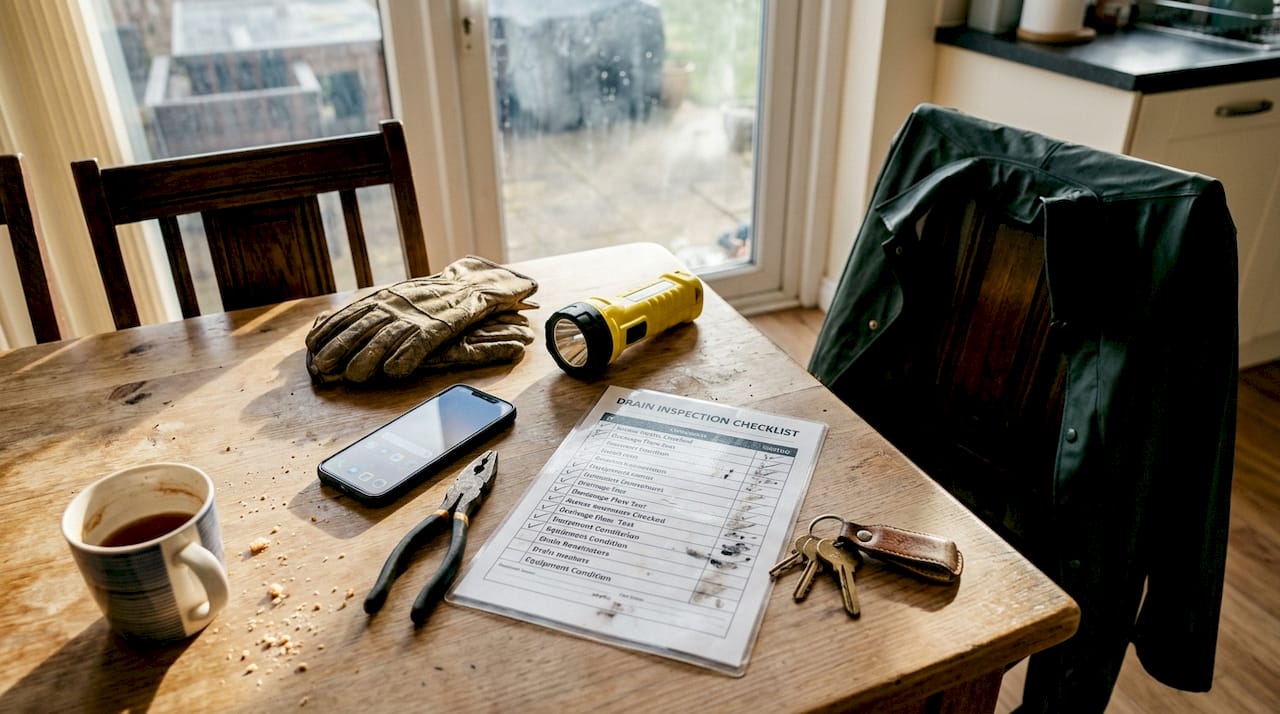
Here is an overview of what to bring and what to request:
| Item | Purpose |
|---|---|
| Torch (powerful LED) | Illuminate drain covers, chambers, and under-sink areas |
| Rubber gloves | Basic hygiene when handling covers or checking chambers |
| Smartphone with camera | Photograph findings for later review or negotiation |
| Drain rods (optional) | Test flow and probe for obstructions in accessible runs |
| Notepad or inspection app | Record findings systematically |
| Property floor plan | Cross-reference drain runs with the building layout |
| OS drainage map | Identify public sewer locations relative to the plot |
Before your visit, ask the seller or their solicitor for the following documents:
- Previous CCTV survey reports, if any exist
- Drain repair or unblocking history for the past five years
- Building regulations completion certificates for any extensions
- Drainage adoption agreements confirming which drains are privately owned
Sellers are not legally obliged to volunteer this information, but you are entitled to ask. If they cannot or will not provide it, that itself tells you something useful.
Personal safety matters too. Drain inspection chambers can contain toxic gases. Never lean into a manhole or confined space without proper training and equipment. Keep your inspection to surface-level observation unless you are qualified to go further.
Use the drainage inspection checklist designed specifically for Poole homebuyers to make sure nothing gets missed.
Pro Tip: Visit the property shortly after heavy rainfall. Water flowing through the system naturally reveals slow drainage, pooling, and overflow points that would be invisible on a dry day.
Step-by-step: how to inspect home drains
Once you’re ready and equipped, follow these inspection steps.
- Locate all external drain covers. Walk the full perimeter of the property and mark the position of every inspection chamber, gully, and drain cover on your floor plan.
- Lift accessible covers. Use a flat-head screwdriver or drain key. Look for standing water, debris, grease, or signs of surcharging (where water has overflowed the chamber walls).
- Run water from every internal outlet. Flush toilets, run taps, and operate the shower. Then go outside and watch whether water flows freely through the chambers below.
- Check for odours. A persistent sulphur or sewage smell around inspection chambers or near the property boundary suggests a blockage or broken pipe.
- Inspect under sinks and behind appliances. Look for staining, mould, or soft flooring around waste pipes, all of which suggest slow-draining or leaking connections.
- Note any visible pipe runs in the garden. Cracked clay pipes sometimes show as sunken lines in lawns or as areas of unusually lush grass fed by leaking effluent.
Safety notice: Never enter a manhole or inspection chamber. Confined spaces in drainage systems can contain hydrogen sulphide gas, which is colourless, odourless at low concentrations, and potentially fatal. Always keep your inspection above ground.
Here is a comparison of what a DIY check covers versus a professional CCTV survey:
| Check type | What it reveals | Limitations |
|---|---|---|
| DIY visual check | Surface blockages, obvious odours, flow speed | Cannot see inside pipes |
| CCTV drain survey | Cracks, root ingress, collapsed sections, displaced joints | Requires specialist equipment |
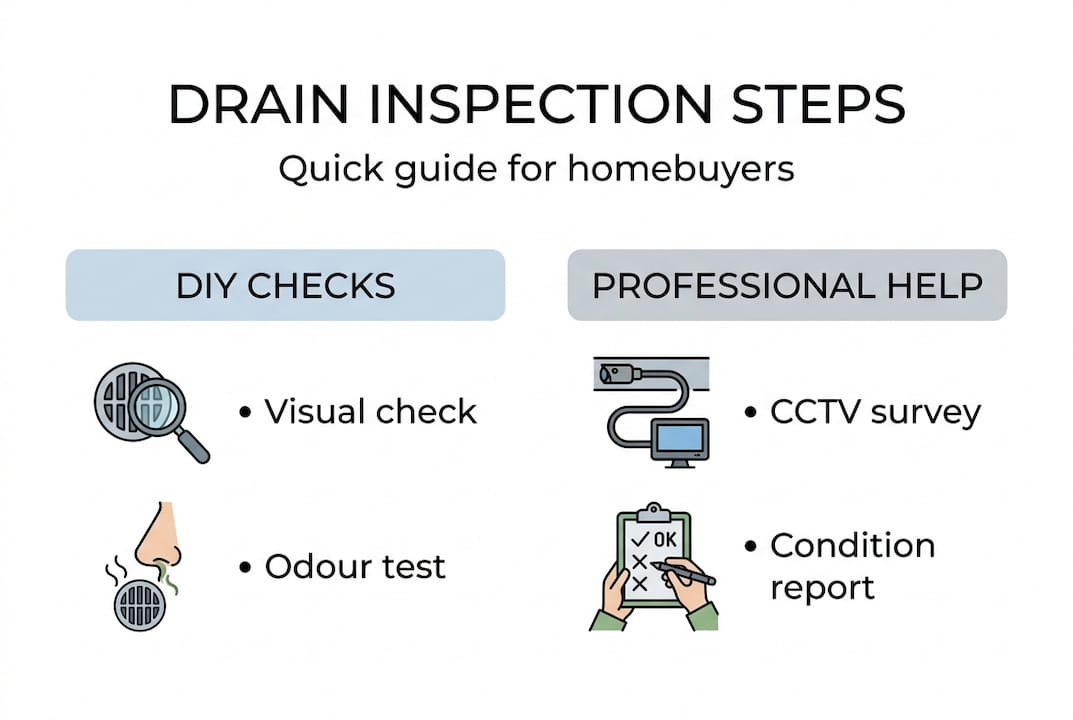
Understanding the CCTV drain survey process helps you decide when to escalate from a DIY check to a professional assessment. Detailed inspections often uncover hidden issues even if drains seem to work at first glance, which is precisely why visual checks alone are not enough for older Poole properties. You can also find a practical drain CCTV tutorial that shows what to look for on survey footage.
Pro Tip: Use your smartphone camera on a selfie stick or simply held low to photograph under-sink waste traps and tight corners. These images are invaluable if you later need to negotiate on price or request repairs before exchange.
Common findings and what to do next
Once your inspection is complete, here’s how to make sense of your findings.
The most frequent issues uncovered in Poole properties include:
- Slow-draining outlets suggesting partial blockages or undersized pipes
- Foul smells at ground level or inside the property near waste connections
- Water pooling in the garden after rain, pointing to drainage capacity problems
- Visible cracks or displaced joints in exposed pipework or inspection chambers
- Root ingress visible as fibrous material inside chambers
- Corroded or broken chamber covers which are a safety hazard and indicate neglect
How do you interpret what you find? Think in two categories. A pass means water flows freely, chambers are clean, covers are intact, and there are no odours or pooling. A needs further investigation result means any one of the above problems is present, or you simply cannot see enough to be confident.
RICS often recommends specialist follow-up if drainage flags are noted during a standard property survey. Do not ignore that recommendation. The cost of detecting drainage issues early is always lower than the cost of repairing them after you move in.
A CCTV survey gives you a recorded video of the pipe interior, a written condition report, and a clear basis for negotiation. The benefits of CCTV surveys go beyond peace of mind. Buyers have used survey reports to negotiate thousands of pounds off asking prices or to require sellers to fund repairs before completion.
Pro Tip: Keep every photograph and note from your inspection in a single folder. If you proceed with the purchase, this record becomes useful for future maintenance. If you negotiate a price reduction, it becomes evidence.
Our view: why proactive drain checks save headaches
After years of working with Poole homebuyers, we have noticed a consistent pattern. Buyers who skip drain checks rarely do so because they think it is unimportant. They do it because they assume someone else has already checked, whether the surveyor, the solicitor, or the seller. That assumption is almost always wrong.
A standard RICS survey is not a drain survey. It is a visual inspection of accessible parts of the property, and drains are largely inaccessible. The surveyor will note visible concerns but will not camera the system.
The buyers who regret skipping checks are not naive. They are often experienced, organised people who simply did not know where the gap in the process was. The uncomfortable truth is that the property transaction system in England does not require anyone to fully inspect the drainage before sale.
Our view is that a DIY check and a professional CCTV survey are not alternatives. They are two stages of the same process. Do your own checks first to identify obvious concerns, then bring in a specialist to confirm or rule out what you cannot see. Understanding the role of drain surveys in property management makes it clear this is not an optional extra. It is standard due diligence.
Protect your investment with expert drainage help
You have done the research, walked the property, and noted your findings. Now is the time to get professional eyes on the system before you commit.

At Blocked Drains Poole, we carry out thorough Poole drainage inspections for homebuyers across Dorset, using CCTV camera technology to produce clear, documented reports you can use in negotiations or hand to your solicitor. We offer transparent, upfront pricing with no call-out fees, and our team understands the specific challenges of Poole’s older housing stock. Whether you need a pre-purchase survey or want to understand an existing unblocking procedure, the blocked drains experts at Blocked Drains Poole are ready to help you buy with confidence.
Frequently asked questions
Are drain inspections mandatory when buying a home in Poole?
No, they are not legally required, but RICS strongly recommends them to avoid hidden costs that only emerge after purchase.
What signs suggest a property needs a specialist drain survey?
Persistent slow drainage, foul odours near inspection chambers, or evidence of previous repairs all indicate that a CCTV drain survey is the sensible next step.
Can I inspect drains myself or do I need a professional?
Basic visual checks are well within any buyer’s ability, but hidden structural defects inside pipes require a qualified specialist with camera equipment to identify reliably.
What documents should sellers provide about drainage?
Ask for recent inspection reports, any CCTV survey footage, a record of repairs or unblocking work, and drainage adoption paperwork confirming which runs are privately maintained.
How long does a homebuyer drain inspection usually take?
A thorough DIY visual check takes around 30 to 60 minutes, while a full professional CCTV survey of a standard residential property typically takes up to two hours.