
Most property managers assume the biggest risks are visible: cracked walls, leaking taps, or peeling paint. Yet hidden drainage problems cause up to 90% of unexpected maintenance expenses. Underground pipes deteriorate silently, triggering subsidence, damp, and emergency repairs that devastate budgets. For Poole landlords and property professionals, drain surveys transform invisible threats into manageable data, protecting capital value and tenant satisfaction. Understanding how these inspections work and when to deploy them is no longer optional for effective property stewardship.
Table of Contents
- What is a drain survey and why does it matter?
- How does a CCTV drain survey work?
- Why regular drain surveys are essential for property management
- Comparing survey types and selecting the right provider
- Drain survey insights for long-term property value
- How to take charge of your property with expert drain surveys
- Frequently asked questions
Key Takeaways
| Point | Details |
|---|---|
| Proactive risk control | Regular drain surveys help prevent costly emergencies and asset loss by revealing hidden issues early. |
| Technology-driven insights | Modern CCTV and AI-assisted surveys deliver accurate, efficient reporting for confident property management. |
| Legal and insurance compliance | Certified survey reports satisfy insurers, lenders, and regulatory bodies for property alterations or disputes. |
| Better provider selection | Comparing survey types and providers ensures you receive the most effective, relevant service for your property. |
What is a drain survey and why does it matter?
A drain survey uses CCTV technology to inspect underground pipes without excavation. Waterproof cameras mounted on flexible rods travel through drainage systems, capturing high-resolution footage of pipe interiors. LED lighting illuminates cracks, blockages, root ingress, and structural defects invisible from the surface. Telemetry measures precise distances, whilst software codes defects according to industry standards.
Modern property management demands visibility of hidden assets. Drainage infrastructure represents a significant capital investment, yet most managers only inspect it after catastrophic failure. This reactive approach multiplies costs and disrupts tenants. Proactive surveys shift the paradigm, revealing minor issues before they escalate into emergencies.
Common triggers for commissioning a survey include:
- Pre-purchase property assessments
- Recurring blockages or slow drainage
- Unexplained damp or subsidence
- Planning applications for extensions or build-overs
- Routine maintenance schedules for commercial portfolios
Pro tip: Schedule surveys during dry weather when possible. Heavy rain can obscure camera visibility and mask intermittent defects that only appear under normal flow conditions.
The shift from reactive to preventative drainage management reflects broader industry trends. Insurance providers increasingly require documented maintenance histories, whilst tenants expect landlords to demonstrate due diligence. Detecting drain issues early protects both legal compliance and property reputation.
How does a CCTV drain survey work?
Understanding the technical process demystifies what property managers receive for their investment. The survey follows five distinct stages, each designed to maximise diagnostic accuracy whilst minimising property disruption.
-
Preparation: Engineers locate access points such as manholes, inspection chambers, or rodding eyes. They review site plans and discuss specific concerns with the property manager.
-
Camera insertion: A waterproof camera head, typically 40-100mm diameter, enters the drainage system via the chosen access point. Flexible push rods allow navigation through bends and junctions.
-
Real-time inspection: Engineers monitor live footage on portable screens, adjusting camera angle and lighting to examine pipe walls, joints, and connections. Distance counters track precise locations.
-
Video and photo capture: High-resolution recordings document the entire inspection. Engineers pause to photograph specific defects, creating a permanent visual record.
-
Defect coding: Observations are classified using standardised systems like MSCC5 or WRc, ensuring consistent interpretation across the industry.
The process is entirely non-destructive. No digging, no structural alteration, and minimal disruption to occupants. A typical residential survey completes within two hours, whilst larger commercial systems may require a full day.
| Report element | Purpose | Value for property files |
|---|---|---|
| Video footage | Complete visual record | Evidence for insurance claims |
| Annotated drawings | Defect locations mapped | Planning for remedial works |
| Defect codes | Standardised severity ratings | Prioritising maintenance budgets |
| Written summary | Executive overview | Board reporting and compliance |
| Recommendations | Repair options and costs | Procurement planning |
RIBA and NADC guidance confirms that pre and post-conditional surveys are essential for extensions or build-overs, protecting both property managers and contractors from liability disputes. This documentation proves invaluable when disagreements arise about pre-existing conditions versus construction damage.
Emerging technology enhances efficiency. AI-assisted defect recognition software, increasingly common in 2026, analyses footage automatically, flagging potential issues for human verification. This reduces inspection time and improves consistency, particularly valuable for portfolio managers overseeing multiple properties.
“The transition from manual defect coding to AI-assisted analysis has halved our reporting turnaround whilst improving accuracy. Property managers receive actionable intelligence faster than ever.” — Senior drainage engineer, Dorset
For those new to drain survey processes, requesting a sample report before commissioning work clarifies exactly what you’ll receive. Quality providers willingly share anonymised examples, demonstrating their reporting standards and technical capability.
Why regular drain surveys are essential for property management
The financial case for routine surveys is compelling. Research indicates that up to 90% of unexpected repair costs stem from undetected drainage issues. A £300 survey can prevent a £15,000 emergency excavation, delivering a 50:1 return on investment.
Beyond cost avoidance, regular surveys deliver strategic advantages:
- Early detection: Identifying hairline cracks before they become collapses
- Legal compliance: Demonstrating duty of care for tenant safety
- Insurance validity: Maintaining coverage by proving proactive maintenance
- Process documentation: Creating audit trails for regulatory inspections
- Capital protection: Preserving property values through preventative care
Landlords face particular pressure. Letting agents increasingly require drainage certificates before listing properties, whilst tenants armed with smartphones can quickly escalate maintenance complaints to social media or legal action. A documented survey history demonstrates professional management, protecting reputation and reducing litigation risk.
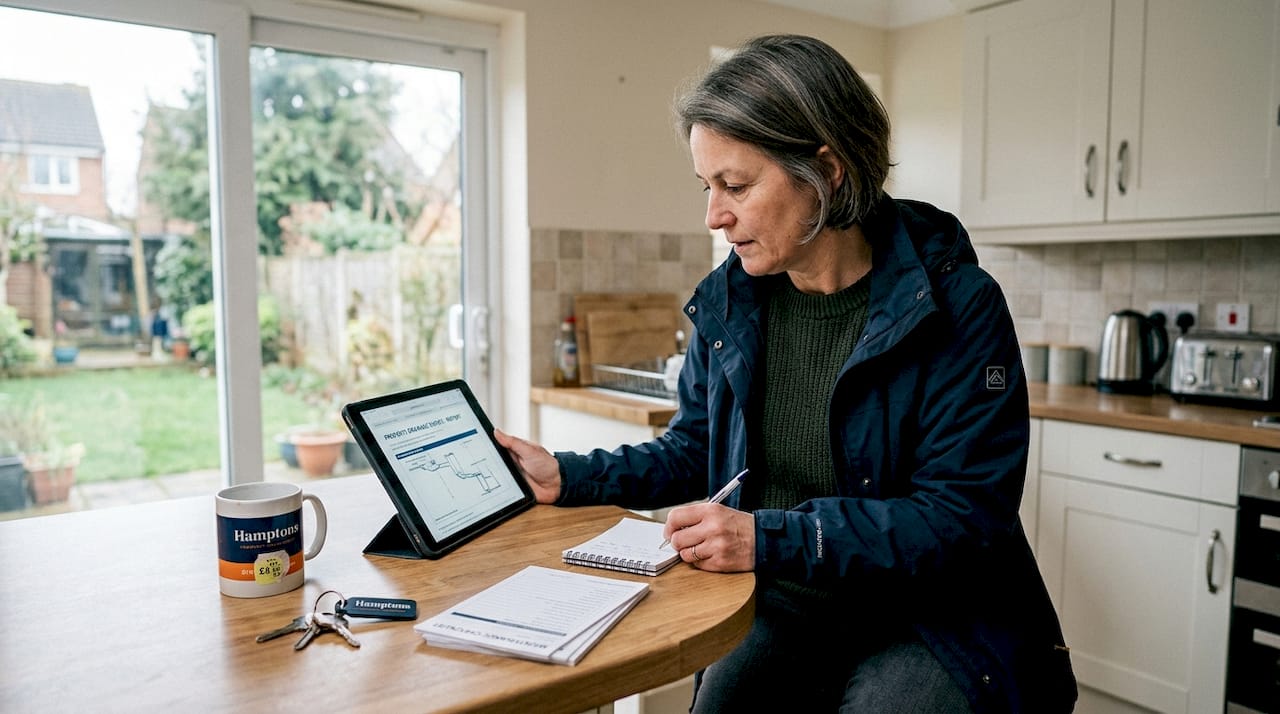
The importance of regular inspections extends beyond individual properties. Portfolio managers use survey data to identify systemic issues across multiple sites, optimising maintenance contracts and negotiating better rates with contractors. Patterns emerge: certain property ages or locations consistently show specific defect types, allowing predictive maintenance scheduling.
Second opinions matter. If a contractor recommends expensive repairs, an independent survey provides objective verification. This prevents unnecessary work and ensures quoted prices reflect actual requirements. Savvy property managers treat surveys as insurance against both hidden defects and contractor overcharging.
Tenant satisfaction improves measurably when drainage issues are addressed proactively. Recurring blockages frustrate occupants and trigger complaints. A survey identifying root ingress or pipe misalignment allows permanent fixes rather than repeated temporary clearances, reducing call-outs and improving retention rates.
Comparing survey types and selecting the right provider
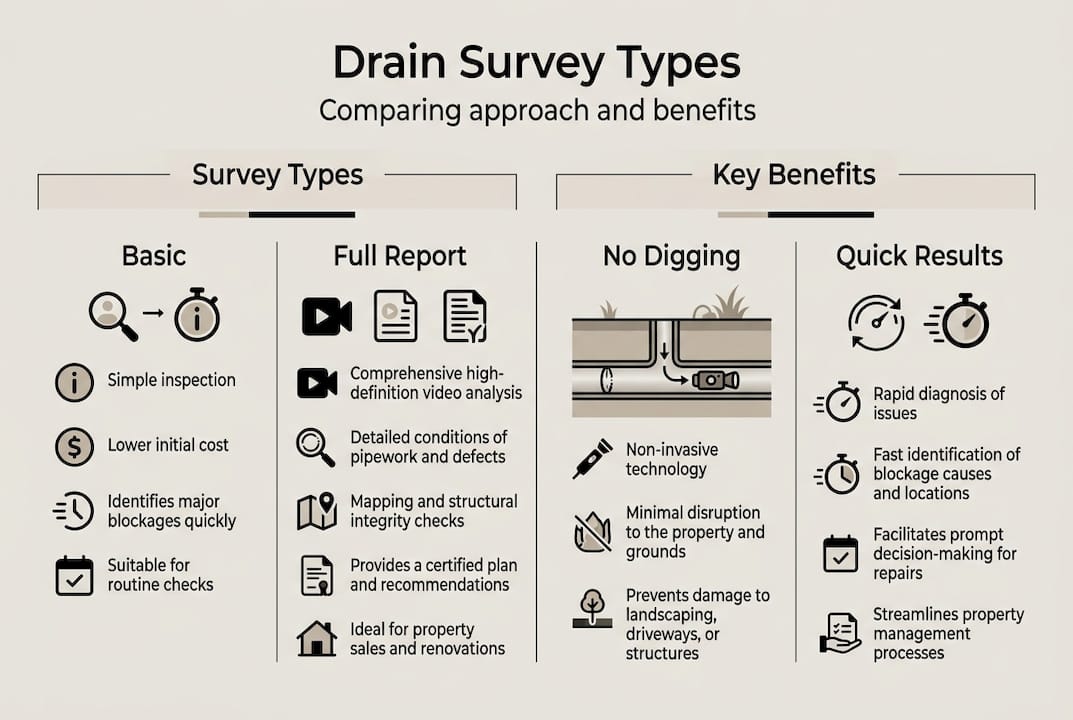
Not all drain surveys serve identical purposes. Understanding the distinctions helps property managers commission appropriate investigations without overpaying for unnecessary detail.
| Survey type | Typical cost | Output detail | Ideal use case |
|---|---|---|---|
| Basic CCTV | £150-300 | Video only, verbal summary | Investigating specific blockage |
| Homebuyer | £250-450 | Video, photos, written report | Pre-purchase due diligence |
| Build-over/extension | £400-700 | Full mapping, defect coding, compliance certificate | Planning applications |
| Emergency diagnostic | £200-350 | Rapid video, immediate verbal findings | Urgent failure investigation |
Provider credentials separate professional services from amateur operations. Verify that surveyors hold current certifications in MSCC5 or WRc defect coding standards. These frameworks ensure consistent, industry-recognised reporting that insurers and solicitors accept without question.
Insurance coverage protects property managers from liability. Reputable providers carry public liability insurance covering accidental damage during surveys. Request proof before granting site access, particularly for heritage or high-value properties where even minor mishaps could prove costly.
Local reputation matters more than national brand recognition. Poole’s unique drainage infrastructure, with Victorian-era pipes alongside modern developments, requires specific regional knowledge. Comparing providers reveals that local specialists often deliver faster response times and better understand area-specific challenges like coastal soil conditions or historic pipe materials.
Pro tip: Always request a sample report and video before booking. Quality varies dramatically between providers. A comprehensive report should include annotated drawings, defect severity ratings, and costed repair recommendations, not just raw footage with minimal commentary.
Response time for urgent surveys separates excellent providers from adequate ones. When subsidence threatens structural integrity or sewage backs up into occupied spaces, waiting three days for an appointment is unacceptable. Establish relationships with providers offering genuine 24/7 emergency response before crises occur.
Follow-up capability influences provider selection. Some survey specialists only diagnose, requiring separate contractors for repairs. Others offer integrated services, streamlining the process from investigation through remediation. For portfolio managers, single-source accountability simplifies project management and reduces coordination overhead.
Drain survey insights for long-term property value
Strategic survey deployment transforms reactive property management into proactive asset stewardship. Consider a Poole portfolio manager who commissioned pre-sale surveys on three rental properties. One revealed significant pipe displacement beneath a patio, invisible from the surface. Repairing the defect before listing cost £2,800 but prevented a £12,000 price reduction during negotiations. The survey paid for itself four times over whilst protecting the manager’s professional reputation.
Digital survey records build defensible maintenance histories. When disputes arise about pre-existing conditions versus tenant damage, timestamped video evidence settles arguments definitively. This documentation proves particularly valuable for Houses in Multiple Occupation, where turnover rates increase the likelihood of conflicting damage claims.
AI-assisted coding emerging in 2026 accelerates analysis without sacrificing accuracy. Machine learning algorithms trained on thousands of surveys identify common defects instantly, flagging unusual conditions for human expert review. This technology reduces reporting turnaround from days to hours, enabling faster decision-making for time-sensitive transactions.
Actionable maintenance patterns emerge from systematic survey programmes. Property managers who schedule biennial inspections across portfolios discover that certain building types consistently develop specific issues at predictable intervals. Victorian terraces show root ingress around year 15, whilst 1970s developments experience joint failures at 25 years. This intelligence allows budgeting for repairs before emergencies occur, smoothing cash flow and preventing crisis spending.
“Integrating drain surveys into our planned maintenance cycle reduced emergency call-outs by 60% over three years. The cost savings funded additional preventative work, creating a virtuous cycle of improving asset quality.” — Commercial property manager, Poole
Capital value protection justifies survey costs even when no immediate issues appear. Buyers increasingly request drainage certificates during due diligence. Properties with recent clean surveys command premium prices and sell faster than comparable listings without documentation. The £400 survey investment can add £5,000 to sale proceeds by eliminating buyer uncertainty.
For property managers overseeing mixed portfolios, survey data informs strategic decisions about retention versus disposal. A building requiring £20,000 in drainage repairs may warrant selling rather than investing, particularly if other deferred maintenance compounds the financial burden. Conversely, properties with excellent drainage infrastructure justify higher retention priority and renovation investment.
How to take charge of your property with expert drain surveys
Armed with understanding of survey types, processes, and strategic value, Poole property managers can confidently integrate drainage inspections into professional practice. Modern providers combine technical expertise with customer service, making the process straightforward even for those new to drainage management.
Qualified local specialists offer comprehensive services beyond basic surveys. CCTV drain surveys in Poole include detailed reporting, repair recommendations, and follow-up support to ensure issues are resolved permanently. Transparent pricing eliminates surprise costs, whilst 24/7 emergency availability provides peace of mind when urgent situations arise.
Whether you’re investigating a specific problem, conducting pre-purchase due diligence, or implementing preventative maintenance schedules, expert guidance ensures appropriate survey scope and cost-effective solutions. Reliable providers explain findings in plain language, translating technical defect codes into actionable management decisions. For those managing multiple properties, establishing ongoing relationships with trusted specialists streamlines procurement and ensures consistent service quality.
Explore comprehensive resources on drain unblocking procedures and identifying blockages through surveys to deepen your drainage knowledge. Understanding the full spectrum of available services empowers informed decisions that protect property values whilst optimising maintenance budgets.
Frequently asked questions
How often should I commission a drain survey for my rental property?
Most experts suggest a drain survey every three to five years, or before major works, for proactive risk management. Pre and post-conditional surveys are essential for extensions or build-overs, protecting both property managers and contractors from liability disputes.
What’s included in a typical CCTV drain survey report?
You’ll receive video footage, annotated site drawings, defect codes following standards like MSCC5 or WRc, and a written summary. Quality reports also include photographs of specific defects and costed repair recommendations for budgeting purposes.
Can a drain survey identify the cause of recurring damp or subsidence?
Yes, drain surveys pinpoint leaks or breaks that may lead to damp or foundation problems. CCTV inspections detect hidden defects in underground pipes, revealing issues invisible from the surface that compromise structural integrity over time.
Do I need a professional survey, or can I use DIY tools?
Professional surveys provide certified reports required for insurance, legal matters, or major works. Standardised defect coding and professional-grade cameras deliver accuracy that DIY tools cannot match, whilst documentation holds legal weight that amateur footage lacks.
What should I look for when comparing drain survey providers?
Verify MSCC5 or WRc certification, public liability insurance, and local reputation. Request sample reports to assess output quality, confirm 24/7 emergency availability, and clarify whether the provider offers integrated repair services or diagnosis only.
Recommended
- Role of Drainage Inspection – Safeguarding Dorset Homes
- Why Drain Inspections Prevent 90% of Costly Repairs in Poole
- Drainage inspection checklist for Poole homeowners 2026
- Drain Survey Explained – Protecting Your Poole Home
- Gebäudeservice: Was Immobilienverwalter wissen müssen
- Filtraciones de Agua en Edificios: Métodos de Detección