
Blocked drains disrupt daily life and threaten property integrity. Understanding the specific type of blockage you’re facing transforms a frustrating guessing game into a targeted solution. Different blockages demand different approaches, and misidentifying the culprit wastes time and money whilst potentially worsening the problem. This guide walks you through recognising blockage types common in Poole homes, matching them to effective clearing methods, and knowing when professional intervention becomes essential for protecting your drainage system.
Table of Contents
- Key takeaways
- How to identify drainage blockage types: criteria for diagnosis
- The top types of drain blockages affecting Poole homes
- Comparing methods: how blockage type affects drain clearing solutions
- When to fix yourself and when to call a professional for blockages
- Trusted drain blockage solutions for Poole homeowners
- Frequently asked questions
Key Takeaways
| Point | Details |
|---|---|
| Blockage varieties | Different blockages require different clearing methods and misidentification wastes time and money. |
| Common culprits | Hair and soap in bathrooms, grease in kitchens, and tree roots invading external drains are frequent causes. |
| Early identification | Recognising symptoms early reduces damage and costly repairs. |
| Professional intervention | Professional inspection and cleaning offer reliable solutions when DIY fixes fail. |
How to identify drainage blockage types: criteria for diagnosis
Recognising what’s blocking your drains starts with careful observation. Slow drainage signals a partial obstruction, whilst complete standstill indicates total blockage. Gurgling sounds suggest air trapped behind the blockage, and foul odours point to organic material decomposition. The location matters tremendously: bathroom drains typically suffer hair and soap buildup, kitchen sinks battle grease deposits, and external drains face sediment and root problems.
Environmental context provides crucial diagnostic clues. Properties with mature trees nearby frequently experience root intrusion into drainage pipes, whilst older Poole homes with cast iron systems face corrosion and sediment accumulation. Understanding blockage type starts with observing drainage symptoms and considering common causes in local homes. Multiple affected drains suggest main line issues rather than isolated fixture problems.
Simple tests narrow possibilities before calling specialists. Fill your sink and release the water whilst watching drainage speed. Check whether other fixtures back up simultaneously. Inspect visible drain openings for debris. These observations help professionals diagnose quickly and homeowners attempt appropriate DIY fixes safely.
Pro tip: Keep a drainage diary noting slow spots, recurring blockages, and seasonal patterns. This history helps specialists diagnose underlying issues rather than just treating symptoms, potentially saving hundreds in repeated callouts.
Key diagnostic indicators include:
- Drainage speed variations across different fixtures pinpoint blockage location
- Odour characteristics reveal organic versus inorganic obstructions
- Seasonal patterns suggest environmental causes like autumn leaf accumulation or spring root growth
- Response to initial clearing attempts indicates blockage severity and composition
The top types of drain blockages affecting Poole homes
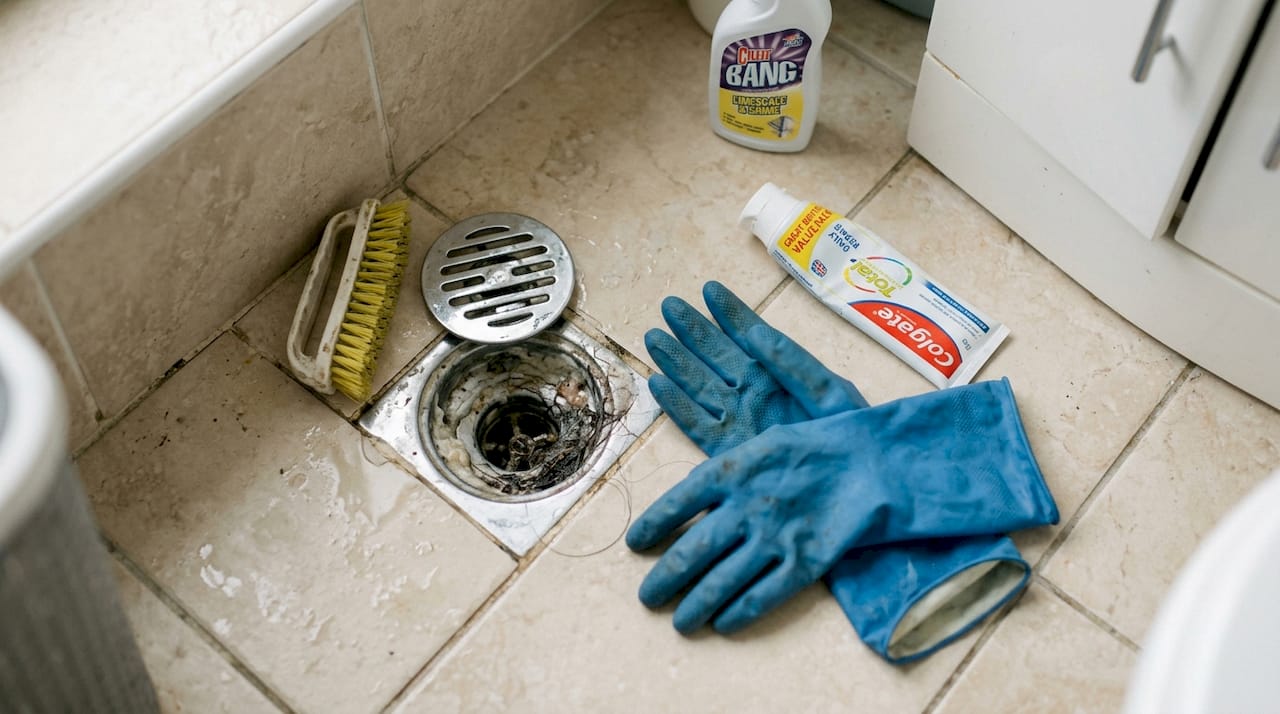
Hair and soap scum create the most common bathroom blockages. Hair binds with soap residue, forming dense mats that trap other debris. These accumulations build gradually, starting as minor slowdowns before causing complete stoppages. Shower and bath drains suffer most, though bathroom sink pop-up assemblies also collect significant hair.
Grease and fat deposits plague kitchen drainage systems. Liquid fats solidify as they cool in pipes, coating interior walls and narrowing flow paths. Over time, these layers trap food particles and other waste, creating stubborn blockages that resist simple plunging. The problem worsens in older properties with narrower pipework and properties disposing of significant cooking oils.
Tree root intrusion represents the most destructive blockage type. Roots seek moisture and nutrients, infiltrating pipes through tiny cracks or joints. Once inside, they expand dramatically, crushing pipes and creating complete obstructions. Willow, poplar, and oak trees prove particularly aggressive, with roots travelling considerable distances to reach drainage systems.
Foreign objects cause sudden, complete blockages. Sanitary products, wet wipes marketed as flushable, cotton buds, and children’s toys commonly obstruct toilets and main drains. Unlike organic blockages that degrade slowly, these items remain intact indefinitely, requiring physical removal. Common blockages include hair and grease clogs, tree root invasions, foreign objects, and sediment buildup.
Sediment and soil accumulation affects external drainage particularly. Poole’s clay-rich soil enters systems through damaged pipes, broken gullies, or poor sealing. This material settles in low points and pipe bellies, gradually reducing capacity. Combined with organic debris like leaves and moss, sediment creates persistent blockages requiring regular maintenance.
Common blockage characteristics:
- Hair clogs develop slowly over months, typically affecting bathroom drains exclusively
- Grease blockages emit distinctive rancid odours and often affect kitchen waste pipes first
- Root intrusions cause recurring blockages despite clearing attempts and may affect multiple properties on shared lines
- Foreign objects create sudden, complete stoppages with no warning signs
- Sediment issues worsen after heavy rainfall and affect ground-level or below-ground drainage primarily
Comparing methods: how blockage type affects drain clearing solutions
Manual clearing suits accessible blockages near drain openings. Hair clogs respond well to drain snakes or retrieval tools, whilst visible foreign objects often come out with careful extraction. This approach works brilliantly for surface-level bathroom and sink blockages but proves useless for deeper main line issues. The method costs nothing beyond basic tools and carries minimal pipe damage risk when done carefully.
Grease blockages demand different tactics entirely. Hot water flushes provide temporary relief but rarely solve established problems. Enzyme-based treatments break down organic fats over time, offering eco-friendly solutions for moderate buildup. Severe grease blockages need professional high-pressure water jetting to scour pipe interiors thoroughly. Chemical drain cleaners seem tempting but damage older pipes and prove ineffective against solid grease deposits.
Tree root clearance always requires professional intervention. Mechanical cutters mounted on flexible cables slice through roots, whilst high-pressure jetting removes debris and smaller infiltrations. Different blockages call for tailored clearing methods, from manual removal to high-pressure water jetting or chemical treatments. However, cutting roots provides only temporary relief without pipe repair or relining to prevent re-entry. Root intrusion indicates structural damage requiring CCTV inspection to assess repair needs.
Sediment removal depends on accumulation severity. Light buildup responds to regular jetting maintenance, flushing material through the system. Heavy sediment requires specialist equipment and may indicate broader drainage design problems needing correction. Properties with recurring sediment issues benefit from installing sediment traps or improving surface water management.
Pro tip: Match your clearing method to blockage composition, not just symptoms. Using chemical cleaners on root blockages wastes money and damages pipes, whilst attempting mechanical clearing on grease simply compacts the problem deeper into your system.
| Blockage type | Best clearing method | DIY suitable | Professional equipment needed | Prevention strategy |
|---|---|---|---|---|
| Hair and soap | Manual removal, drain snake | Yes, for accessible clogs | Rarely | Drain guards, regular cleaning |
| Grease deposits | Enzyme treatment, hot water jetting | Partial, for minor buildup | High-pressure jetter for severe cases | Proper fat disposal, regular maintenance |
| Tree roots | Mechanical cutting, pipe relining | Never | Always, cutting equipment and CCTV | Root barriers, pipe inspection |
| Foreign objects | Physical extraction | Sometimes, if visible | Depends on depth and object | Mindful disposal, toilet education |
| Sediment buildup | Water jetting, system flushing | No | Professional jetting equipment | Gully maintenance, surface water control |
When to fix yourself and when to call a professional for blockages
Small, accessible blockages suit DIY approaches when you can see the problem and access it easily. Hair clogs near drain openings, visible soap buildup, and minor slow drainage respond to basic tools and techniques. If plunging or a drain snake clears the issue completely within minutes, you’ve likely handled it appropriately. Success means full drainage restoration with no recurring symptoms.
Persistent blockages signal deeper problems beyond homeowner capability. If drainage remains slow after clearing attempts, the obstruction lies further down the system or involves multiple contributing factors. Recurring blockages in the same location indicate underlying structural issues rather than simple debris accumulation. Foul odours persisting after clearing suggest organic material trapped where you cannot reach it.
Multiple affected drains always warrant professional assessment. When toilets, sinks, and showers back up simultaneously, the blockage affects your main drain line. These situations risk sewage backup into your property and require specialist equipment to locate and clear safely. Attempting DIY fixes on main line blockages often worsens the problem by pushing debris deeper.
Tree root invasions always require specialist equipment and repair to ensure safety and effectiveness. Roots damage pipes structurally, meaning clearance alone provides temporary relief. Professional CCTV inspection reveals damage extent, whilst relining or replacement prevents recurrence. Ignoring root problems leads to collapsed pipes and emergency repairs costing thousands.
Chemical drain cleaners pose significant risks for certain blockage types. These products generate heat that can crack older pipes, prove ineffective against solid obstructions, and create hazardous conditions when mixed with other chemicals. Professional methods achieve better results without risking your drainage infrastructure or personal safety.
Situations demanding professional help:
- Blockages affecting multiple fixtures simultaneously indicate main line problems
- Sewage backing up into your property creates health hazards requiring immediate specialist response
- Visible pipe damage, cracks, or leaks accompanying drainage issues need structural assessment
- Recurring blockages despite repeated clearing attempts signal underlying system problems
- Outdoor drain blockages involving inspection chambers or main sewers exceed homeowner access and capability
Trusted drain blockage solutions for Poole homeowners
When blockages exceed DIY capability or threaten your property’s drainage infrastructure, professional intervention protects your investment whilst restoring function quickly. Specialist diagnosis identifies not just the immediate blockage but underlying causes, preventing costly recurrence. Modern drain unblocking procedures combine CCTV inspection with targeted clearing techniques, ensuring complete resolution rather than temporary fixes.

Comprehensive drain cleaning workflows address both symptoms and causes, from high-pressure jetting to remove stubborn deposits through to structural repairs preventing future issues. Regular drainage inspections for Poole homes catch developing problems before they escalate into emergencies, saving thousands in reactive repairs. Professional services offer transparent pricing, rapid response, and the specialist equipment needed for Poole’s unique drainage challenges, from historic pipework to root-prone clay soils.
Frequently asked questions
What causes drain blockages in Poole homes?
Blockages commonly stem from hair and soap accumulation in bathrooms, grease deposits in kitchen drains, tree root intrusion through pipe joints, foreign objects flushed inappropriately, and sediment buildup in external drainage. Poole’s mature tree coverage and clay-rich soil create particular vulnerability to root invasion and sediment problems. Older properties with cast iron or clay pipes face additional risks from corrosion and joint deterioration. Understanding common causes of blocked drains helps homeowners implement targeted prevention strategies.
How can I prevent drain blockages in my home?
Regular cleaning removes accumulating debris before it forms solid blockages. Install drain guards in showers and sinks to catch hair and food particles. Never pour cooking fats or oils down drains, disposing of them in bins instead. Flush drains weekly with hot water to prevent grease solidification. Schedule annual professional inspections to identify developing issues early. Educate household members about appropriate toilet disposal, avoiding wet wipes and sanitary products in drainage systems. These simple habits dramatically reduce blockage frequency and severity, protecting your system long-term.
When should I call a professional for drain blockage?
Seek professional help when blockages persist after DIY attempts, cause foul odours throughout your property, or affect multiple drains simultaneously. Sewage backup, visible pipe damage, or water pooling around external drains require immediate specialist response. Tree root intrusion and damaged pipes always need expert assessment and repair, as temporary clearing without structural fixes leads to rapid recurrence. If you’re unsure about blockage severity or appropriate clearing methods, calling a drain specialist prevents accidental damage from inappropriate DIY attempts whilst ensuring complete resolution.
Can some blockages damage my drainage system?
Tree root blockages cause severe structural damage, crushing pipes and creating entry points for further infiltration. Untreated root problems lead to collapsed drains requiring expensive excavation and replacement. Sediment accumulation increases pressure on pipe joints, accelerating deterioration and creating leak points. Even seemingly minor blockages cause problems when left unaddressed: standing water corrodes pipes, whilst pressure buildup from obstructions stresses joints and seals. Understanding examples of drain blockages and their potential impacts helps homeowners prioritise timely intervention, preventing minor issues from escalating into major structural failures.