
Blocked drains in commercial buildings can disrupt daily operations, especially when the cause is unclear and problems spread across multiple fixtures. For property managers in Poole, understanding what leads to persistent drainage issues is crucial for quick, effective action. With research showing that 83.1% of blockages result from user actions like flushing wet wipes or pouring fats down sinks, a clear assessment of your drains helps you decide whether you need a simple fix or urgent professional support.
Table of Contents
- Step 1: Assess The Drain Blockage And Identify Causes
- Step 2: Prepare The Area And Gather Essential Equipment
- Step 3: Apply Manual Or Mechanical Clearing Methods
- Step 4: Flush And Rinse The Drain Thoroughly
- Step 5: Check Drain Flow And Inspect For Recurring Issues
Quick Summary
| Key Point | Explanation |
|---|---|
| 1. Identify the Blockage Cause | Determine if the blockage is localised or systemic to specify what kind of intervention is needed. |
| 2. Prepare the Work Area | Ensure staff safety by restricting access and gathering essential tools before starting drain work. |
| 3. Use Appropriate Clearing Techniques | Apply plunging or mechanical methods effectively, avoiding excessive force to prevent damage to older pipes. |
| 4. Flush Thoroughly After Clearing | Rinse the drain adequately to confirm complete blockage removal and prevent future issues with lingering debris. |
| 5. Monitor for Recurring Problems | Regularly check connected fixtures after clearing to catch potential issues before they escalate into major blockages. |
Step 1: Assess the Drain Blockage and Identify Causes
Before you can fix a drainage problem, you need to understand what’s actually happening beneath your building. Identifying the cause of your commercial drain blockage determines whether you need a quick plunging fix or professional structural repairs. Let’s work through this systematically.
Start by observing where the water backs up. Does it occur in just one fixture like a sink or toilet, or are multiple drains affected across your property? A single fixture blockage usually points to a localised problem within that drain line, whilst water backing up throughout your building suggests the issue sits further down in your main drainage system. This distinction matters because it tells you how urgent the situation is and what kind of specialist you might need.
Next, consider what materials enter your drains regularly. Research shows that inappropriate flushing habits cause the majority of blockages, with 83.1% of blocked drains resulting from user actions like discarding wet wipes, nappies, or pouring fats and oils down sinks. These materials solidify inside pipes and trap other debris, creating stubborn blockages. If your staff regularly dispose of these items, that’s your likely culprit.
Beyond user behaviour, structural problems require specialist attention. Broken pipes, root intrusion from nearby trees, and ground movement can all collapse or damage your drainage infrastructure. These issues typically affect older commercial buildings in Poole with aged pipework that’s more vulnerable to deterioration. You cannot resolve these problems with basic unblocking techniques.
Here is a summary of common commercial drain blockage causes and their typical solutions:
| Cause of Blockage | Usual Location | Typical Solution |
|---|---|---|
| Wet wipes or nappies | Sink, toilet, local | Manual clearing, staff training |
| Grease and oils | Kitchen drains | Hot water flush, jetting |
| Structural pipe damage | Main drain line | Professional repairs |
| Tree root intrusion | Underground pipes | Specialist root removal |
| Ageing/fragile pipework | Older buildings | Pipe replacement, upgrades |
Observe the water’s colour and smell. Clear water suggests a straightforward blockage, whilst dark, foul smelling water indicates the blockage is sitting for extended periods, allowing organic matter to decompose. This helps your drainage specialist understand what they’re dealing with before they arrive.
Professional tip Document when blockages occur and what you’ve put down drains before your specialist arrives, as this information speeds up diagnosis and prevents unnecessary investigations that cost you time and money.
Step 2: Prepare the Area and Gather Essential Equipment
Proper preparation prevents accidents, damage to your property, and wasted time during the unblocking process. Before you attempt any drain work, you need to secure the area and assemble the right tools for the job. This groundwork separates professionals from those who create bigger problems.
First, alert your staff and restrict access to the affected area. A backed-up drain poses genuine health and safety risks. Water containing bacteria and contaminants can splash unpredictably, and slippery floors increase injury likelihood. Place warning signs around wet zones and ensure your team understands which facilities are temporarily unavailable. This prevents emergency situations and protects your liability.
Gather your equipment before you start. You will need heavy-duty rubber gloves, safety goggles, and a dust mask for protection against unpleasant odours and airborne particles. A torch with a strong beam helps you see inside pipe openings and identify blockage location. A plunger specifically designed for floor drains differs from household versions, so ensure you have the commercial grade. A drain snake or plumbing auger provides mechanical force to break through stubborn obstructions.
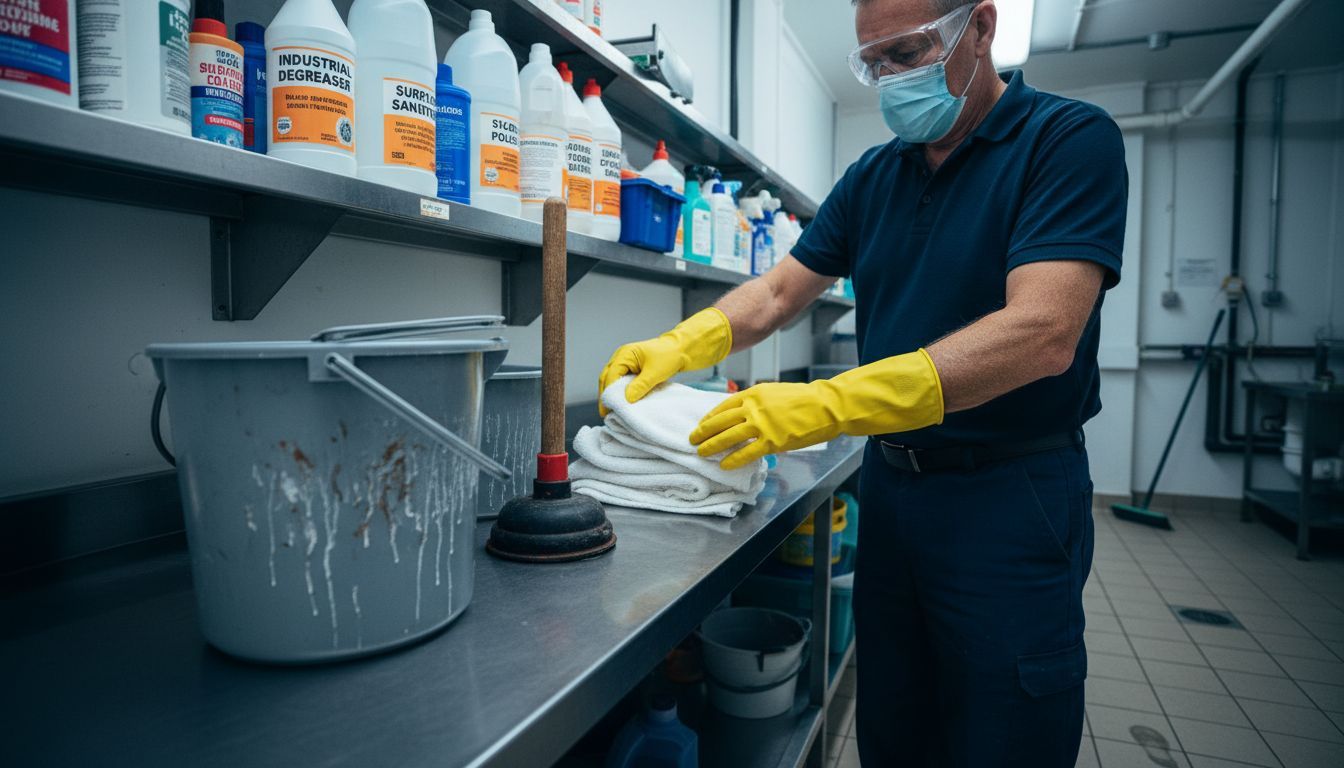
Prepare containment for overflow. Place buckets and towels near the work area to catch spilled water. Commercial drains sometimes release considerable volumes when pressure is relieved suddenly. Wet floors become hazardous slipping surfaces, so absorbent materials nearby protect both your team and your flooring. If the blockage involves materials like grease, keep absorbent pads handy for disposal.
Check your space for obstacles. Move boxes, equipment, or furniture away from drain access points. You need clear working room to manoeuvre equipment effectively and safely. Also identify where your main stopcock is located. If the situation escalates and you need to cut off water supply entirely, knowing this location becomes crucial. Preparation prevents panic during emergencies.
Professional tip Take photographs of the clean, dry area before starting work so you have documentation for insurance purposes if any damage occurs during the unblocking process.
Step 3: Apply Manual or Mechanical Clearing Methods
Manual and mechanical techniques form the backbone of drain clearing for many commercial blockages. These methods work by physically dislodging the obstruction rather than dissolving it, making them effective against stubborn debris. Let’s walk through how to use these approaches safely and effectively.
Start with a plunger if you have access to standing water above the blockage. Fill the sink or floor drain with enough water to cover the plunger cup completely. Press down firmly and pull up sharply in rapid succession, creating pressure that pushes the blockage downward. Repeat this action fifteen to twenty times without breaking the seal. You should feel resistance ease as the blockage moves. If water drains freely after plunging, you have solved the problem without needing further intervention.
When plunging fails, drain rods and cables inserted into pipes work by rotating and dislodging blockages mechanically. Feed the rod slowly into the drain opening, rotating it clockwise as you push forward. This rotation breaks apart grease accumulation and snags on foreign objects like wet wipes or hair. You will feel resistance when the rod contacts the blockage. Continue rotating whilst applying steady forward pressure until you feel the blockage give way.
Work methodically to avoid damaging pipes. Push the rod in sections, allowing each segment to seat properly before adding the next. Aggressive force can crack older pipework, particularly common in aged Poole commercial buildings. If you encounter extreme resistance that does not yield after sustained effort, stop immediately. Continuing risks rupturing the pipe entirely.
Once the blockage shifts, remove the rod and run water through the drain to flush away dislodged debris. The water flow should improve noticeably. If draining remains sluggish, a second pass with the rod may be necessary to clear remaining material completely.
Professional tip Rotate the rod consistently rather than jabbing, as steady rotation creates mechanical advantage whilst jabbing motions can bend or snap the rod inside your pipes.
Step 4: Flush and Rinse the Drain Thoroughly
After mechanical clearing, your drain needs a complete flush to remove loosened debris and restore full flow. Thorough rinsing ensures you have genuinely solved the blockage rather than simply pushing it further down the pipe. This step separates temporary fixes from lasting solutions.
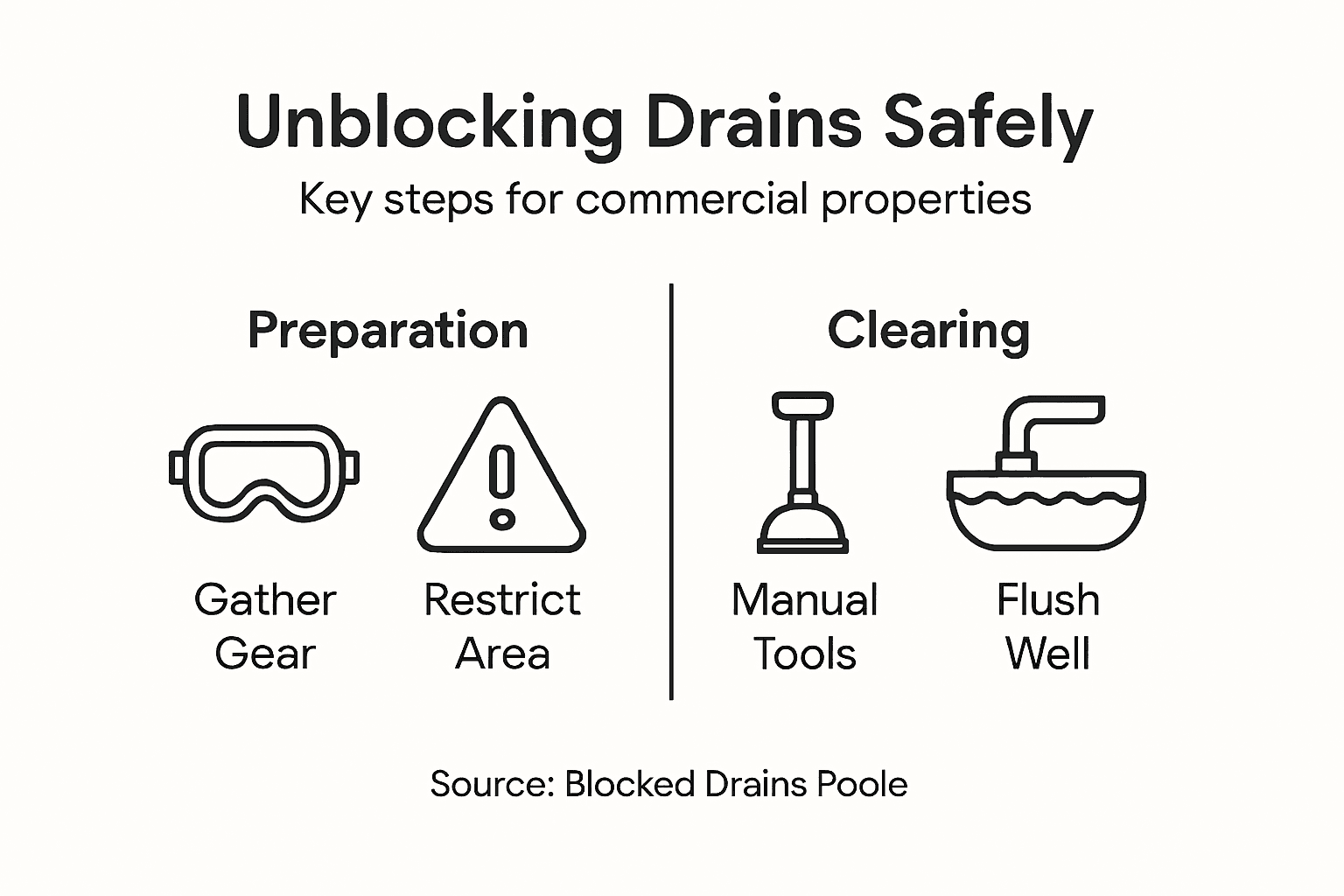
Start with a basic water flush using your building’s standard water pressure. Run water through the cleared drain for several minutes, watching how quickly it disappears. If water pools or drains slowly, debris remains trapped in the system. Continue running water until you observe rapid drainage with no pooling whatsoever. This indicates the blockage has cleared completely.
For stubborn residue like grease accumulation, high pressure water jetting removes grease and sediment effectively without causing pipe damage. Commercial pressure washers operate at 1000 to 4000 PSI (pounds per square inch), creating force sufficient to blast away compressed material clinging to pipe walls. The jet stream forces debris downstream into the main sewer system where it can flow freely. This method works particularly well for commercial kitchens where grease buildup is common.
If you do not have pressure jetting equipment, alternative flushing methods still work effectively. A hose connected to hot water supply can break down grease better than cold water alone. Direct the hose into the drain opening and allow hot water to flow for several minutes. Grease softens when heated, allowing it to flow away rather than solidifying further down your pipes.
Compare the effectiveness and typical usage of drain clearing methods below:
| Method | Best For | Risk Level |
|---|---|---|
| Plunger | Local, minor blockages | Low, safe with care |
| Drain rod/auger | Stubborn or deep obstructions | Medium, pipe damage |
| Water jetting | Grease, sediment residue | Low, needs training |
| Hot water flush | Grease in kitchen drains | Low, quick solution |
Check all connected drains after flushing. Run water through sinks, floor drains, and other outlets that feed into the cleared line. They should all drain quickly without backup or gurgling sounds. If any fixture still drains slowly, a secondary blockage exists elsewhere in your system requiring additional clearing.
Professional tip Schedule regular flushing every three to six months on high-use commercial properties to prevent future blockages before they cause problems.
Step 5: Check Drain Flow and Inspect for Recurring Issues
Your work does not end when water drains away. Proper inspection ensures the blockage has genuinely cleared and identifies warning signs of future problems. Catching issues early prevents expensive emergency call-outs that disrupt your operations.
Observe drain behaviour over the next few days. Fast drainage immediately after clearing is encouraging, but you need to monitor whether the improvement holds. Run water through affected drains multiple times daily and note any changes. Slow drainage returning within 24 to 48 hours suggests a partial blockage remains or debris has shifted but not fully cleared. This requires a second mechanical clearing pass before the problem worsens.
Listen for unusual sounds. Gurgling noises when water drains indicate air pockets in the system, often caused by partial blockages further down the line. A drainpipe should produce smooth, silent water flow. Strange odours are equally important. Foul smells suggest decomposing organic matter trapped inside pipes, which means your clearing did not reach the full blockage. Regular servicing including CCTV surveys helps identify issues before blockages cause disruption to your business operations.
Check all connected fixtures daily for the first week. Run water through sinks, floor drains, showers, and toilets that feed into the cleared line. Watch for any signs of backup or slow drainage. If multiple fixtures slow down simultaneously, a problem exists further down your drainage system beyond the area you cleared. This requires professional assessment to locate the secondary blockage.
Document your observations. Note the date you cleared the drain, what materials caused the blockage, and any warning signs that preceded the problem. This record helps you identify patterns and understand what preventative measures your building needs. If recurring blockages develop in the same location, structural damage becomes more likely and warrants professional investigation.
Professional tip Establish a maintenance schedule to monitor drain performance every six to twelve months rather than waiting for blockages to occur, which prevents costly emergency repairs and maintains continuous business operations.
Expert Solutions for Your Commercial Drainage Challenges in Poole
Unblocking commercial drains safely and efficiently requires experience with the unique challenges posed by older pipework and complex plumbing systems found in Poole. If you have spotted persistent blockages caused by grease, root ingress, or structural damage as outlined in our guide, you understand how critical it is to act promptly and avoid costly disruptions to your business operations. Common pain points like recurring slow drainage, foul odours, and potential health risks demand professional intervention that goes beyond DIY methods.
At Blocked Drains Poole, we specialise in delivering comprehensive drain solutions designed specifically for commercial properties in Dorset. Our services include expert unblocking, detailed inspections, reliable repairs, and advanced CCTV surveying to identify hidden issues early. We understand the importance of fast response with no call-out fees and transparent pricing so you can trust us to protect your investment and keep your facilities running smoothly.

Do not wait for minor blockages to escalate into emergencies causing costly downtime. Take control of your drainage system today. Visit Blocked Drains Poole’s service page to learn more about our tailored solutions or contact our specialists immediately for a swift, professional response. Secure your commercial property with expert care you can rely on.
Frequently Asked Questions
How can I assess the cause of a commercial drain blockage?
To assess the cause of a commercial drain blockage, start by identifying whether it’s localised to a single fixture or affects multiple drains across your property. Document any user behaviours that may contribute to the blockage, such as improper disposal of materials, as this helps you and any specialists understand the situation better.
What preparations should I make before attempting to unblock commercial drains?
Before unblocking commercial drains, secure the area by alerting staff and restricting access to prevent accidents. Gather essential equipment like rubber gloves, safety goggles, and a plunger, to ensure a safe and efficient unblocking process.
What manual methods can I use to unblock commercial drains safely?
You can use a plunger or drain rods to manually clear blockages in commercial drains. Start with the plunger to build pressure; if this fails, use drain rods by inserting them into the drain and rotating to dislodge any stubborn obstructions.
How should I flush and rinse the drain after clearing a blockage?
After manually clearing a blockage, flush the drain with water to ensure that all debris has been removed. Run water through the drain for several minutes and watch for any pooling; if water drains quickly, the blockage has been effectively cleared.
What signs indicate that a drainage problem might recur?
Signs that a drainage problem might recur include slow drainage returning within 24 to 48 hours after clearing. Additionally, listen for gurgling noises or detect foul smells, as these can signify lingering blockages or decomposing matter in the pipes that need further attention.
How often should I perform maintenance on my commercial drains to prevent blockages?
Schedule regular drain maintenance every six to twelve months to prevent blockages before they occur. This proactive approach can significantly reduce the frequency of emergency repairs and maintain smooth drainage performance.