
A slow-draining sink seems harmless enough. Then comes the smell. Then the puddle on the bathroom floor. Before long, you are facing an emergency call-out, potential water damage, and a bill that could have been avoided entirely. For homeowners in Poole, where many properties sit on ageing pipe networks with decades of wear, the gap between a minor inconvenience and a serious drainage problem can close faster than you might expect. This guide walks you through everything you need: the right tools, a clear step-by-step process, troubleshooting advice, and ongoing habits that keep your drains running freely all year round.
Table of Contents
- Why regular drain maintenance matters
- What you need before you start: tools, safety gear and preparation
- Step-by-step drain maintenance for every home
- Troubleshooting and common mistakes
- How to keep your drains clear: maintenance routines and expert prevention tips
- Expert support for tougher drain problems
- Frequently asked questions
Key Takeaways
| Point | Details |
|---|---|
| Routine matters | Consistent maintenance every 1-3 months helps avoid costly blockages. |
| Safe cleaning | Use safe, non-chemical methods to protect your pipes and the local environment. |
| Warning signs | Be alert to persistent odours or slow drainage as cues for specialist help. |
| Preparation is key | Always use the right tools and protective gear before working on your drains. |
| Prevention saves money | Simple prevention habits reduce emergencies and keep your property safe. |
Why regular drain maintenance matters
Neglected drains do not just block. They create a chain of problems that gets more expensive and disruptive with every week you leave them. Standing water backs up into sinks, baths, and toilets. Foul odours seep through the house. In serious cases, water damage and mould growth can take hold in walls and floors, turning a drainage issue into a structural one.
Poole’s housing stock adds extra complexity. Many homes here were built before modern drainage standards, meaning narrower pipes, older joints, and materials that react badly to harsh cleaning chemicals. Tree roots are a particular problem in established neighbourhoods, quietly infiltrating pipe joints and causing blockages that are invisible until they become severe. Understanding the risks of blocked drains specific to this area helps you prioritise the right maintenance steps.
The secondary risks are just as serious:
- Health hazards from bacteria and mould in standing water
- Emergency call-out costs that far exceed the price of routine maintenance
- Insurance complications if damage results from a known, neglected issue
- Property value impact if drainage problems are flagged during a survey
Knowing the causes of blocked drains in Poole homes, from fat build-up to root ingress, is the first step towards preventing them. And prevention, as you will see, is far simpler than the cure.
Regular drain maintenance is one of the most cost-effective things a homeowner can do. A small amount of time every few months can prevent hundreds, sometimes thousands, of pounds in repair costs.
What you need before you start: tools, safety gear and preparation
Before you touch a drain, gather the right equipment. Working without proper gear is one of the most common mistakes homeowners make, and it can lead to exposure to harmful bacteria or accidental pipe damage. Following a proper drain cleaning workflow starts with preparation.
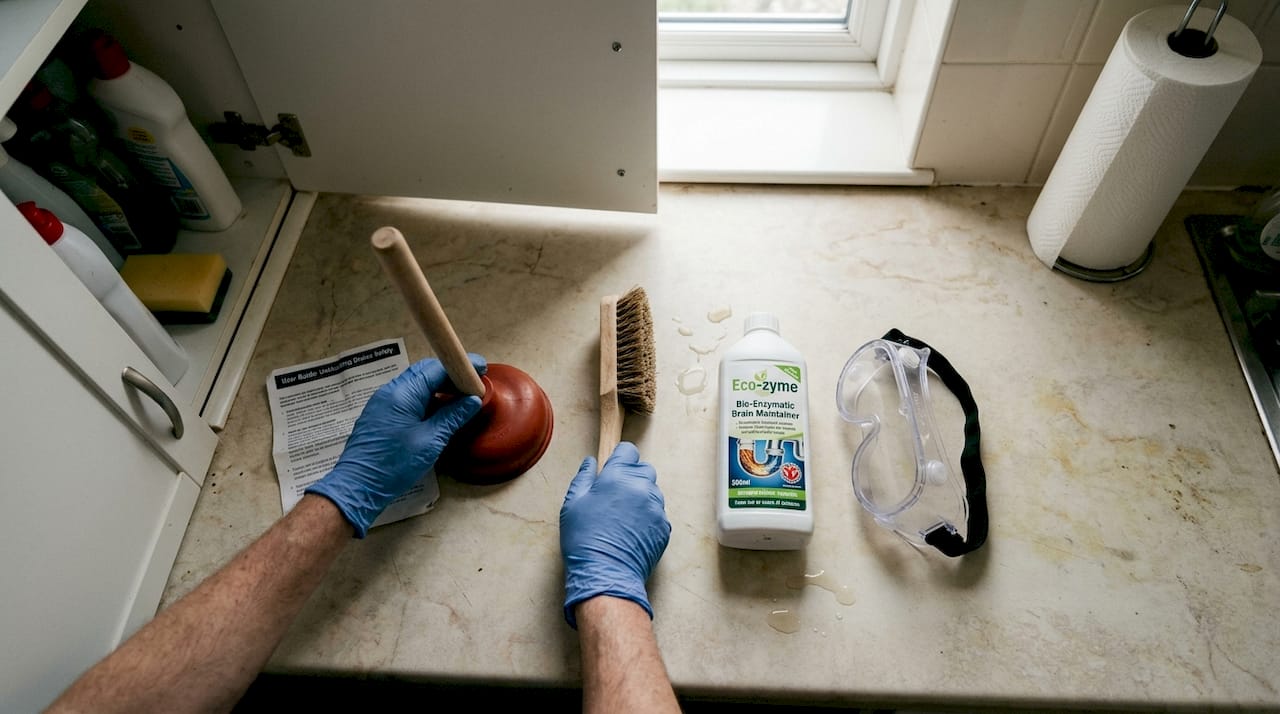
Protective equipment prevents exposure to bacteria during drain cleaning, so do not skip this step even for what looks like a minor job.
Essential tools and materials:
| Item | Purpose |
|---|---|
| Rubber gloves (heavy duty) | Protect hands from bacteria and chemicals |
| Safety goggles | Shield eyes from splashback |
| Plunger | Clear minor blockages with suction |
| Drain rods | Reach and break up deeper blockages |
| Torch | Inspect grates and visible pipe sections |
| Bucket | Collect waste water during cleaning |
| Bio-enzymatic cleaner | Break down organic matter safely |
| Baking soda and white vinegar | Natural, gentle cleaning alternative |
Ventilate the area before you start, particularly in enclosed spaces like under-sink cupboards. Check for any visible leaks around pipe joints before applying pressure with a plunger or rods. If you spot cracked pipes or corroded joints, stop and seek advice before continuing. The importance of safety in drain maintenance cannot be overstated, especially in older Poole properties where pipework may already be fragile.
For waste water disposal, follow your local council guidance. Do not pour chemical-laden water into garden drains or onto soil.
Pro Tip: Keep a dedicated drain maintenance kit under the sink or in a utility cupboard. Having everything in one place means you are far more likely to carry out routine checks regularly rather than putting them off.
Step-by-step drain maintenance for every home
Routine cleaning prevents up to 80% of household blockages, which makes this process one of the most valuable things you can do as a homeowner. Follow these steps every one to three months.
- Inspect visually. Look at every drain grate in your home. Check for slow drainage when you run the tap, and note any unusual smells. These are your early warning signs.
- Remove surface debris. Lift grates and clear out hair, soap scum, food particles, and any visible build-up by hand (gloves on). Do this before applying any liquid.
- Flush with boiling water. Pour a full kettle of boiling water slowly down the drain. This softens grease and shifts loose debris. Repeat twice.
- Apply a bio-enzymatic cleaner or baking soda mix. Pour the cleaner down the drain and leave it for the time stated on the label, usually 15 to 30 minutes. For a natural alternative, use half a cup of baking soda followed by half a cup of white vinegar, then cover the drain and wait 20 minutes.
- Flush again with hot water. This clears the loosened material through the pipe.
- Use a plunger if needed. For any remaining resistance, use a plunger with firm, steady strokes. Do not force it. If the blockage does not shift after a few attempts, move to drain rods.
- Use drain rods carefully. Insert rods gently and rotate clockwise only. Anticlockwise rotation can unscrew the rod sections inside the pipe, making the situation significantly worse.
- Final flush and check. Run the tap at full pressure and observe the flow. Water should drain quickly with no gurgling or backing up.
For a more detailed drain unblocking procedure, including guidance on specific drain types, refer to our full guide. You can also follow our safe drain unblocking steps for additional support.
Cleaning method comparison:
| Method | Effectiveness | Safety for older pipes | Environmental impact |
|---|---|---|---|
| Bio-enzymatic cleaner | High | Excellent | Low |
| Baking soda and vinegar | Moderate | Excellent | Very low |
| Boiling water flush | Moderate | Good | None |
| Chemical drain cleaner | High short-term | Poor | High |
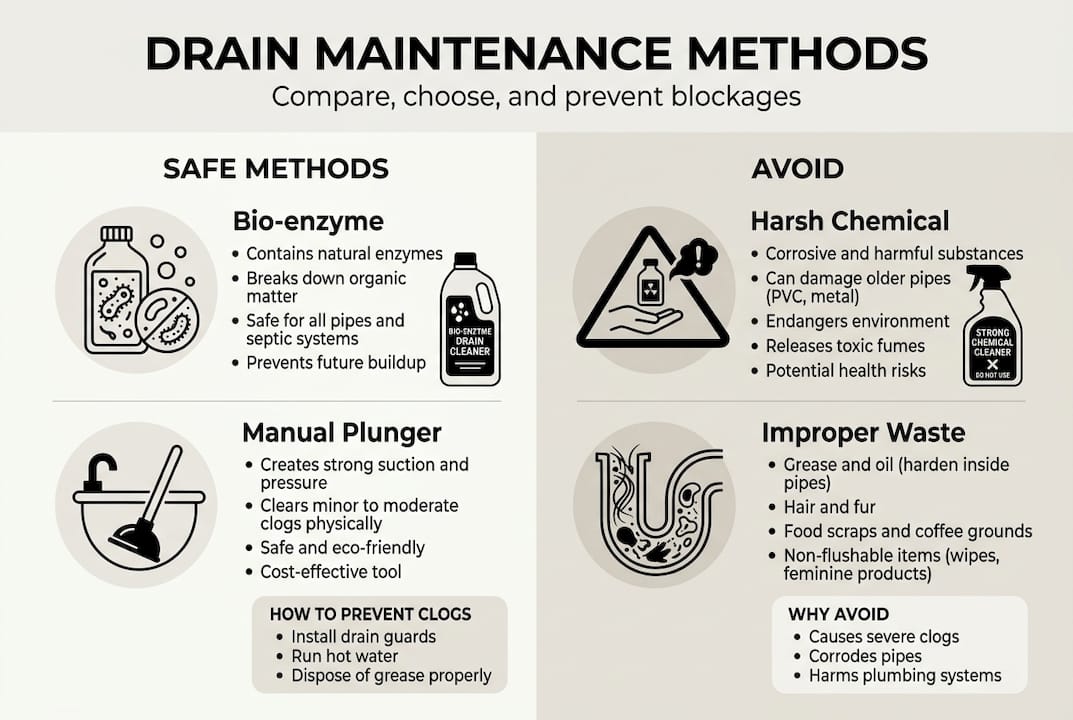
Pro Tip: Never use caustic chemical drain cleaners in older Poole properties. The pipework in many pre-1980s homes cannot handle the corrosive action, and you risk cracking joints or accelerating pipe deterioration.
Troubleshooting and common mistakes
Even with the best intentions, homeowners often make errors that reduce the effectiveness of their maintenance or make problems worse. After following the steps above, it is worth checking your results carefully.
Common mistakes to avoid:
- Overusing chemical cleaners, which corrode older pipes over time
- Forcing drain rods too aggressively, risking pipe damage or rod loss
- Skipping protective gear and risking bacterial exposure
- Treating symptoms without investigating the underlying cause
- Cleaning only one drain while ignoring others in the same system
If your drains still run slowly after maintenance, or if persistent bad smells or repeated blockages return within days, this points to a deeper issue that DIY methods cannot resolve. Root intrusion, collapsed pipe sections, and build-up deep in the main sewer line all require professional equipment to diagnose and fix.
If you have cleaned your drains thoroughly and problems return within a week or two, stop repeating the same steps. The issue is almost certainly further down the system than household tools can reach.
Knowing the signs of blocked drains that indicate a professional is needed saves you time and prevents accidental damage. Gurgling sounds from multiple drains at once, sewage smells that persist after cleaning, and water backing up into other fixtures are all clear signals to call a drain specialist rather than continuing with DIY attempts.
How to keep your drains clear: maintenance routines and expert prevention tips
The best drain maintenance is the kind that stops blockages forming in the first place. Simple disposal habit changes can significantly reduce drain issues across your whole home.
Build these habits into your routine:
- Never pour fats, oils, or cooking grease down the sink. Let them cool and dispose of them in the bin.
- Keep coffee grounds, food scraps, and paint out of all drains.
- Fit hair-catching drain covers in showers and baths. These cost very little and prevent one of the most common blockage causes.
- Run hot water for 30 seconds after every use of the kitchen sink to flush residue through.
- Use a mild bio-enzymatic cleaner monthly as a preventative measure, not just when problems arise.
- Book a professional CCTV drain inspection annually, particularly if your home is older or surrounded by mature trees.
For Poole homeowners specifically, tree root intrusion is worth monitoring closely. Roots from established trees can enter pipe joints silently over years, and by the time you notice a blockage, the root mass may already be substantial. Annual inspections catch this early, before it becomes a costly repair.
For ongoing drain blockage prevention advice tailored to Poole properties, including guidance on the routine drain cleaning workflow that works best for older pipe systems, we have detailed resources to help you stay ahead of problems.
Expert support for tougher drain problems
Sometimes, even diligent maintenance is not enough. Older pipe systems, root intrusion, and collapsed sections are problems that no plunger or enzyme cleaner can fix. When that happens, getting professional help quickly prevents a manageable issue from becoming a major repair.

At Blocked Drains Poole, we provide fast, no call-out-fee support for homeowners across Poole and the wider Dorset area. Whether you need an advanced unblocking procedure for a stubborn blockage, urgent assistance through our emergency drain help service, or a full walkthrough via our blocked drains step guide, we are here to help. Our team understands Poole’s unique drainage challenges and can diagnose problems quickly using CCTV survey technology, giving you clear answers and upfront pricing with no surprises.
Frequently asked questions
How often should I clean my drains at home?
Ideally, carry out basic drain maintenance every one to three months. Routine cleaning prevents the majority of household blockages before they become serious problems.
What should I never pour down the drain?
Never pour fats, oils, coffee grounds, or paint down your drains. Improper disposal is one of the top causes of blockages in Poole homes.
Is it safe to use chemical drain cleaners?
Chemical cleaners are best avoided, particularly in older properties. Overuse of harsh chemicals risks pipe damage, so opt for bio-enzymatic or natural alternatives wherever possible.
What are the signs I need to call a specialist?
Persistent bad smells, frequent blockages, slow drainage, and gurgling sounds all indicate a deeper issue. Certain signs point to problems that require professional equipment to resolve safely.
Are drain maintenance steps different for Poole’s older homes?
Yes. Older Poole properties need gentler, non-corrosive cleaning methods and more frequent inspections. Older homes often have unique drainage challenges including fragile joints and root ingress that require specialist attention.