
Blocked drains disrupt daily life and can escalate into costly damage if left untreated. Whether it’s a slow-draining sink or an unpleasant smell wafting from your bathroom, these issues demand prompt attention. Fortunately, many blockages can be tackled safely at home with the right approach and tools. This guide walks you through a practical, step-by-step process tailored for Poole homeowners, helping you restore your drains efficiently whilst avoiding common pitfalls that could worsen the problem.
Table of Contents
- Key takeaways
- Understanding the problem: common causes and signs of blocked drains
- Preparing for drain cleaning: essential tools and safety measures
- Step-by-step guide to cleaning your drain effectively
- Troubleshooting common issues and when to seek professional help
- Professional drain cleaning services in Poole
- Frequently asked questions
Key Takeaways
| Point | Details |
|---|---|
| Prompt attention | Blocked drains should be tackled quickly to prevent worsening damage. |
| Proper preparation and gear | Gather the correct tools and protective equipment before starting to maximise safety and effectiveness. |
| Step by step cleaning | Follow a methodical sequence to achieve the best cleaning results. |
| Check for signs early | Identify common warning signs such as slow drainage and foul odours to act before a blockage worsens. |
| Post cleaning verification | Test drainage after cleaning to confirm flow is restored and no new blockages remain. |
Understanding the problem: common causes and signs of blocked drains
Before you begin cleaning, identifying what’s blocking your drain helps you choose the most effective method. Frequently drains become blocked due to common causes in domestic properties such as grease buildup, hair, and foreign objects. Understanding these culprits prevents repeat blockages and guides your cleaning strategy.
Typical blockages in Poole homes include:
- Grease and fat accumulation from cooking that solidifies in pipes
- Hair combined with soap scum forming dense clumps
- Foreign objects like cotton buds, wipes, or children’s toys
- Tree root intrusion in older properties with mature gardens
- Mineral deposits from hard water gradually narrowing pipe diameter
- Collapsed or damaged pipes in ageing drainage systems
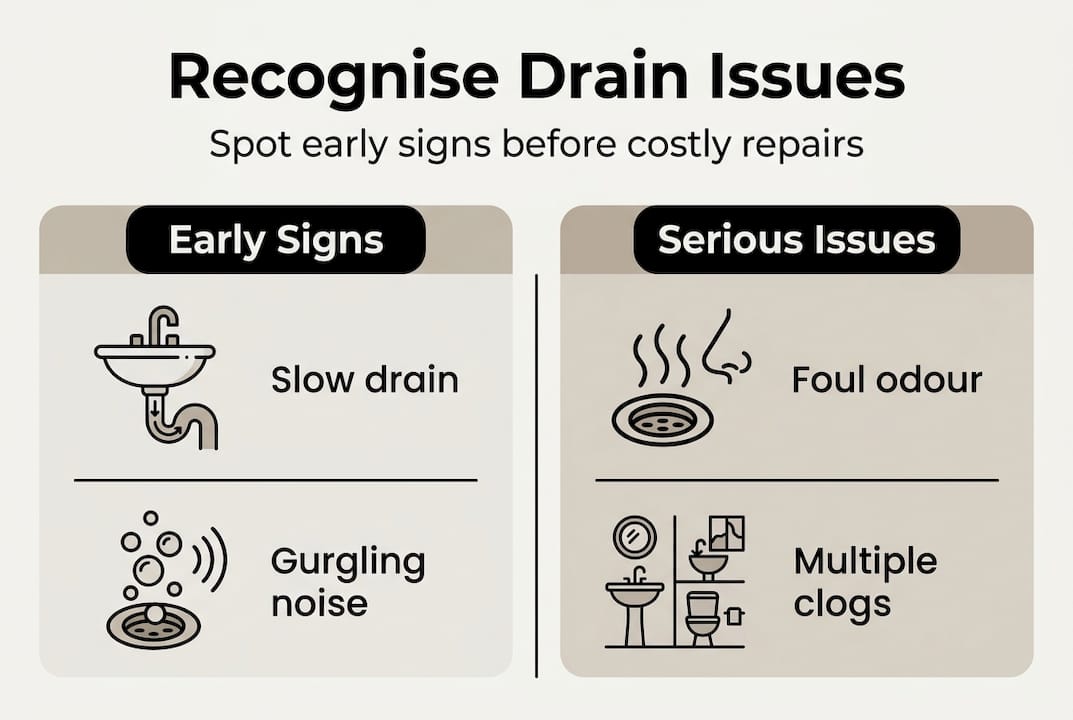
Recognising early warning signs allows you to address problems before they escalate. Slow drainage is often the first indicator, where water takes noticeably longer to disappear from sinks or baths. Gurgling sounds when water drains suggest air trapped by partial blockages. Foul odours emanating from drains signal decomposing organic matter stuck in pipes. Water backing up into other fixtures when you use one appliance indicates a more serious blockage affecting multiple drainage points.
Early detection matters because minor blockages are far easier to clear than complete obstructions. A partially blocked drain can still function temporarily, tempting homeowners to delay action. However, the blockage continues accumulating debris, eventually causing complete failure or even pipe damage from pressure buildup. Poole’s older properties with Victorian-era drainage infrastructure are particularly vulnerable to progressive deterioration if signs of blocked drains every homeowner should know are ignored.
Preparing for drain cleaning: essential tools and safety measures
Proper preparation significantly increases your chances of success whilst protecting you from potential hazards. Proper preparation, including correct tools and protective gear, increases safety and cleaning effectiveness in homeowners’ DIY drain work. Rushing into drain cleaning without adequate equipment often leads to frustration and incomplete results.
Essential tools for effective drain cleaning:
- Rubber gloves extending to forearms for protection from contaminated water
- Cup plunger for sinks and flat drains
- Flange plunger specifically designed for toilet blockages
- Hand-operated drain snake or auger for reaching deeper obstructions
- Bucket for catching overflow water and removed debris
- Old towels or rags for containing spills
- Torch for inspecting drain openings
- Wire coat hanger as makeshift retrieval tool for visible blockages
| Tool | Primary purpose | When to use |
|---|---|---|
| Plunger | Creates pressure to dislodge blockages | First attempt for most blockages |
| Drain snake | Physically breaks up or retrieves obstructions | When plunging fails or blockage is deep |
| Chemical cleaner | Dissolves organic matter chemically | Grease or soap buildup after mechanical methods |
| Enzymatic cleaner | Breaks down organic material naturally | Regular maintenance and prevention |
| Bucket and towels | Contains mess and protects surroundings | Every drain cleaning session |
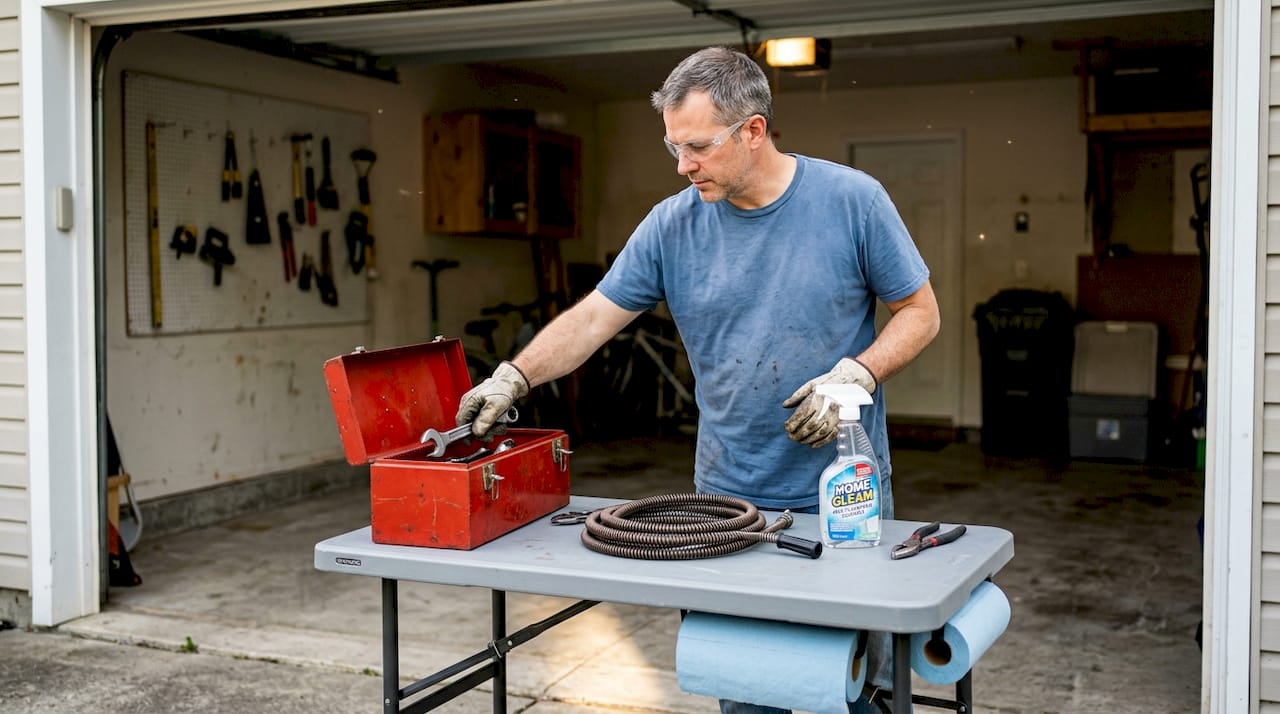
Safety precautions are non-negotiable when working with drains. Always wear protective gloves because drain water contains bacteria and potential pathogens. Safety goggles protect your eyes from splashes, especially when using chemical cleaners or working overhead. Ensure adequate ventilation by opening windows and doors, as sewer gases can accumulate in enclosed spaces and cause dizziness or nausea.
Before starting, check for warning signs of serious problems. If you smell strong sewer gas, stop immediately and ventilate the area thoroughly. Multiple fixtures backing up simultaneously suggests a main line blockage requiring professional attention. Visible cracks or damage around drain fittings indicate structural issues that DIY cleaning could worsen.
Pro tip: Keep a dedicated drain cleaning kit in an accessible location with all tools together. This saves time during emergencies and ensures you’re never caught unprepared when a blockage strikes.
When using chemical drain cleaners, read product labels carefully before application. Never mix different chemical products, as dangerous reactions can occur. Some chemicals generate heat during use, so avoid contact with PVC pipes that might soften. Always add chemicals to water, never water to chemicals, to prevent violent reactions.
Step-by-step guide to cleaning your drain effectively
With preparation complete, follow this systematic approach to clear your blocked drain safely and thoroughly. Following a systematic step-by-step cleaning process ensures more effective clearing of household drains. Each step builds on the previous one, progressing from simplest to more intensive methods.
-
Remove visible debris from the drain entrance. Unscrew or lift the drain cover and use gloved hands or a wire hook to extract hair, soap residue, or foreign objects you can see. Many blockages occur right at the entrance where debris accumulates most readily. Dispose of removed material in a bin, never back down the drain.
-
Apply plunger technique to create pressure. Fill the sink or bath with enough water to cover the plunger cup. Position the plunger directly over the drain opening, ensuring a tight seal. Push down firmly, then pull up sharply without breaking the seal. Repeat this pumping action vigorously for 15 to 20 strokes. The alternating pressure often dislodges blockages and restores flow.
-
Use a drain snake for deeper blockage removal. If plunging fails, feed the snake’s cable into the drain whilst rotating the handle clockwise. You’ll feel resistance when you reach the blockage. Continue rotating and gently pushing to break through or hook the obstruction. Once you’ve penetrated the blockage, slowly withdraw the snake whilst continuing rotation to bring debris out with it.
-
Apply chemical or enzymatic cleaner safely if necessary. For stubborn organic blockages like grease or hair, carefully pour the recommended amount of cleaner into the drain following manufacturer instructions precisely. Allow the specified contact time for the product to work. Enzymatic cleaners are gentler on pipes and environmentally preferable, though they work more slowly than harsh chemicals.
-
Flush the drain with hot water to clear residues. After mechanical or chemical cleaning, run hot water through the drain for several minutes. This flushes away loosened debris and residual cleaning products. For kitchen sinks, boiling water helps dissolve any remaining grease. For plastic pipes, use very hot tap water rather than boiling to avoid damage.
Pro tip: Schedule monthly preventive maintenance by flushing drains with hot water and enzymatic cleaner. This routine prevents buildup before blockages form, saving you from emergency cleaning sessions and extending your drainage system’s lifespan.
Between steps, test the drain by running water to check if flow has improved. Sometimes a blockage clears partway through the process, allowing you to stop before using harsher methods. Always progress from gentlest to most intensive techniques, preserving your pipes and avoiding unnecessary chemical use.
Troubleshooting common issues and when to seek professional help
Even with careful execution, DIY drain cleaning sometimes encounters obstacles or fails to resolve the problem completely. Recognising when drain blockages exceed DIY capacity is key to protecting property and avoiding further damage. Understanding these limitations prevents costly mistakes and knows when expert intervention becomes necessary.
Common troubleshooting scenarios include:
- Ineffective plunging despite proper technique suggests the blockage is too far down the pipe for pressure to reach
- Recurring blockages within days or weeks indicate an underlying structural problem rather than simple debris accumulation
- Chemical cleaners failing to clear blockages may mean the obstruction is non-organic, like a foreign object or mineral deposit
- Water backing up into multiple fixtures simultaneously points to main line blockages beyond DIY scope
- Foul odours persisting after thorough cleaning could signal broken pipes allowing sewer gas escape
“Knowing when to stop DIY attempts and call professionals protects both your property and your safety. Forcing tools or overusing chemicals often transforms a simple blockage into expensive pipe damage requiring extensive repairs.”
| Aspect | DIY drain cleaning | Professional drain cleaning |
|---|---|---|
| Cost | Low initial outlay for tools | Higher service fee but includes expertise |
| Effectiveness | Works for simple, accessible blockages | Handles complex, deep, or structural issues |
| Equipment | Basic household tools | Specialist equipment like CCTV cameras and high-pressure jetters |
| Time required | Immediate availability, variable success time | Scheduled appointment, typically faster resolution |
| Risk | Potential for pipe damage if done incorrectly | Insured professionals minimise damage risk |
| Diagnosis | Limited to visible symptoms | Comprehensive assessment identifies root causes |
Signs demanding professional attention include persistent slow drainage after multiple DIY attempts, water pooling around external drains suggesting main line issues, and visible cracks or damage to pipes or fittings. If you notice sewage backing up into your home, this constitutes an emergency requiring immediate professional response to prevent health hazards and property damage.
Poole’s older properties often have complex drainage systems with cast iron pipes, clay sections, or inadequate fall that complicate DIY efforts. Tree roots commonly infiltrate joints in mature gardens, creating blockages that require specialist cutting equipment. If your property dates from before 1960, consider professional assessment even for seemingly simple blockages, as underlying infrastructure issues may be present.
Cost-effective decision making balances DIY attempts against professional services. Try basic methods first for straightforward blockages, but don’t persist beyond two or three attempts if you’re not seeing improvement. Continuing to force tools or pour chemicals down an unresponsive drain often escalates repair costs significantly. Professional drain cleaners can diagnose problems accurately using CCTV surveys, saving money by targeting the actual issue rather than guessing.
Professional drain cleaning services in Poole
When DIY methods reach their limits, professional drain specialists offer comprehensive solutions backed by expertise and specialist equipment. Blocked Drains Poole provides emergency response for urgent blockages that threaten property damage or create health hazards. Their drain unblocking procedure 2026 effective results combines modern technology with local knowledge of Poole’s unique drainage infrastructure.

Professional services excel where DIY cannot reach. High-pressure water jetting clears stubborn blockages without chemicals, whilst CCTV drain surveys identify hidden problems like root intrusion or pipe collapse. For complex issues requiring more than surface cleaning, specialists provide lasting solutions rather than temporary fixes. Their emergency drain unblocking workflow poole ensures rapid response when you face urgent drainage crises.
Transparent pricing and no call-out fees make professional help more accessible than many homeowners expect. When you’ve invested time and money in DIY attempts without success, consulting experts often proves more economical than continuing ineffective efforts. Their comprehensive approach addresses underlying causes, preventing recurring problems that waste your time and money. For guidance on when professional help becomes necessary, explore how to unblock drains step guide resources that help you make informed decisions about your drainage needs.
Frequently asked questions
How can I tell if my drain is completely cleared after cleaning?
Run water for several minutes and observe the drainage speed. It should flow quickly without pooling or gurgling sounds. Check other connected fixtures to ensure water drains normally throughout your system. Monitor for 24 to 48 hours, as some blockages partially clear initially but return quickly if debris remains.
Are chemical drain cleaners safe to use regularly in home drains?
Chemical cleaners should be used sparingly because repeated use corrodes pipes over time, particularly older metal pipes common in Poole properties. They also harm septic systems and the environment. For regular maintenance, prefer enzymatic cleaners that break down organic matter naturally without damaging pipes. Following how to unblock drains step guide recommendations helps you choose safer alternatives for routine care.
When should I contact a professional drain cleaner instead of DIY?
Call professionals when blockages persist after two DIY attempts, water backs up into multiple fixtures, or you notice foul odours that cleaning doesn’t eliminate. Structural damage signs like cracks, leaks, or ground subsidence near drains require immediate expert assessment. Emergency situations involving sewage backup or complete drainage failure need rapid professional response to prevent health hazards. Understanding why call drain specialist poole helps you recognise when expert intervention protects your property investment.