
Blocked drains disrupt daily life and can quickly escalate into costly damage if left unattended. Whether it’s a sluggish kitchen sink or a bathroom drain that refuses to clear, these issues demand immediate attention. Many blockages can be tackled by homeowners with the right knowledge and approach, saving you time and money. This guide offers a safe, step by step approach for immediate action, empowering you to restore normal drainage flow without delay. You’ll learn exactly what tools to gather, how to execute each clearing method safely, and when it’s time to seek professional help.
Table of Contents
- What You Need Before Unblocking Drains
- Step By Step Guide To Unblocking Your Drains
- Troubleshooting Common Problems And Mistakes
- What To Expect After Unblocking Your Drains
- Explore Professional Drain Unblocking Services In Poole
- Frequently Asked Questions
Key takeaways
| Point | Details |
|---|---|
| Early detection prevents damage | Recognising blockage signs like slow drainage and odours helps you act before serious harm occurs. |
| Essential tools improve success | Plungers, drain rods, gloves, and eye protection make unblocking safer and more effective. |
| Stepwise methods clear blockages | Manual and chemical clearing techniques applied in sequence maximise your chances of success. |
| Troubleshooting speeds resolution | Identifying common mistakes and pitfalls helps you avoid worsening blockages or damaging pipes. |
| Professional help saves time | Knowing when to call specialists prevents frustration and protects your drainage system from further harm. |
What you need before unblocking drains
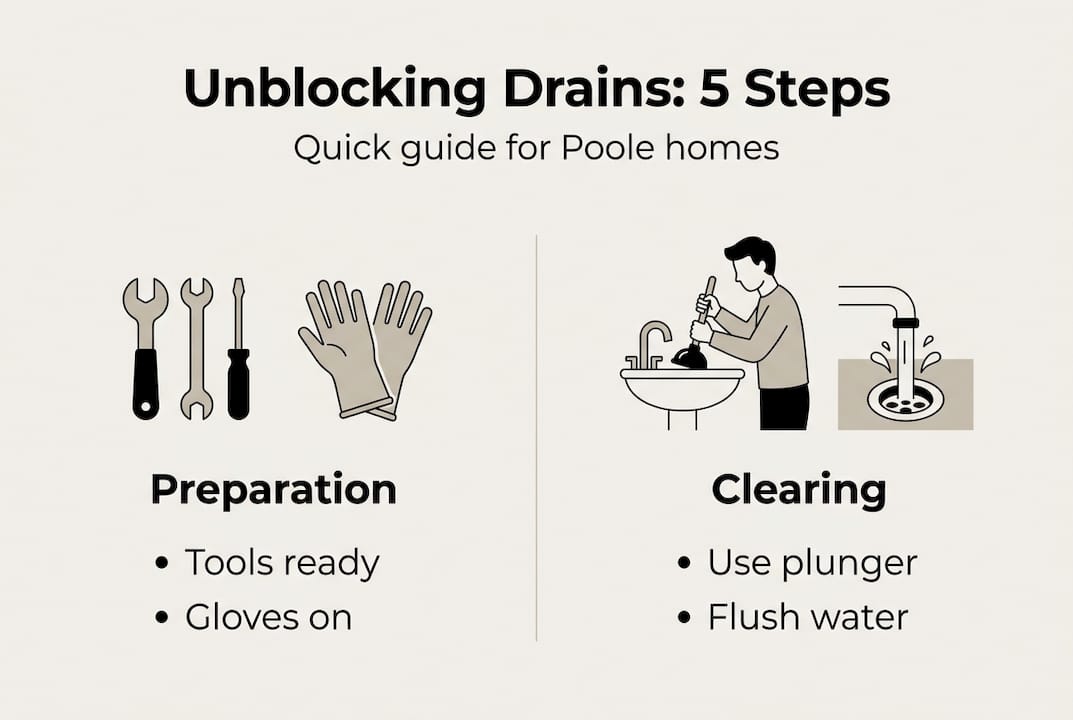
Proper preparation makes the difference between a quick fix and a frustrating afternoon. Before you tackle any blockage, gather the right tools and safety equipment to protect yourself and your plumbing. Using appropriate tools and protective gear reduces injury risk and improves effectiveness, ensuring you approach the problem with confidence.
Start with these essential tools. A cup plunger works best for sinks and baths, whilst a flange plunger suits toilets. Drain rods with various attachments help reach deeper blockages, and a sturdy bucket catches overflow and debris. Keep old towels or rags nearby to manage spills, and a torch helps you inspect dark drain openings. If you’re considering chemical cleaners, choose products specifically designed for domestic drains rather than industrial strength solutions that might damage older pipes.
Safety gear protects you from contaminated water and harmful substances. Thick rubber gloves prevent skin contact with bacteria and chemicals, whilst safety goggles shield your eyes from splashes. A face mask reduces exposure to unpleasant odours and airborne particles, particularly important when working with standing water. These simple precautions make the task more bearable and protect your health.
Before you begin clearing, conduct an initial assessment. Test water flow by running taps briefly to gauge the severity of the blockage. Check multiple fixtures to determine whether the problem affects a single drain or your entire system. Look for visible debris near drain openings and remove anything you can reach by hand. Inspect the area around drains for signs of leaks or water damage that might indicate a more serious issue requiring professional attention.
Pro Tip: Always test water flow before deeper clearing attempts by running a small amount of water and observing how quickly it drains, which helps you gauge blockage severity and track your progress.
Prepare your work area to minimise mess and water damage. Place towels around the base of sinks or toilets to catch splashes, and clear the space beneath to give yourself room to work. Move any items that might get wet or contaminated, and ensure good ventilation if you plan to use chemical cleaners. This preparation saves cleanup time and prevents accidental damage to your belongings.
| Tool | Purpose | Safety consideration |
|---|---|---|
| Cup plunger | Creates suction for sinks and baths | Ensure good seal for effectiveness |
| Drain rods | Reaches deeper blockages | Use gentle pressure to avoid pipe damage |
| Rubber gloves | Protects hands from contamination | Choose thick, elbow length variety |
| Safety goggles | Shields eyes from splashes | Essential when using chemicals |
| Bucket | Catches overflow and debris | Keep nearby throughout process |
Step by step guide to unblocking your drains
Methodical execution increases your chances of clearing blockages without causing damage. Proper stepwise techniques greatly increase the likelihood of clearing blockages without professional help, transforming a daunting task into a manageable project. Follow each step carefully and resist the urge to skip ahead, as rushing often creates additional problems.
Step one involves removing visible debris and testing water flow. Put on your gloves and safety goggles, then carefully remove any hair, soap scum, or foreign objects you can see near the drain opening. Many blockages occur just below the surface where accumulated debris restricts flow. Once you’ve cleared visible material, run a small amount of water to see if drainage improves. If water drains slowly but steadily, you’ve made progress. If it remains completely blocked, proceed to the next step.
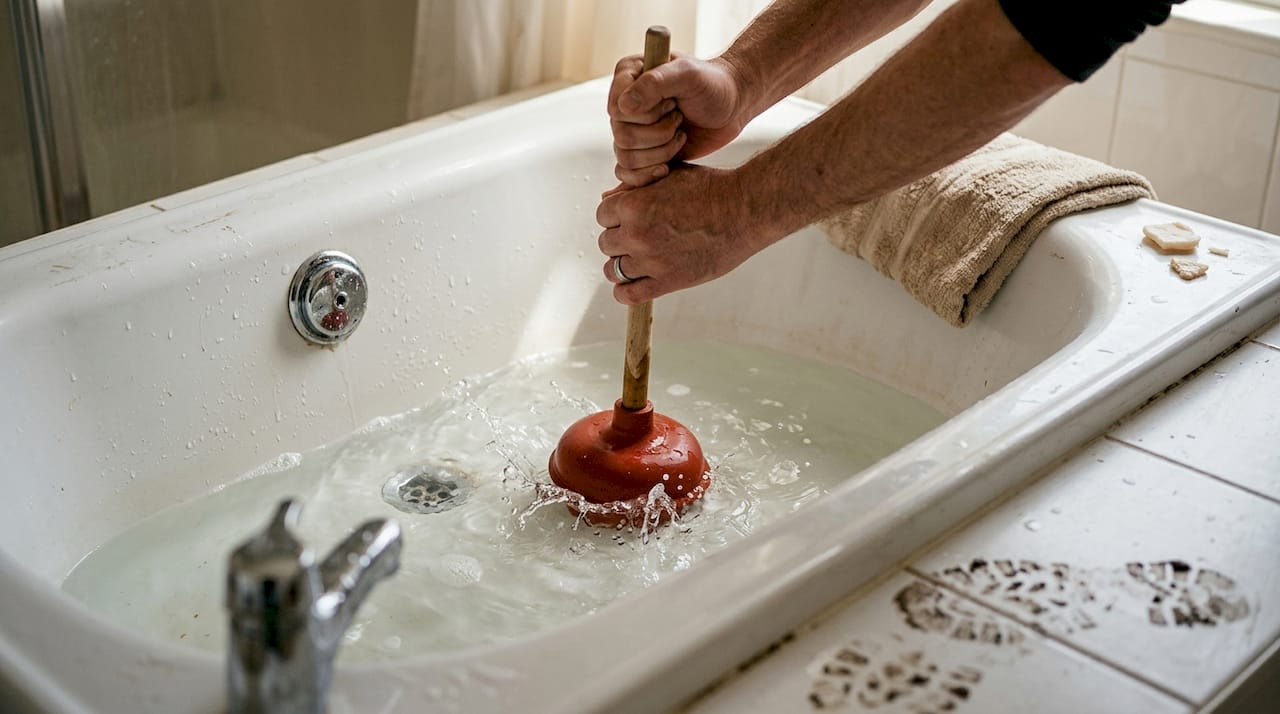
Step two requires using a plunger correctly to attempt clearing. Fill the sink or bath with enough water to cover the plunger cup, typically 5 to 8 centimetres. This water creates the hydraulic pressure needed to dislodge blockages. Place the plunger over the drain opening, ensuring a tight seal, then push down firmly and pull up sharply. Repeat this motion 15 to 20 times with increasing force. The suction and pressure work together to break up and move blockages. After plunging, run water again to check if drainage has improved.
Step three involves inserting drain rods carefully if the plunger fails. Screw together enough rod sections to reach the suspected blockage depth, typically 1 to 2 metres for household drains. Insert the rod gently, rotating clockwise as you push to avoid unscrewing connections. When you encounter resistance, apply steady pressure whilst continuing to rotate. Avoid forcing the rod, as excessive pressure can damage older pipes. Work the rod back and forth to break up the blockage, then withdraw it slowly whilst continuing to rotate clockwise.
Step four applies safe chemical cleaners if needed following instructions. Choose a product suitable for your pipe material, as some chemicals corrode older metal pipes. Pour the recommended amount directly into the drain, avoiding splashes. Never mix different chemical products, as this can create dangerous reactions. Allow the cleaner to work for the specified time, usually 15 to 30 minutes, then flush thoroughly with hot water. Chemical cleaners work best on organic blockages like hair and grease but prove less effective against solid objects.
Pro Tip: Avoid harsh chemicals on old pipes to prevent damage by opting for enzyme based cleaners that break down organic matter naturally without corroding metal or weakening joints.
Step five requires flushing with hot water to verify clearance. Boil a kettle and pour the hot water slowly down the drain in stages, allowing each pour to drain completely before adding more. Hot water melts grease and flushes away loosened debris. Run cold water afterwards to cool pipes and check that drainage remains clear. If water drains quickly and smoothly, you’ve successfully cleared the blockage. If problems persist, you may need professional assessment.
Troubleshooting common problems and mistakes
Even careful homeowners encounter challenges when unblocking drains safely at home. Understanding typical pitfalls helps you avoid costly mistakes and recognise when DIY methods have reached their limit. Recognising common pitfalls helps prevent further drainage damage and saves costly repairs, protecting both your plumbing and your budget.
Several signs indicate you’ve worsened the blockage or created leaks. Water backing up into other fixtures suggests you’ve pushed the blockage deeper into the system. Gurgling sounds from multiple drains indicate air trapped by the obstruction. Wet patches on walls or ceilings near pipes signal leaks caused by excessive pressure. If you notice any of these warning signs, stop immediately and assess the situation before proceeding.
Overuse of chemical cleaners creates serious risks. Repeated applications corrode pipes, particularly older metal systems common in Poole’s historic properties. Chemicals generate heat that can soften plastic pipes or weaken joints. Standing chemical solution in blocked drains becomes hazardous to anyone attempting further clearing. Limit chemical use to one application, and if it fails, switch to mechanical methods or professional help.
Incorrect use of drain rods causes unnecessary damage. Rotating anticlockwise whilst inserting or withdrawing rods unscrews connections, leaving sections stuck in your drains. Forcing rods against resistance punctures pipes or pushes blockages into positions that make removal harder. Using excessive force on fragile older pipes creates cracks or joint failures. Always rotate clockwise, apply gentle steady pressure, and stop if you encounter immovable resistance.
Remember that persistence doesn’t always equal success. If your initial attempts haven’t cleared the blockage within an hour, continuing with the same methods rarely produces better results and often worsens the situation.
Blockages that persist despite multiple attempts indicate deeper issues. Tree root intrusion, collapsed pipes, or severe scale buildup require professional equipment and expertise. Attempting to force clearance in these situations damages your drainage system further. Similarly, blockages that recur within days suggest underlying structural problems rather than simple debris accumulation.
Safety warnings deserve serious attention when handling tools and chemicals. Never mix chemical cleaners with other products, including bleach or ammonia based cleaners. Avoid leaning directly over drains when pouring chemicals, as fumes can cause respiratory irritation. Don’t use excessive force with drain rods, as sudden release of pressure can cause injury. If you feel uncomfortable or unsafe at any point, when to call a drain specialist becomes the sensible choice.
- Pushing blockages deeper instead of breaking them up
- Using boiling water on plastic pipes causing warping
- Neglecting to seal overflow outlets during plunging
- Attempting to clear main sewer blockages without proper equipment
- Ignoring protective gear and risking contamination
What to expect after unblocking your drains
Successfully clearing a blockage brings immediate relief, but understanding what happens next helps you maintain results and spot potential problems. Most homeowners notice improved drainage flow within minutes of clearing the obstruction. Water runs away quickly and smoothly, without the gurgling or slow emptying that characterised the blockage. Unpleasant odours dissipate as stagnant water clears and fresh water flushes the system.
Some lingering minor slow drainage may persist initially and requires monitoring. Residual debris can take several flushes to clear completely, particularly if the blockage was severe or long standing. Run hot water through cleared drains several times over the following day to flush away remaining particles. If drainage continues to improve gradually, your clearing efforts have succeeded. However, if slow drainage persists beyond 24 hours or worsens, deeper issues may exist.
Certain signs indicate deeper issues requiring expert inspection. Recurring blockages in the same location within weeks suggest structural problems like pipe damage or root intrusion. Multiple fixtures blocking simultaneously point to main drain issues beyond household reach. Persistent foul odours despite clear drainage may indicate cracked pipes allowing sewage seepage. Professional CCTV surveys identify these hidden problems before they cause serious damage.
Regular drainage maintenance and early problem detection greatly reduce the recurrence of blockages, protecting your investment and preventing inconvenient emergencies. Simple preventive measures keep drains flowing freely between deep cleans.
Implement these maintenance tips to prevent future blockages. Use drain guards to catch hair and food particles before they enter pipes. Pour hot water down drains weekly to melt grease and flush debris. Avoid pouring cooking oil or fat down sinks, as these solidify and accumulate. Clean pop up stoppers and plug holes monthly to remove buildup. These small habits dramatically reduce blockage frequency.
| Aspect | DIY unblocking | Professional services |
|---|---|---|
| Cost | Low, tools under £50 | Higher, but includes guarantee |
| Time required | 1 to 3 hours | 30 minutes to 1 hour |
| Success rate | 60 to 70% for simple blockages | 95%+ for all blockage types |
| Equipment | Basic household tools | CCTV surveys, high pressure jetting |
| Suitable for | Surface blockages, single fixtures | Deep blockages, recurring issues |
| Risk of damage | Moderate if inexperienced | Minimal with qualified technicians |
Understanding your limitations saves frustration and protects your plumbing. DIY methods work excellently for straightforward blockages caused by hair, soap, or food waste near drain openings. Professional services become worthwhile for persistent problems, main drain blockages, or situations where you lack confidence or time. The comparison helps you make informed decisions about common causes of blocked drains and appropriate responses.
- Test all affected fixtures to confirm complete clearance
- Document blockage locations and frequency for pattern recognition
- Schedule annual professional inspections for older properties
- Keep basic unblocking tools accessible for quick response
- Monitor drainage speed as an early warning system
Explore professional drain unblocking services in Poole
Whilst DIY methods handle many blockages effectively, some situations demand professional expertise and equipment. Persistent blockages that resist your best efforts, recurring problems that disrupt your household repeatedly, or emergency situations requiring immediate resolution all benefit from specialist attention.

Professional services bring advanced diagnostic tools and proven techniques to complex drainage problems. Modern CCTV inspection identifies exact blockage locations and underlying causes without guesswork. High pressure water jetting clears stubborn obstructions that manual methods cannot shift. Specialists understand Poole’s unique drainage infrastructure, including older pipe materials and common local issues like root intrusion. Their expertise ensures efficient resolution with guaranteed results, giving you peace of mind and protecting your property from water damage. Quick access to emergency drain unblocking workflow means help arrives when you need it most, minimising disruption to your daily routine. Whether you’re following the drain unblocking procedure 2026 or seeking expert drain unblocking advice, professional support complements your efforts when challenges exceed DIY capabilities.
Frequently asked questions
How do I know if my drain is truly blocked?
Several clear indicators signal a genuine blockage requiring attention. Water draining slowly from sinks, baths, or showers suggests partial obstruction, whilst water refusing to drain at all indicates complete blockage. Unpleasant odours emanating from drains result from decomposing organic matter trapped in pipes. Gurgling sounds when water drains point to air trapped by blockages, and water backing up into other fixtures confirms the obstruction affects multiple connection points. If you notice any combination of these signs of blocked drains, investigate promptly before the situation worsens.
What are the safest tools to use when unblocking drains at home?
The safest approach combines proper tools with adequate protective equipment. Cup plungers create effective suction for sinks and baths without chemical risks, whilst drain rods with screw together sections allow controlled reach into pipes. Always wear thick rubber gloves extending to your elbows to prevent skin contact with contaminated water and bacteria. Safety goggles protect your eyes from splashes, particularly important when using any cleaning products. A face mask reduces exposure to unpleasant odours and airborne particles. These safe drain unblocking tools enable effective clearing whilst minimising health and safety risks throughout the process.
When should I call a professional drain specialist?
Several scenarios warrant professional intervention rather than continued DIY attempts. Blockages persisting after you’ve tried plunging, rodding, and appropriate chemical treatments indicate problems beyond basic clearing methods. Repeated blockages occurring in the same location within weeks suggest underlying structural issues like pipe damage or root intrusion requiring specialist diagnosis. Signs of pipe damage including visible leaks, wet patches on walls, or water backing up into multiple fixtures simultaneously demand immediate professional assessment. Additionally, if you feel uncomfortable or unsafe continuing DIY efforts, or if the blockage affects your main sewer line rather than individual household drains, calling a drain specialist prevents further damage and resolves issues efficiently with proper equipment and expertise.