
Drainage problems plague Poole homeowners regularly, from slow drains to complete blockages that demand emergency repairs. The sandy soils and mature trees throughout Poole create ideal conditions for root intrusion and pipe damage, making regular inspection essential. This guide walks you through simple, actionable steps to inspect your drains at home, helping you catch issues early before they escalate into expensive emergencies. You’ll learn what tools you need, how to perform thorough checks, and when professional help becomes necessary.
Table of Contents
- Preparing For Your Drain Inspection
- Performing A Step By Step Drain Inspection At Home
- Common Drainage Issues Found During Inspections In Poole
- Verifying Inspection Findings And Next Steps
- Professional Drain Inspections And Unblocking Services In Poole
- Frequently Asked Questions
Key takeaways
| Point | Details |
|---|---|
| Start with visual checks | Basic inspection requires only a torch, gloves and observation of drainage behaviour before investing in advanced tools. |
| Safety is paramount | Drains contain biohazards requiring proper protective equipment including gloves, goggles and masks during any inspection work. |
| Regular inspections prevent damage | Annual checks for older properties and biennial inspections for newer homes catch problems before they cause structural damage. |
| Know when to call professionals | CCTV surveys and complex blockages need specialist equipment and expertise beyond DIY capabilities. |
| Document your findings | Keeping inspection logs helps track drainage health over time and supports maintenance planning. |
Preparing for your drain inspection
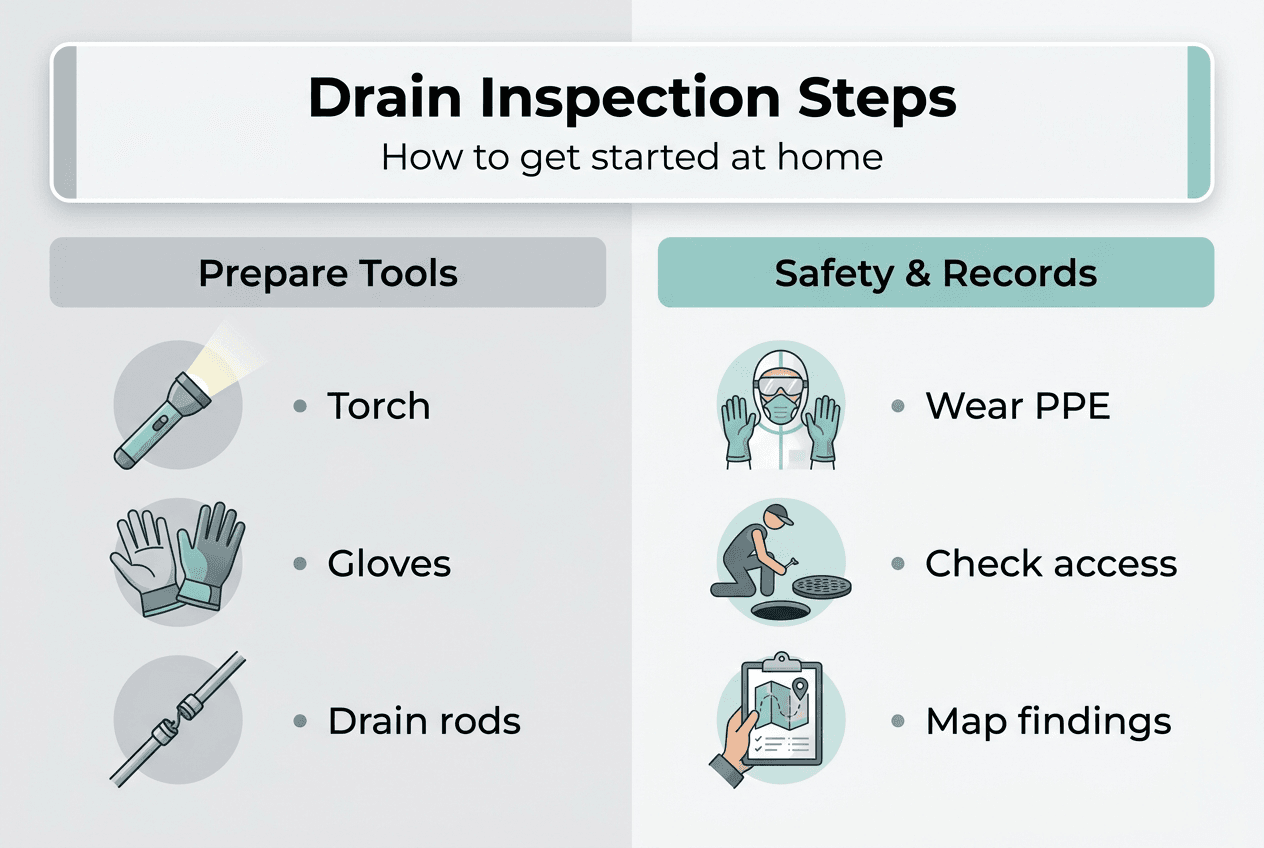
Before you begin inspecting your drainage system, gathering the right equipment and understanding safety protocols ensures effective results without risking your health. Wearing proper PPE including gloves, goggles and masks protects you from harmful bacteria and pathogens present in wastewater and drainage systems. Never attempt drain inspection without this essential protective gear.
Your basic toolkit should include a powerful torch or headlamp for visibility, drain rods for testing accessibility, a bucket for collecting water samples or debris, and a notepad for recording observations. For more thorough inspections, consider whether renting a drain camera makes sense for your situation. A drainage inspection checklist helps ensure you cover all critical points during your assessment.
Locating access points proves crucial before starting any inspection work. Most properties have cleanout points, typically found near the property boundary, in basements, or outside near bathroom facilities. Inspection chambers, common in older Poole properties, provide direct access to main drainage runs. Remove covers carefully, checking for damage or signs of recent flooding around these access points.
Safety warnings deserve serious attention. Drain environments harbour dangerous pathogens including E. coli, hepatitis and leptospirosis. Never place your face directly over open drains, avoid touching your face during inspection, and wash thoroughly with antibacterial soap afterwards. If you encounter sewage backup or strong gas smells, evacuate immediately and contact professionals.
Pro tip: Take photographs of your drainage access points and create a simple map showing their locations. This documentation proves invaluable during emergencies when you need quick access or when explaining issues to professional drainage engineers.
Comparing your inspection options helps determine the right approach:
| Method | Cost | Effectiveness | Best for |
|---|---|---|---|
| Visual inspection | Free | Basic surface issues | Regular maintenance checks |
| Basic tools (rods, torch) | £20-50 | Accessible blockages | DIY problem solving |
| Camera rental | £50-150/day | Internal pipe condition | Suspected hidden damage |
| Professional CCTV | £150-300 | Complete diagnosis | Persistent or complex issues |
Understanding these preparation essentials sets you up for successful inspection work. Following a comprehensive DIY approach means balancing thoroughness with realistic limitations of home inspection capabilities.
Performing a step by step drain inspection at home
Systematic inspection reveals drainage problems before they become emergencies. Start your assessment indoors, working through each room with water fixtures. Run taps and flush toilets whilst observing drainage speed and listening for unusual sounds. Slow drainage indicates partial blockages, whilst gurgling noises suggest venting problems or restrictions further down the system.
Follow this numbered inspection sequence:
- Test all sinks, baths and showers by filling them halfway and releasing the water simultaneously
- Listen carefully for gurgling sounds which indicate air displacement from blockages
- Check beneath sinks for moisture, corrosion or unusual odours suggesting hidden leaks
- Inspect toilet flushing, noting whether water rises before draining or swirls weakly
- Examine external gullies and drains for standing water, debris accumulation or offensive smells
- Use your torch to peer into accessible drain openings, looking for visible obstructions or damage
Camera inspections offer detailed internal views but require careful consideration. Rental equipment typically costs £50-150 daily, providing footage of pipe interiors to identify cracks, root intrusion or collapsed sections. However, navigating cameras through pipework demands patience and risks equipment damage in severely blocked or damaged drains. For homeowners comfortable with technology, cameras reveal issues invisible to surface inspection.
External inspection complements indoor checks. Walk your property perimeter, noting any ground subsidence, unusual wet patches or areas where grass grows exceptionally lush, all indicating potential drainage leaks. Check manhole covers for proper seating and signs of recent overflow. Poole’s sandy soil means ground movement around drains shows quickly through surface changes.
Pro tip: Maintain a simple inspection log with dates, observations and any actions taken. Patterns emerge over time, helping you spot deterioration early and providing valuable history when consulting professionals about persistent issues.
Recognising warning signs during inspection proves crucial. Foul odours emanating from drains suggest decomposing matter or sewer gas escape. Multiple slow drains indicate main line problems rather than isolated fixture issues. Water backing up in lower fixtures when using upper ones points to serious blockages requiring immediate attention.
For properties with known drainage vulnerabilities, consider learning about CCTV drain survey capabilities and how professionals use this technology. Understanding the survey process helps identify blockages more effectively when DIY methods reach their limits.
Timing your inspections strategically maximises their value. Schedule checks after heavy rainfall to observe how your system handles peak flow. Inspect again during dry periods to identify slow leaks or persistent moisture that doesn’t result from recent weather. Seasonal inspection before winter helps prevent freeze damage to compromised pipes.
Common drainage issues found during inspections in Poole
Poole properties face specific drainage challenges shaped by local conditions and infrastructure age. Understanding typical problems helps you recognise issues during inspection and assess their severity accurately. The area’s mature tree coverage and sandy soil create perfect conditions for root intrusion, whilst older Victorian and Edwardian properties often feature clay pipes susceptible to damage.
Common blockage culprits include:
- Hair accumulation in bathroom drains, often combined with soap residue forming stubborn clogs
- Grease and fat deposits coating kitchen pipes, gradually narrowing flow capacity
- Tree root intrusion through pipe joints, particularly prevalent in Poole’s sandy soils
- Foreign objects accidentally flushed or washed down drains
- Collapsed or damaged pipe sections allowing soil ingress
Tree roots prove especially problematic in sandy Poole and Bournemouth soils, seeking moisture and nutrients from drainage pipes. Roots exploit tiny cracks or joint gaps, expanding inside pipes until they create complete blockages. Properties with mature trees within 10 metres of drainage runs face highest risk.
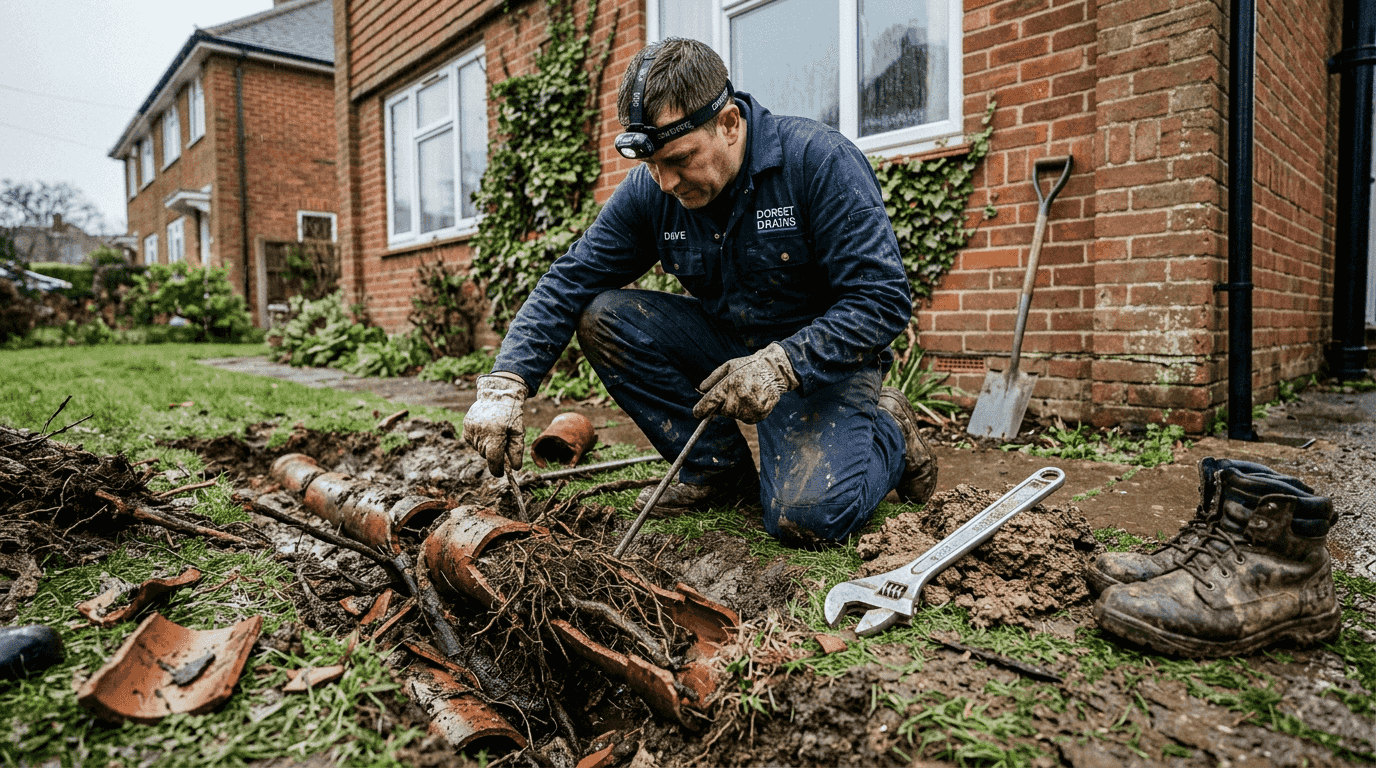
Structural damage takes various forms, each requiring different responses:
| Damage type | Symptoms | Typical cause | Repair urgency |
|---|---|---|---|
| Cracks | Slow leaks, damp patches | Ground movement, age | Medium |
| Bellies (sagging) | Persistent slow drainage | Poor installation, subsidence | Medium to high |
| Corrosion | Rust staining, weak flow | Metal pipe deterioration | High |
| Collapsed sections | Complete blockage, backups | Severe ground movement | Immediate |
| Root intrusion | Recurring blockages, gurgling | Tree proximity | Medium to high |
Early detection through regular inspection prevents minor issues escalating into major property damage. A small crack allowing gradual leakage can undermine foundations over months, whilst complete pipe collapse floods properties within hours. Understanding how to prevent drain blockages saves thousands in emergency repairs and property restoration.
Poole’s older properties frequently feature pitch fibre pipes installed between the 1950s and 1970s. These pipes degrade over time, becoming oval shaped and prone to collapse. If your property dates from this era and experiences recurring drainage problems despite regular maintenance, pipe material deterioration might be the underlying cause requiring professional assessment.
Recognising symptom patterns helps distinguish urgent problems from routine maintenance needs. Single fixture drainage issues typically indicate localised blockages manageable through DIY methods. Multiple fixtures draining slowly simultaneously suggest main line problems requiring professional intervention. Sewage backup into properties demands immediate expert attention due to health hazards and potential structural damage.
Verifying inspection findings and next steps
Interpreting your inspection results accurately determines appropriate next steps. Minor issues like slow drainage from hair buildup respond well to DIY cleaning methods, whilst structural damage or main line blockages need professional expertise. Assessing severity honestly prevents wasting time on problems beyond DIY capabilities whilst avoiding unnecessary professional callouts for simple fixes.
Signs demanding professional CCTV inspection include persistent drainage problems despite cleaning attempts, multiple fixtures affected simultaneously, visible ground subsidence near drainage runs, or sewage odours inside your property. Professional surveys provide precise problem location and detailed condition assessment impossible through basic inspection methods.
Preventive inspections deliver significant cost savings, with maintenance plans typically returning investment within one to three years compared to emergency repairs costing £3,000 or more. Research shows 70% of drainage backups occur in systems that haven’t received regular inspection, highlighting prevention’s value.
Recommended inspection frequency depends on several factors:
- Annual inspections for properties over 30 years old or with known drainage vulnerabilities
- Biennial checks for newer properties with modern drainage systems
- Annual inspections for properties with mature trees near drainage runs
- Inspection after any significant ground works or landscaping near drainage infrastructure
- Immediate inspection following unexplained increases in water bills suggesting hidden leaks
Post inspection actions depend on your findings:
- Document all observations with photographs and written notes including dates
- Address simple blockages using appropriate methods for the obstruction type
- Schedule professional assessment for structural issues or persistent problems
- Create a maintenance calendar based on your property’s specific risk factors
- Update property records with inspection findings and any remedial work completed
Maintaining inspection records provides valuable trend data. Noting gradual drainage speed decreases over successive inspections indicates developing blockages before they become complete. Recording seasonal variations helps distinguish normal behaviour from genuine problems requiring attention.
Post inspection do’s and don’ts:
- Do act promptly on warning signs rather than waiting for complete failure
- Do keep access points clear and easily reachable for future inspections
- Do share inspection findings with household members to encourage drainage care
- Don’t ignore recurring minor issues hoping they’ll resolve themselves
- Don’t attempt repairs beyond your skill level, risking further damage
- Don’t delay professional consultation when DIY methods prove ineffective
Understanding drainage inspection’s role in property maintenance helps you appreciate its value beyond immediate problem solving. Regular inspection forms part of responsible property ownership, protecting your investment whilst ensuring family health and safety. Learning about CCTV survey benefits helps you make informed decisions when professional services become necessary.
Professional drain inspections and unblocking services in Poole
Whilst DIY inspection catches many drainage issues early, some situations demand professional expertise and specialist equipment. Poole’s drainage specialists offer comprehensive CCTV surveys providing detailed internal pipe assessment, identifying problems invisible to basic inspection methods. Professional services prove particularly valuable for older properties with complex drainage layouts or persistent issues resisting DIY solutions.

Expert drain unblocking procedures combine high pressure jetting, mechanical cleaning and targeted treatments to clear even stubborn blockages safely. Professional drainage inspection services include detailed reporting with video footage, precise problem location and recommended solutions tailored to your property’s specific needs. Following a professional inspection checklist ensures thorough assessment covering all critical drainage system elements.
Frequently asked questions
How often should drains be inspected in Poole homes?
Inspection frequency depends on property age, pipe materials and local risk factors. Annual inspections suit high risk properties including those over 30 years old or with cast iron and clay pipes prone to deterioration. Standard Poole homes benefit from inspections every two to three years, whilst properties with mature trees nearby warrant annual checks due to root intrusion risks.
What signs indicate a drain needs immediate inspection?
Slow drainage across multiple fixtures, persistent gurgling sounds, foul odours emanating from drains, and any sewage backup require immediate professional inspection. Visible surface pooling, unexplained wet patches in gardens, or ground subsidence near drainage runs also warrant urgent attention. These symptoms often indicate serious blockages or structural damage demanding prompt professional assessment to prevent property damage.
Is it safe to inspect drains myself?
DIY drain inspection remains safe when proper precautions are followed. Always wear appropriate PPE including waterproof gloves, safety goggles and face masks to protect against harmful pathogens in drainage systems. Never place your face directly over open drains or manholes. Seek professional help for camera inspections requiring specialist equipment or when encountering sewage backup presenting serious health hazards.
Can I use a camera to inspect my drains at home?
Home camera inspections help identify internal pipe conditions but carry equipment damage risks in severely blocked or damaged drains. DIY approaches suit basic visual checks but professionals provide accurate diagnostics with superior equipment and interpretation expertise. Rental cameras cost £50-150 daily, making professional CCTV surveys often more cost effective for complex drainage issues requiring expert analysis.