
Poole’s historic housing stock presents unique drainage challenges that many homeowners face silently until a crisis strikes. Clay tile sewer pipes were widely installed from the early 1900s through the 1960s, and their short segments with primitive joints create vulnerabilities that traditional repair methods struggle to address efficiently. Modern trenchless repair techniques offer cost-effective, minimally disruptive solutions that preserve your property whilst delivering long-lasting results. Understanding these advanced methods empowers you to make informed decisions when drainage problems emerge, potentially saving thousands of pounds and weeks of upheaval.
Table of Contents
- Understanding The Limitations Of Traditional Drain Repair
- Modern Trenchless Repair Methods Explained
- Suitability And Limitations Of Modern Drainage Repair Options
- Practical Steps For Homeowners And Property Managers In Poole
- Modern Drainage Repair Services In Poole
Key takeaways
| Point | Details |
|---|---|
| Trenchless repair reduces disruption | Modern techniques like CIPP relining eliminate excavation, preserving landscaping and driveways whilst cutting repair time to days. |
| Clay pipes fail predictably | Root intrusion, joint misalignment, and cracks are common in older Poole homes due to primitive jointing materials. |
| Cost savings are substantial | No-dig methods avoid restoration expenses and labour costs associated with traditional excavation approaches. |
| Durability exceeds expectations | Relined pipes resist corrosion and roots, offering 50+ year lifespans that outlast original clay installations. |
Understanding the limitations of traditional drain repair
Older properties throughout Poole share a common vulnerability that often goes unnoticed until serious problems emerge. The clay tile pipes installed in homes built before the 1970s consist of short segments joined with basic mortar or pitch, creating weak points that deteriorate over time. Typical problems include infiltration, cracks, joint misalignment, and root intrusion, each contributing to increasingly severe drainage failures.
These failures manifest in ways that disrupt daily life. Tree roots seek moisture and nutrients, penetrating joints and creating blockages that worsen with each season. Crushed or cracked sections allow soil infiltration, reducing flow capacity and causing backups. Misaligned joints create lips where waste accumulates, leading to recurring blockages that temporary fixes cannot resolve.
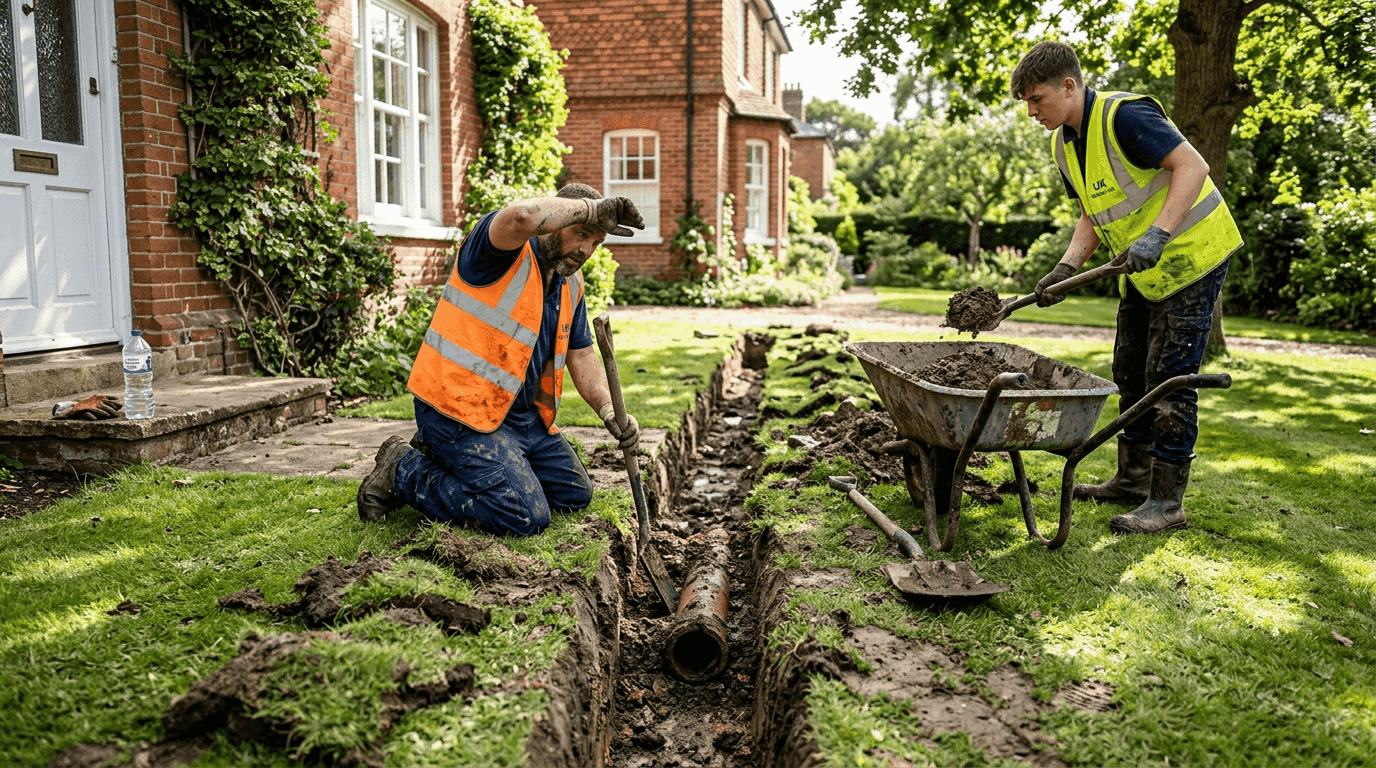
Traditional repair approaches compound these problems through their invasive nature. Excavation requires digging trenches across gardens, patios, or driveways to access damaged sections. This process destroys landscaping, damages hardscaping, and creates mess that takes weeks to restore. The labour costs alone can reach several thousand pounds before considering reinstatement expenses.
Repeated plumber visits for the same recurring blockages signal deeper structural issues that surface treatments cannot address. Each temporary fix provides brief relief whilst underlying pipe deterioration continues unchecked. Property owners often spend hundreds of pounds annually on emergency callouts without resolving the root cause.
Pro Tip: Watch for persistent wet patches in gardens, sewage odours near drains, or gurgling sounds when water drains. These early warning signs indicate developing problems that are cheaper to address before complete failure occurs.
Many homeowners in Poole face these common drainage issues without realising that modern alternatives exist. The assumption that excavation is inevitable prevents exploration of better options. Understanding why traditional methods fall short creates context for appreciating how trenchless technology transforms the repair process.
The short segments and primitive joint materials of clay tile pipes are the root of most problems.
The disruption extends beyond physical damage. Excavation projects require vehicle access, restrict property use, and create noise and dust that affect neighbours. Completing repairs can take several weeks when weather delays occur or unexpected complications arise. The total cost of ownership for traditional repairs includes hidden expenses that only become apparent after work begins.
Modern trenchless repair methods explained
Trenchless technology revolutionises drainage repair by working from within existing pipes rather than excavating around them. The most widely adopted method, cured-in-place pipe (CIPP) relining, creates a new pipe within the old one, offering a long-term solution with 50+ years lifespan. This approach transforms damaged clay pipes into seamless, durable systems without disturbing your property.
The process begins with thorough CCTV inspection to map damage locations and assess suitability. Technicians then clean the pipe using high-pressure water jets to remove debris, roots, and scale. A flexible liner saturated with epoxy resin is inserted through existing access points and positioned precisely within the damaged section. Hot water or steam cures the resin, creating a rigid, corrosion-resistant pipe that bonds to the host pipe.
Pipe bursting offers an alternative for severely damaged lines requiring full replacement. This method uses a bursting head to fracture the old pipe whilst simultaneously pulling new pipe into place. The technique works well when existing pipes are too damaged for relining but excavation remains undesirable.
Trenchless pipe repair methods offer less disruption and cost compared to excavation, completing most residential projects within one to three days. The speed advantage stems from eliminating excavation, backfill, and restoration phases that dominate traditional timelines. Contractors access pipes through existing manholes or small entry points, minimising visible impact.
A typical CIPP relining procedure follows these steps:
- Conduct comprehensive CCTV survey to identify damage extent and pipe dimensions.
- Clean pipe interior thoroughly using mechanical cutters and high-pressure jetting.
- Measure and prepare custom liner saturated with structural epoxy resin.
- Insert liner through access point using inversion or pull-in-place method.
- Inflate liner with air or water bladder to ensure complete contact with pipe walls.
- Cure resin using hot water, steam, or UV light depending on system specifications.
- Remove bladder and trim liner ends flush with existing connections.
- Perform final CCTV inspection to verify quality and restore service connections.
The relined pipe becomes a monolithic structure resistant to root penetration, chemical corrosion, and joint failures that plagued the original installation. Smooth interior surfaces improve flow characteristics, reducing future blockage risk. The structural integrity often exceeds that of new traditional pipe installations.
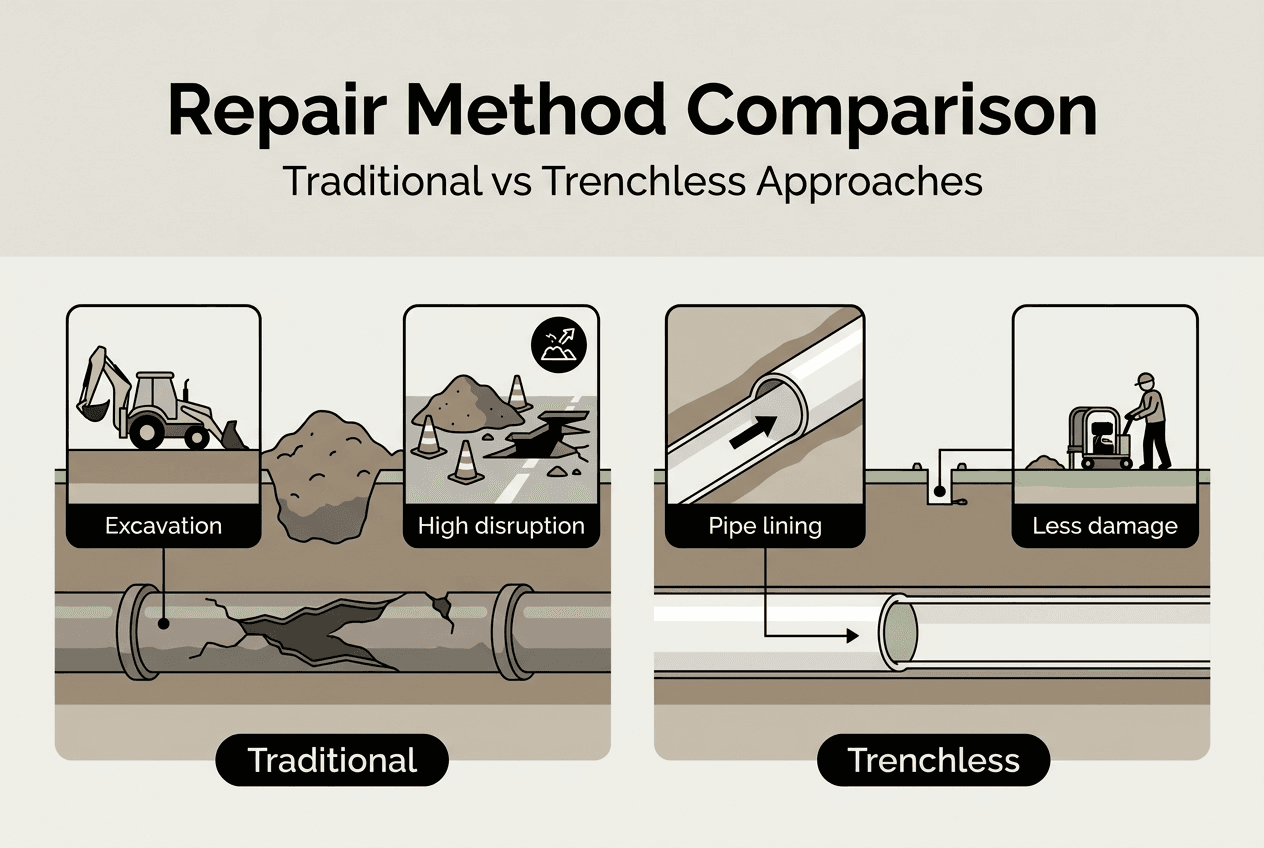
Pro Tip: Trenchless repair preserves mature trees, established gardens, and expensive paving that excavation would destroy. The avoided restoration costs often offset the repair expense entirely.
Comparing methods reveals stark differences in practical impact:
| Criteria | Traditional excavation | Trenchless repair |
|---|---|---|
| Property disruption | Extensive trenching destroys landscaping | Minimal surface disturbance |
| Project duration | 2-4 weeks including restoration | 1-3 days start to finish |
| Cost range | £5,000-£15,000 with reinstatement | £3,000-£7,000 typically |
| Pipe lifespan | 30-50 years for new clay | 50+ years for CIPP liner |
| Access requirements | Vehicle access for excavators | Standard van access sufficient |
The financial advantage of drain relining becomes clear when considering total project costs. Traditional methods incur expenses for excavation equipment, disposal of excavated material, pipe materials, backfill, compaction, and complete surface restoration. Trenchless repairs eliminate most of these cost centres whilst delivering superior longevity.
Suitability and limitations of modern drainage repair options
Whilst trenchless technology solves many drainage problems elegantly, understanding its appropriate applications prevents disappointment and ensures optimal outcomes. The method excels at addressing specific pipe conditions that compromise function without complete structural collapse.
Trenchless repair suits these common scenarios:
- Hairline to moderate cracks allowing infiltration or exfiltration
- Separated or offset joints creating flow restrictions
- Root intrusion through joints without complete blockage
- Corrosion or erosion affecting pipe walls but maintaining structural integrity
- Multiple defects along extended pipe runs where excavation would be prohibitively disruptive
However, trenchless repair is not suitable for major structural failures or fully collapsed pipes. Severe deformation exceeding 30% of pipe diameter prevents liner insertion and proper curing. Pipes with significant bellying or sags may require excavation to correct grade issues before relining becomes viable.
No-dig methods address cracked pipes, displaced joints, root intrusion, corrosion, and erosion effectively when structural integrity remains sufficient for liner installation. Professional assessment through CCTV inspection determines suitability by revealing internal conditions that dictate appropriate repair strategies.
Key considerations before selecting a repair method include:
- Extent and location of damage throughout the drainage system
- Pipe diameter and material composition affecting liner compatibility
- Access point availability for equipment and liner insertion
- Local ground conditions and depth of pipe installation
- Budget constraints balanced against long-term value and disruption costs
- Future property plans that might affect drainage system modifications
A comparison of repair approaches by specific criteria helps clarify decision-making:
| Repair aspect | Trenchless methods | Traditional excavation |
|---|---|---|
| Best for | Multiple defects, difficult access, preservation priorities | Complete collapse, severe misalignment, grade correction |
| Limitations | Requires some structural integrity, limited diameter reduction | Destroys landscaping, lengthy disruption, weather dependent |
| Inspection needs | Essential CCTV before and after | Visual inspection during excavation |
| Warranty typical | 10-50 years depending on system | 10-25 years for materials and workmanship |
Professional CCTV drainage surveys provide the diagnostic foundation for informed repair decisions. These inspections reveal damage severity, identify contributing factors like root intrusion sources, and document conditions that guide method selection. Reputable contractors conduct thorough surveys before quoting to ensure recommendations match actual requirements.
The importance of matching repair method to specific conditions cannot be overstated. Attempting trenchless repair on unsuitable pipes wastes money and delays proper resolution. Conversely, defaulting to excavation when modern methods suffice incurs unnecessary expense and disruption. Expert evaluation bridges this gap, ensuring the chosen approach delivers optimal results for your particular situation.
Understanding these types of drain repairs empowers you to ask informed questions and evaluate contractor recommendations critically. Not every drainage problem requires the same solution, and recognising these distinctions protects you from inappropriate or excessive interventions.
Practical steps for homeowners and property managers in Poole
Recognising drainage problems early and responding appropriately separates minor repairs from major crises. Symptoms like tree roots, wet patches, smells, slow drains, and backups indicate failing pipes that warrant professional attention before complete failure occurs.
Watch for these warning signs that suggest drainage repair needs:
- Persistent sewage odours near drains or in gardens without obvious blockage source.
- Recurring slow drainage in multiple fixtures suggesting main line restrictions.
- Gurgling sounds from toilets or drains when water flows elsewhere in the property.
- Unexplained wet patches or lush grass growth indicating underground leaks.
- Frequent blockages requiring repeated plumber visits within short timeframes.
- Visible settlement or subsidence near drainage routes suggesting soil erosion.
- Tree roots visible in toilets or drains during blockage clearing attempts.
When these signs appear, taking systematic action prevents escalation and controls costs. Contact specialist Poole contractors who offer modern trenchless repair capabilities alongside traditional methods. This ensures you receive unbiased recommendations based on actual conditions rather than limited service offerings.
Request comprehensive CCTV surveys before accepting any repair quotation. Reputable contractors provide video footage and detailed reports showing damage locations, severity, and contributing factors. This documentation supports informed decision-making and provides baseline records for future reference.
Pro Tip: Regular inspection and early action prevents escalating costs and damage. Annual or biennial CCTV surveys for properties over 40 years old identify developing issues whilst repair options remain straightforward and affordable.
After repairs, insist on post-completion CCTV verification showing successful restoration. This quality assurance step confirms proper liner installation, verifies restored flow capacity, and documents the improved condition for warranty purposes. Contractors confident in their work welcome this transparency.
Maintaining your drainage system after repair extends its functional life and prevents new problems. Avoid planting trees with aggressive root systems near drainage routes. Species like willows, poplars, and some ornamental varieties seek water aggressively and can compromise even modern liners over time.
Schedule periodic maintenance inspections through drainage inspection services to catch developing issues early. Professional monitoring identifies minor problems before they require extensive intervention, protecting your investment in modern repair work.
Consider preventative measures that reduce future repair needs. Root barriers installed during landscaping projects protect drainage lines from tree intrusion. Regular drain cleaning removes accumulated debris before it hardens into stubborn blockages. These modest investments deliver substantial long-term savings.
For minor issues, understanding drain repair DIY solutions helps you address simple problems without professional intervention. However, recognise when DIY approaches prove inadequate and professional expertise becomes necessary. Attempting complex repairs without proper equipment or knowledge often worsens problems and increases eventual costs.
Building relationships with trusted drainage specialists provides peace of mind and ensures rapid response when emergencies occur. Established service providers familiar with your property’s drainage history deliver more efficient, targeted solutions than contractors encountering your system for the first time.
Modern drainage repair services in Poole
When drainage problems threaten your property’s comfort and value, accessing local expertise in modern repair techniques makes all the difference. Poole homeowners benefit from specialists who understand the region’s unique drainage challenges and offer minimally invasive solutions tailored to older housing stock.

Comprehensive modern drain repair methods combine advanced technology with local knowledge to deliver results that traditional approaches cannot match. From initial CCTV surveys identifying problem sources to final verification confirming successful restoration, professional services guide you through each stage with transparency and expertise.
Understanding the complete drain unblocking procedure helps you appreciate the thoroughness required for lasting solutions. Modern approaches address underlying causes rather than merely treating symptoms, ensuring problems stay resolved rather than recurring seasonally.
Whether you need emergency intervention or planned preventative maintenance, exploring professional drain repair guidance connects you with services designed specifically for Poole’s drainage infrastructure. Local specialists offer rapid response, upfront pricing, and proven techniques that protect your property whilst delivering exceptional value.
FAQ
What are the main signs that my drainage pipes need modern repair?
Signs include root intrusion, wet patches, sewage smells, slow drains, gurgling sounds, and frequent backups. These symptoms indicate structural problems beyond simple blockages. Professional CCTV inspection confirms whether modern repair methods can address your specific issues effectively.
Is modern trenchless repair more cost-effective than traditional methods?
No-dig methods can save between £2,000 and £8,000 due to reduced labour and no restoration costs. The savings stem from eliminating excavation, backfill, and surface reinstatement expenses. Long lifespans exceeding 50 years add substantial value beyond initial cost comparisons.
Can trenchless repair fully replace pipe replacement?
Trenchless repair suits moderate damage but trenchless repair is not suitable for major structural failures or fully collapsed pipes. Severe deformation or complete collapse requires excavation to restore proper function. Professional diagnosis determines which approach delivers optimal results for your specific conditions.
How long does trenchless drain repair take to complete?
Most residential trenchless repairs complete within one to three days from initial survey to final restoration. This timeline includes CCTV inspection, pipe cleaning, liner installation, curing, and verification. Traditional excavation methods typically require two to four weeks including restoration work.
Will relined pipes resist future root intrusion effectively?
Properly installed CIPP liners create seamless, jointless pipes that roots cannot penetrate. The smooth epoxy surface provides no entry points or nutrient sources that attract root growth. This resistance to biological intrusion represents a key advantage over traditional jointed pipe systems that roots exploit readily.