
Poole homeowners often struggle to pinpoint the exact cause of their drainage problems, particularly given the area’s ageing clay and cast iron pipe infrastructure. Understanding the most common types of blockages, from root ingress to over 60% of residential issues, helps you recognise symptoms early and take appropriate action. This guide walks through real examples of blockages affecting local properties, explaining what to look for and how to respond effectively.
Table of Contents
- How To Identify And Understand Drain Blockages
- Common Examples Of Drain Blockages: Root Ingress
- Examples Of Drain Blockages: Fat, Oil And Grease Buildup
- Examples Of Drain Blockages: Tissue And Wet Wipes
- Summary Comparison And Situational Recommendations
- How We Help Poole Homeowners With Blocked Drains
Key takeaways
| Point | Details |
|---|---|
| Root ingress and FOG dominate | Tree roots and cooking fats cause the majority of Poole drain blockages due to ageing pipes and disposal habits. |
| Non-flushable items create severe clogs | Wet wipes and tissues resist breakdown, leading to costly toilet and sewer backups. |
| Ageing infrastructure amplifies risk | Poole’s older clay and cast iron pipes deteriorate over time, making blockages more frequent and complex. |
| Professional diagnosis saves money | CCTV surveys pinpoint exact blockage locations and types, preventing unnecessary excavation and guesswork. |
How to identify and understand drain blockages
Recognising what’s actually blocking your drains makes the difference between a quick fix and extensive pipe damage. Several materials commonly obstruct Poole drainage systems, each producing distinct warning signs.
The most frequent culprits include tree roots penetrating pipe joints, fats and cooking oils solidifying inside kitchen drains, wet wipes and tissues accumulating in toilets, and sediment buildup from deteriorating pipe interiors. Homes with clay pipes over 50 years old face 40% higher blockage risk, a situation particularly relevant to Poole’s housing stock.
Watch for these telltale symptoms across your property:
- Water draining noticeably slower than usual in sinks, showers, or toilets
- Foul sewage odours emanating from drains or external inspection chambers
- Gurgling sounds when running taps or flushing toilets
- Multiple fixtures backing up simultaneously, indicating main drain obstruction
- Damp patches or subsidence near external drainage runs
Early visual checks help catch problems before they escalate. Lift your outside inspection chamber covers periodically to check water levels shouldn’t sit high when fixtures aren’t in use. If you spot standing water or debris floating near the surface, a blockage likely exists downstream.
Professional diagnosis through drain inspection methods reveals exactly what’s causing your drainage issues. CCTV camera surveys navigate your entire pipe network, identifying blockage composition, location, and any structural damage requiring attention. This precision prevents unnecessary digging and targets treatment effectively.
Understanding why drains get blocked in Poole properties helps you anticipate problems based on your home’s age and surrounding environment. Properties near mature trees face higher root ingress risk, whilst homes built before 1970 typically feature clay pipes more susceptible to cracking and sediment accumulation.
Pro tip: Schedule annual drain inspections during autumn before winter rainfall increases system pressure. This proactive approach catches developing blockages whilst they’re still manageable, avoiding emergency callouts during peak demand periods.
Common examples of drain blockages: root ingress
Tree and shrub roots represent one of the most destructive blockage types affecting Poole’s older drainage infrastructure. Roots naturally seek moisture and nutrients, making your underground pipes an irresistible target.
As clay and cast iron pipes age, tiny cracks and gaps develop at joints where sections connect. Tree roots detect escaping water vapour and begin infiltrating these weak points, initially as fine tendrils. Once inside, roots expand rapidly, feeding on the nutrient-rich wastewater whilst causing progressive pipe damage.
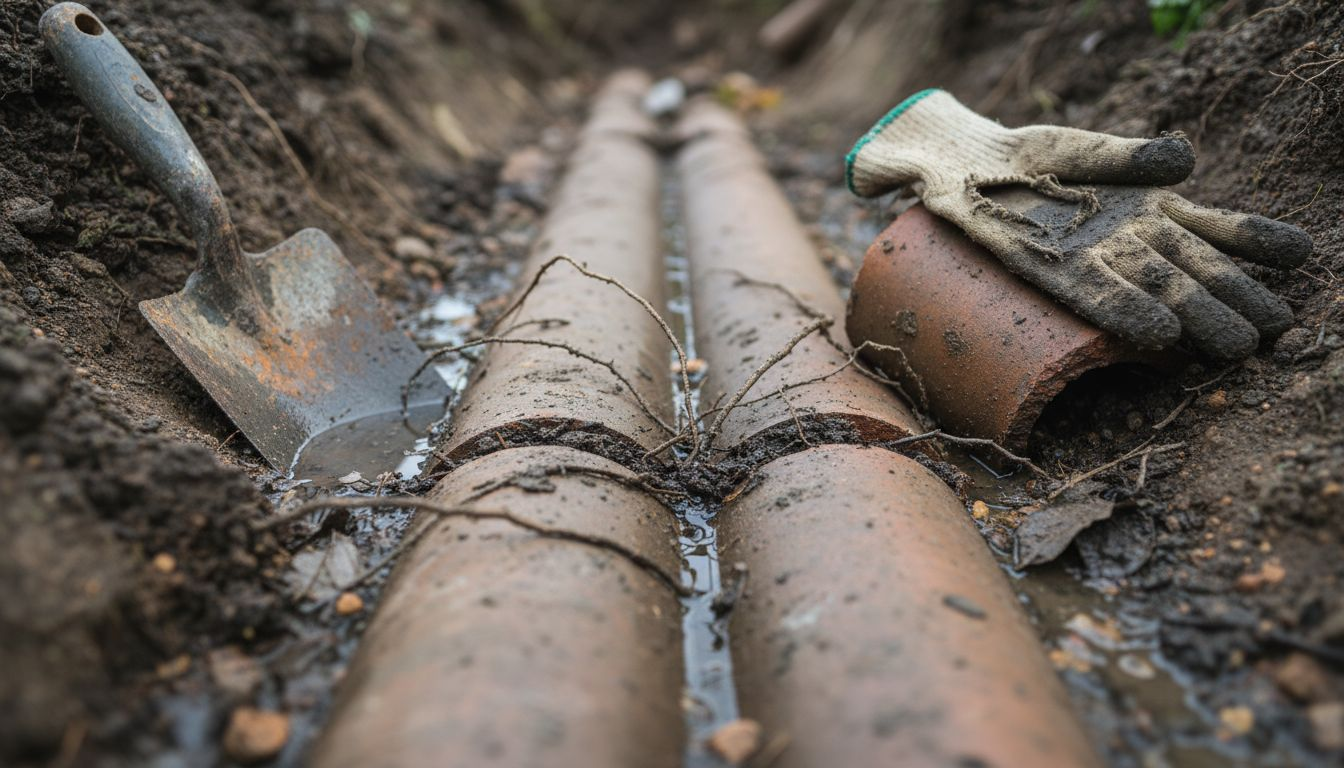
Root ingress predominantly affects older properties and creates increasingly severe blockages as root masses accumulate. The fibrous root structure traps passing debris, toilet paper, and sediment, forming dense clogs that completely obstruct flow. Poole’s combination of mature gardens and pre-1980s housing makes this scenario particularly common.
Recognise root blockages through these characteristic symptoms:
- Progressively slower drainage over weeks or months rather than sudden blockage
- Persistent gurgling from toilets and ground-floor drains
- Sewage backups during heavy rainfall when system capacity peaks
- Foul odours near garden drains or areas with inspection chambers
- Visible root intrusion if you lift external chamber covers
Root damage extends beyond the immediate blockage. As roots expand, they crack pipes further, allowing soil infiltration and creating voids that lead to subsidence. Left untreated, root-invaded pipes eventually collapse, requiring full replacement rather than simple clearing.
Professional CCTV drain surveys precisely locate root intrusion points and assess pipe condition. High-pressure water jetting cuts through root masses initially, whilst mechanical cutters grind away stubborn accumulations. Severely damaged sections often need patch lining or excavation and replacement.
Pro tip: If mature trees grow within 10 metres of your property, request root barrier installation when having drains relined. These physical shields redirect root growth away from pipes, preventing recurrence after clearance.
The drain cleaning workflow for Poole homes typically combines initial mechanical clearing with follow-up CCTV verification, ensuring roots are fully removed and identifying any pipe repairs needed to prevent rapid regrowth.
Examples of drain blockages: fat, oil and grease buildup
Kitchen drainage systems face constant assault from cooking byproducts, particularly fats, oils, and grease collectively known as FOG. This seemingly harmless liquid waste creates some of the most stubborn and recurrent blockages.
When you pour hot cooking oil or greasy water down your sink, it flows freely at first. However, as the liquid travels through cooler underground pipes, it solidifies against pipe walls. Each subsequent wash adds another layer, gradually narrowing the pipe diameter until water barely trickles through.
FOG accumulations require high-pressure jetting for effective removal, as the solidified grease forms a waxy coating resistant to simple plunging or chemical treatments. The buildup also traps food particles, hair, and soap residue, creating a compound blockage that worsens rapidly.
Kitchen drain blockages from FOG announce themselves through:
- Standing water in sinks that drains very slowly or not at all
- Unpleasant rancid odours from plug holes
- Gurgling sounds when dishwashers or washing machines drain
- Water backing up through adjacent fixtures when running taps
The problem intensifies over time. Initial slowness becomes complete blockage, often during busy cooking periods when you need your kitchen most. If FOG reaches your main drain, it can affect multiple properties on shared sewer lines, creating neighbour disputes and costly repairs.
Preventing FOG blockages requires changing disposal habits:
- Allow cooking oils and fats to cool, then scrape into containers for bin disposal
- Wipe greasy plates and pans with kitchen paper before washing
- Install sink strainers to catch food particles before they enter drains
- Run hot water for 30 seconds after washing dishes to help clear residual grease
- Pour a kettle of boiling water down drains weekly to melt minor accumulations
Professional high-pressure water jetting blasts away FOG deposits effectively. The concentrated stream scours pipe walls clean, restoring full flow capacity. For severe buildups in older pipes, emergency drain unblocking services often combine jetting with enzyme treatments that break down remaining organic residues.
Regular maintenance prevents FOG from becoming a recurring nightmare. Quarterly professional jetting keeps kitchen drains flowing freely, particularly worthwhile for households that cook frequently or run food-related businesses.
Examples of drain blockages: tissue and wet wipes
Toilet blockages cause immediate disruption and potential hygiene hazards, with improper flushing habits being the primary culprit. Whilst toilets seem capable of disposing of various items, only human waste and toilet paper break down sufficiently to travel through drainage systems safely.
Tissues resemble toilet paper but use stronger fibres designed to retain structure when wet. This durability makes them grab onto pipe irregularities and accumulate. Wet wipes pose an even greater threat, contributing to 68% of severe toilet blockages despite many being marketed as flushable.
The table below clarifies which items safely flush and which cause problems:
| Item | Safe to flush | Blockage risk | Breakdown time |
|---|---|---|---|
| Toilet paper | Yes | Very low | 2-4 minutes |
| Facial tissues | No | High | 4-6 hours |
| Wet wipes (all types) | No | Very high | Weeks to months |
| Cotton buds | No | Medium | Never fully |
| Sanitary products | No | Very high | Never |
| Dental floss | No | Medium | Never |
Wet wipes create particularly troublesome blockages because their synthetic fibres interlock, forming dense mats that trap everything flowing past. Even products labelled flushable fail to disintegrate sufficiently, instead travelling downstream where they snag on pipe joints, tree roots, or existing narrowing.
Recognise tissue and wipe blockages through:
- Toilet water rising when flushed then draining very slowly
- Complete bowl overflow after flushing
- Gurgling from other bathroom fixtures when toilet flushes
- Visible tissue or wipe material in inspection chambers
Simple prevention eliminates most tissue and wipe blockages:
- Keep a small bin beside every toilet for disposing of wipes, tissues, and sanitary items
- Educate all household members, particularly children, about proper flushing habits
- Switch to toilet paper exclusively for bathroom waste
- Post reminder signs in guest bathrooms about what not to flush
When blockages do occur, step-by-step unblocking methods often resolve them quickly. A plunger creates pressure that can dislodge recent accumulations. For stubborn clogs, drain augers mechanically break up the mass. Severe blockages may require professional jetting to fully clear the pipe and restore normal flow.
The cost of clearing wipe blockages far exceeds the minimal effort of proper disposal. A single emergency callout typically costs more than a year’s supply of bathroom bins.
Summary comparison and situational recommendations
Understanding how different blockage types compare helps you make informed decisions about prevention, diagnosis, and treatment. The table below summarises key characteristics:
| Blockage type | Primary cause | Common locations | Typical symptoms | Best clearing method | Prevention approach |
|---|---|---|---|---|---|
| Root ingress | Tree roots penetrating cracked pipes | Main drains, garden lines | Slow drainage, gurgling, outdoor odours | Mechanical cutting + jetting, relining | Root barriers, pipe replacement |
| FOG buildup | Cooking fats solidifying in pipes | Kitchen drains | Sink standing water, rancid smells | High-pressure jetting | Proper grease disposal, weekly flushing |
| Wet wipes/tissues | Flushing non-degradable items | Toilet branches, main sewer | Rising toilet water, overflow | Augering, jetting | Bin disposal only |
| Sediment accumulation | Ageing pipe deterioration | Older clay/iron pipes | Gradual flow reduction, recurring clogs | Jetting, descaling, relining | Regular inspections, pipe renewal |
Choosing the right response depends on your specific situation. DIY methods like plunging or basic augering work for simple, recent blockages in accessible locations. However, several scenarios demand professional intervention:
Call specialists when blockages affect multiple fixtures simultaneously, indicating main drain obstruction. Recurring problems in the same location suggest underlying structural issues requiring CCTV diagnosis. Foul sewage odours or visible wastewater backing up outdoors signal serious blockages needing immediate attention.
Cost considerations matter too. Attempting DIY clearance on root blockages or severe FOG accumulations often worsens the problem, leading to higher eventual repair bills. Professional drain specialists possess equipment and expertise to diagnose accurately and fix problems permanently.
Pro tip: Maintain a drainage log noting slow drainage incidents, clearing actions taken, and seasonal patterns. This record helps professionals diagnose recurring issues faster and identifies preventive maintenance schedules tailored to your property’s specific vulnerabilities.
For properties with ageing infrastructure, annual CCTV surveys catch developing problems before they become emergencies. The modest inspection cost prevents catastrophic failures that require excavation and full pipe replacement.
How we help Poole homeowners with blocked drains
When drainage problems disrupt your daily routine, you need solutions that work first time. We specialise in diagnosing and clearing all blockage types affecting Poole properties, from simple toilet clogs to complex root invasions in century-old clay pipes.
Our modern drain unblocking procedures combine proven techniques with cutting-edge technology. High-pressure water jetting blasts away FOG and sediment, whilst mechanical cutters handle root masses effectively. Every job begins with thorough assessment, often using CCTV drain surveys to pinpoint exactly what’s blocking your drains and where.
Our tailored drain cleaning workflow addresses Poole’s unique infrastructure challenges. We understand how local soil conditions, water tables, and historic pipe materials affect drainage performance. This expertise means faster diagnosis, more effective treatment, and advice on preventing recurrence.
FAQ
What causes most drain blockages in Poole homes?
Root ingress, fat and grease buildup, and flushing wet wipes cause the majority of local blockages. Poole’s ageing clay pipe infrastructure makes these issues more frequent and severe than in newer developments. Regular professional inspections and proper disposal habits significantly reduce blockage risk.
How can I tell if a blockage is caused by tree roots?
Slow drainage developing gradually over weeks, foul smells near garden drains, and sewage backups during rainfall typically indicate root problems. Professional CCTV surveys confirm root presence and assess pipe damage, enabling targeted treatment rather than guesswork.
What are the best ways to prevent fat and grease buildup?
Never pour cooking fats down drains; instead, collect cooled oils in containers for bin disposal. Use sink strainers to catch food particles and flush drains weekly with boiling water. Schedule professional high-pressure jetting every six months for heavy kitchen use.
Are wet wipes really a major cause of toilet blockages?
Yes, wet wipes cause 68% of severe toilet blockages in UK homes because their synthetic fibres resist breakdown. Even flushable varieties create problems by snagging on pipe irregularities. Dispose of all wipes in bins, using only toilet paper for flushing.