
Blocked drains can turn into expensive nightmares for homeowners, but modern repair methods offer smarter solutions. Drain relining can reduce repair costs by up to 40% compared to traditional pipe excavation, avoiding disruptive digging while delivering durable results. This guide explains what drain relining is, how the process works, and why it might be the perfect solution for your Poole property’s drainage problems.
Table of Contents
- What Is Drain Relining? Definition And Process
- When To Consider Drain Relining
- Comparison With Traditional Drain Repairs
- Benefits And Limitations Of Drain Relining
- Cost Considerations For Homeowners In Poole
- Common Misconceptions About Drain Relining
- Discover Reliable Drain Relining Services In Poole
- Frequently Asked Questions About Drain Relining
Key Takeaways
| Point | Details |
|---|---|
| What it is | Drain relining installs a resin liner inside damaged pipes, creating a new pipe without excavation. |
| Durability | Properly installed relining lasts 30 to 50 years, resisting corrosion and root intrusion. |
| Assessment | CCTV drain surveys are essential to confirm suitability before repair. |
| Cost benefit | Lower overall costs than excavation due to reduced labour and no landscaping restoration. |
| Limitations | Not suitable for severely collapsed pipes or certain damage types requiring professional evaluation. |
What is Drain Relining? Definition and Process
Drain relining repairs damaged pipes by installing a new resin-coated liner inside the existing pipe, curing it to form a durable new pipe within the old one, eliminating the need for excavation, typically cured to last 30 to 50 years. Unlike traditional methods that require tearing up gardens and driveways, this technique works entirely from inside your existing drainage system. The result is a seamless, watertight pipe that performs like new without the mess.
The drain relining process follows these critical steps:
- Inspection and diagnosis: Technicians conduct CCTV drain surveys for diagnosis to identify damage location, severity, and pipe condition.
- Cleaning preparation: High pressure water jets remove debris, scale, and blockages to ensure proper liner adhesion.
- Liner insertion: A flexible resin-coated tube is inserted through existing access points and positioned precisely within the damaged section.
- Inflation and positioning: The liner inflates against the pipe walls, conforming to the exact shape and diameter of your drainage system.
- Curing process: Hot water or steam activates the resin, hardening it into a solid, structural pipe within 2 to 4 hours.
- Final inspection: Another camera survey confirms complete coverage and proper installation.
The cured liner bonds to the host pipe, creating a joint-free barrier that stops leaks and prevents future root intrusion. This method suits various pipe materials including clay, concrete, cast iron, and PVC. Modern drain repair methods like relining offer Poole homeowners practical alternatives to disruptive excavation.
Pro Tip: Schedule your relining during dry weather when possible. Although the process works year round, dry conditions make access easier and reduce complications from groundwater infiltration during preparation.
When to Consider Drain Relining
Recognising early warning signs helps you address drainage problems before they escalate into emergencies. Common signs homeowners should look for indicating drain damage suitable for relining include bad odours, gurgling noises, wet floors, and sudden rises in utility bills due to leaks. These symptoms often indicate cracks, joint failures, or structural deterioration that relining can effectively repair.
Watch for these specific indicators:
- Persistent foul smells around drains or in your garden
- Slow drainage across multiple fixtures suggesting internal pipe damage
- Unexplained damp patches on walls or floors near drainage routes
- Frequent blockages returning shortly after clearing
- Visible ground subsidence or unusual vegetation growth patterns
- Increased water bills without changed usage patterns
Before proceeding with relining, a CCTV drain survey is essential to accurately diagnose damage, determine suitability, and plan repair method and materials, reducing risk of inadequate repairs. This inspection reveals exact damage locations, pipe material condition, and whether internal lining will solve the problem. Not all drainage issues qualify for relining treatment.
Relining works best for cracks, holes, joint separation, and moderate root intrusion. However, completely collapsed pipes, severe misalignment, or blocked connections may require excavation. The importance of CCTV drain surveys cannot be overstated, as they prevent wasted investment in unsuitable repairs. Adequate access points are also necessary to insert equipment and liners.
Pro Tip: If multiple drains show problems simultaneously, request a comprehensive drainage survey covering your entire system. Identifying all issues at once helps you plan cost-effective repairs rather than addressing problems piecemeal as they emerge.
Poole’s mixture of Victorian-era and modern properties means drainage systems vary considerably. Professional drain assessment in Poole considers local factors like soil conditions, tree root patterns, and historical pipe layouts when evaluating relining suitability.
Comparison with Traditional Drain Repairs
Understanding your repair options helps you make informed decisions about drainage problems. Localised drain patch lining repairs specific sections using fibreglass or resin patches, whereas full drain relining creates a continuous new lining along the entire pipe length, suited for widespread damage. Each method serves different situations with varying costs and disruption levels.
This comparison clarifies when each approach makes sense:
| Method | Best For | Duration | Disruption | Typical Cost |
|---|---|---|---|---|
| Patch lining | Isolated cracks or holes under 1 metre | 2 to 4 hours | Minimal, no excavation | Lower, targeted repair |
| Full relining | Multiple damage points or entire pipe sections | 1 to 2 days | Very low, access points only | Moderate, whole pipe coverage |
| Excavation | Collapsed pipes, severe misalignment, or impossible access | 3 to 7 days | High, involves digging and restoration | Higher, includes landscaping repair |
Relining eliminates the need to dig up driveways, gardens, or pathways. You avoid costs for surface restoration, temporary access arrangements, and landscape repairs. Most relining projects complete within one or two days compared to week-long excavation jobs. The speed reduces inconvenience and gets your drainage functioning faster.
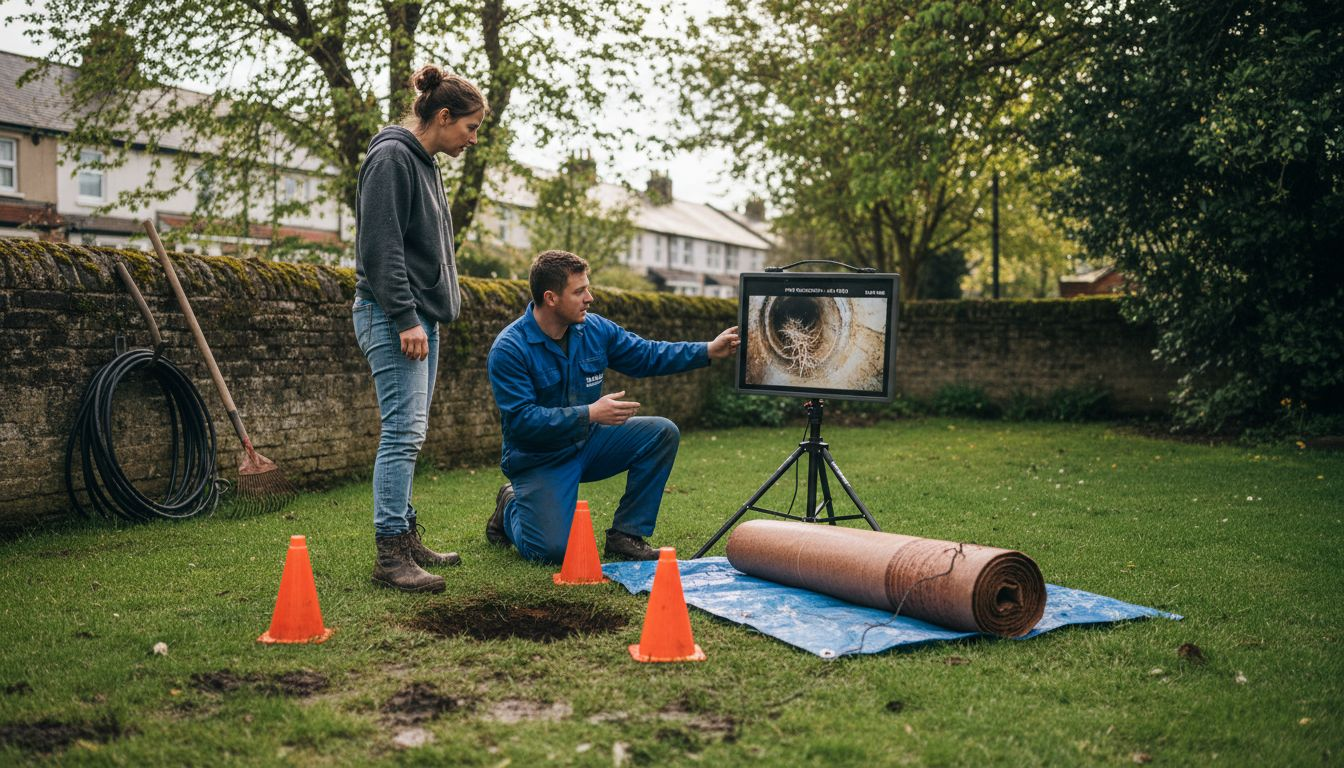
Traditional excavation remains necessary when pipes have completely collapsed or when structural issues extend beyond the pipe itself. However, for internal pipe damage like cracks, joint failures, and moderate deterioration, modern drain repair options provide superior outcomes. The continuous liner eliminates all joints where future leaks typically develop.
Cost savings come from multiple factors:
- Reduced labour hours due to faster installation
- No excavation equipment rental or operation costs
- Elimination of surface restoration and landscaping expenses
- Minimal site preparation and cleanup requirements
- Longer lifespan reducing future repair frequency
The relining vs traditional repairs debate often favours modern methods for most residential situations. Homeowners appreciate avoiding disruption to their daily routines while achieving repairs that outlast many traditional solutions.
Benefits and Limitations of Drain Relining
Drain relining delivers substantial advantages for suitable drainage problems. Relined pipes last 30 to 50 years and resist corrosion and root intrusion; relining is environmentally friendly and reduces waste from pipe replacement. The seamless interior surface prevents debris accumulation and reduces future blockage risks. These pipes withstand ground movement better than jointed systems prone to separation.
Key benefits include:
- Long-term durability: Properly installed liners match or exceed the lifespan of new pipe installations
- Root resistance: The smooth, jointless interior gives roots no entry points to exploit
- Corrosion immunity: Resin materials do not corrode, rust, or deteriorate from chemical exposure
- Maintained flow capacity: Modern liners preserve original pipe diameter without significant reduction
- Minimal disruption: Work proceeds from access points without affecting property use
- Environmental advantages: Eliminates excavation waste and reduces carbon footprint from heavy machinery
The benefits of modern drain repair extend beyond immediate problem resolution. Relined pipes often improve drainage performance compared to deteriorated originals. The smooth interior reduces friction, allowing waste to flow more efficiently.
However, relining has limitations you must understand:
- Collapse exclusion: Completely collapsed pipes lack the structural support needed for liner installation
- Access requirements: Adequate entry points must exist to insert equipment and materials
- Diameter restrictions: Very small diameter pipes may not accommodate relining equipment
- Blockage prerequisite: Existing blockages must clear before relining can proceed
- Cost considerations: While cheaper than excavation, relining still represents significant investment
Severely misaligned pipes or those with major structural failures typically require excavation and replacement. Professional assessment determines whether your specific situation qualifies for relining. The durability and environmental benefits make relining the preferred choice when conditions allow.
Pro Tip: After relining, maintain your drains properly to maximise the investment. Avoid flushing inappropriate items, schedule periodic inspections, and address minor issues promptly to ensure your relined pipes achieve their full 50-year potential.
Cost Considerations for Homeowners in Poole
Understanding pricing helps you budget effectively for drainage repairs. Drain relining costs vary based on pipe length, damage severity, access difficulty, and specific site conditions. Poole properties with older drainage systems may require additional preparation work, affecting overall pricing. However, relining typically costs 30% to 50% less than excavation when you factor in all associated expenses.
Several factors influence your final cost:
- Pipe length and diameter: Longer runs and larger diameters require more materials and time
- Damage extent: Multiple problem areas or extensive deterioration increase complexity
- Access challenges: Difficult-to-reach pipes may need additional equipment or preparation
- Site conditions: Poole’s varied soil types and groundwater levels affect work requirements
- Preparation needs: Heavily scaled or blocked pipes require more thorough cleaning before relining
Transparent pricing without hidden call-out fees gives you confidence in your investment. Most blocked drain services in Poole provide detailed quotes after initial CCTV surveys reveal exact requirements. This approach eliminates surprises and lets you compare options accurately.
The speed of relining projects reduces indirect costs. Completing work in one or two days minimises business disruption for commercial properties and inconvenience for homeowners. You avoid extended periods without proper drainage and reduce accommodation costs if excavation would force temporary relocation.
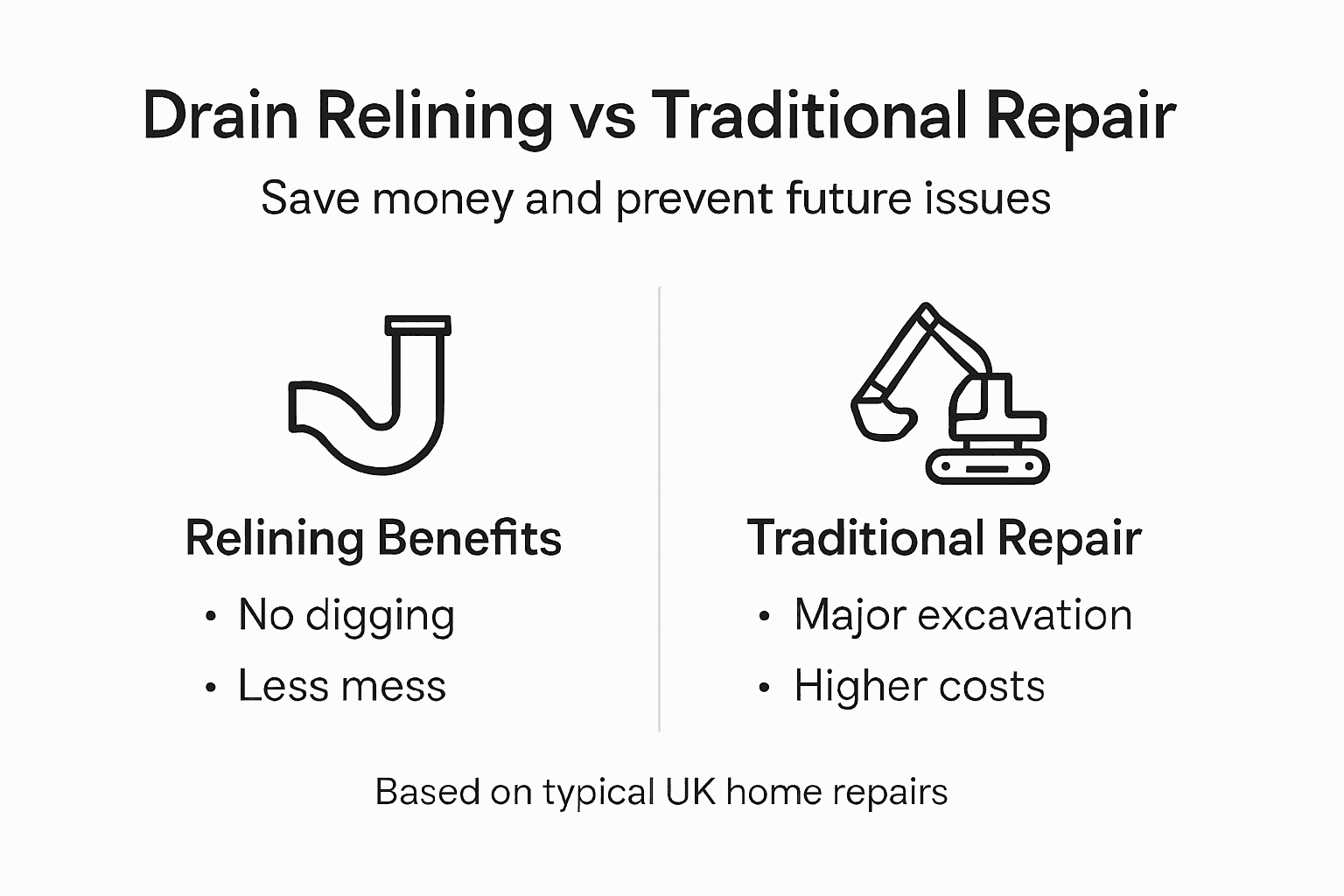
Long-term value comes from durability. A 40-year lifespan means you likely will not face similar repairs again during your property ownership. This contrasts with patch repairs that may need repeating every few years. Calculate total lifetime costs rather than just immediate expenses when evaluating repair methods.
Many homeowners find relining offers the best balance of performance, cost, and convenience. The upfront investment pays dividends through decades of reliable service without the disruption and expense of traditional repairs.
Common Misconceptions About Drain Relining
Several myths about drain relining persist among homeowners, potentially preventing them from choosing the best repair solution. Relining is not a temporary fix but can last as long as pipe replacement; properly installed relining can last 30 to 50 years. Understanding these misconceptions helps you make informed decisions based on facts rather than outdated assumptions.
Let’s address the most common myths:
- Myth: Relining is just a patch job: Reality shows relining creates a complete new pipe inside the old one, providing structural strength and longevity matching new installations. The cured resin forms a solid, permanent solution.
- Myth: Any drain can be relined: Not all drainage problems suit relining. Completely collapsed pipes, severe misalignments, or inaccessible sections require alternative approaches. Professional assessment determines suitability.
- Myth: Relining fixes all blockages: While relining repairs structural damage, it does not remove external factors like invading tree roots. Root cutting may be necessary before relining proceeds.
- Myth: The liner reduces pipe capacity: Modern relining materials add minimal thickness, typically 3mm to 6mm. This slight reduction rarely affects drainage performance and often improves flow through the smooth surface.
- Myth: Relining costs more than traditional repairs: When you include excavation, surface restoration, and landscaping repair, traditional methods often exceed relining costs significantly.
Some homeowners worry about the chemical process involved in curing resin liners. Modern materials meet strict safety standards and emit no harmful substances once cured. The process uses contained systems that protect both workers and property occupants.
Another misconception involves thinking DIY relining kits match professional results. While small-scale patch products exist, comprehensive relining requires specialised equipment, technical expertise, and quality materials. Professional installation ensures proper curing, complete coverage, and long-term performance. Poor installation voids any durability benefits and may worsen existing problems.
Drain relining myths often stem from confusion with older repair techniques or incomplete information. The relining durability myths particularly mislead homeowners into choosing inferior solutions. Consulting drainage specialists ensures you receive accurate information tailored to your specific situation.
Discover Reliable Drain Relining Services in Poole
Facing drainage problems in your Poole property? Our team brings decades of combined experience in modern drain repair methods in Poole, specialising in advanced relining techniques that minimise disruption while delivering lasting results. We understand the unique challenges of Poole’s diverse drainage infrastructure, from Victorian-era clay pipes to modern PVC systems.
Our comprehensive approach starts with thorough CCTV surveys to diagnose issues accurately, followed by transparent pricing and expert recommendations tailored to your specific needs. We offer 24/7 emergency response for urgent drainage problems and flexible scheduling for planned repairs. Whether you need targeted patch lining or complete pipe relining, we deliver professional solutions backed by guarantees.
Explore our effective drain unblocking procedure 2026 services to understand how we combine traditional expertise with cutting-edge technology. Contact us today for a free assessment and discover why Poole homeowners trust our drainage solutions.
Frequently Asked Questions About Drain Relining
What is the typical duration for a drain relining job?
Most residential drain relining projects complete within one to two days from start to finish. The actual relining process takes several hours, with curing requiring an additional 2 to 4 hours before the drain returns to service.
Can drain relining fix pipes damaged by tree roots?
Yes, relining effectively repairs damage caused by tree root intrusion and prevents future root penetration. However, technicians must first remove existing roots through cutting or jetting before installing the liner to ensure proper adhesion and performance.
How do I know if my drain qualifies for relining?
A professional CCTV drain survey provides definitive answers about relining suitability. The inspection reveals pipe condition, damage extent, and whether internal lining will solve your specific problem, with specialists recommending the most appropriate solution.
Is drain relining covered by home insurance?
Coverage varies by policy and damage cause. Many insurers cover relining for sudden, accidental damage but exclude gradual deterioration or maintenance issues. Review your policy details or consult your insurance provider for specific coverage information.
Do I need to move furniture or take special precautions during relining?
Relining work occurs primarily outdoors at drain access points, requiring minimal interior disruption. You should avoid using affected drains during the process and curing period, but furniture movement is rarely necessary unless access manholes are located indoors.