
Managing blockage and root ingress in older drainage systems is a challenge faced by many commercial property managers in Poole. As buildings age, pipes can deteriorate and invasive roots threaten operational reliability, making proactive maintenance crucial. This guide explains how modern drainage solutions and careful system upgrades help preserve structural integrity, boost compliance with UK standards, and protect your property’s long-term value. For those navigating aging infrastructure, understanding drainage options is the first step to effective, sustainable management.
Table of Contents
- What Are Commercial Drainage Systems?
- Surface and Subsurface Drainage Types
- Sustainable Drainage Systems (SudS) in The UK
- Choosing The Right System For Older Properties
- Common Risks and Cost Considerations
Key Takeaways
| Point | Details |
|---|---|
| Importance of Professional Insights | Regular professional inspections can identify potential drainage issues early, preventing costly problems. |
| Integration of Sustainable Practices | Sustainable Drainage Systems (SuDS) can enhance environmental compliance while effectively managing water runoff. |
| Consideration for Older Properties | Upgrading drainage in older buildings requires balancing modern performance with historical integrity. |
| Proactive Risk Management | Implementing predictive maintenance strategies can significantly reduce unexpected repair costs in drainage systems. |
What Are Commercial Drainage Systems?
Commercial drainage systems are sophisticated networks of pipes and infrastructure designed to manage wastewater and rainwater efficiently in complex commercial environments. Unlike residential systems, these networks must handle significantly larger volumes and comply with stringent UK building regulations such as BS EN 12056 standards.
These drainage systems serve critical functions across various commercial settings, including:
- Office complexes
- Industrial facilities
- Educational institutions
- Hotels and hospitality venues
- Retail establishments
The primary components of commercial drainage systems typically include high-capacity infrastructure specifically engineered to manage substantial water volumes and maintain optimal functionality. These complex networks incorporate several specialised elements designed for durability and efficient waste management.
Key Components of commercial drainage systems include:
- Heavy-duty soil stacks
- Advanced trapping mechanisms for odour control
- Extensive vent stacks
- Robust guttering systems
- Strategic access points for maintenance and cleaning
Unlike domestic drainage solutions, commercial systems must withstand significantly greater stress and comply with more rigorous engineering specifications. They are meticulously designed to handle diverse waste streams while maintaining operational integrity and minimising potential blockages or system failures.
Pro tip: Regular professional inspections can help identify potential drainage issues before they escalate into costly commercial infrastructure problems.
Surface and Subsurface Drainage Types
Commercial drainage systems in the UK encompass two primary categories: surface drainage and subsurface drainage, each serving distinct yet complementary functions in managing water flow and preventing potential infrastructure damage. Comprehensive drainage solutions require a nuanced understanding of these different system types.
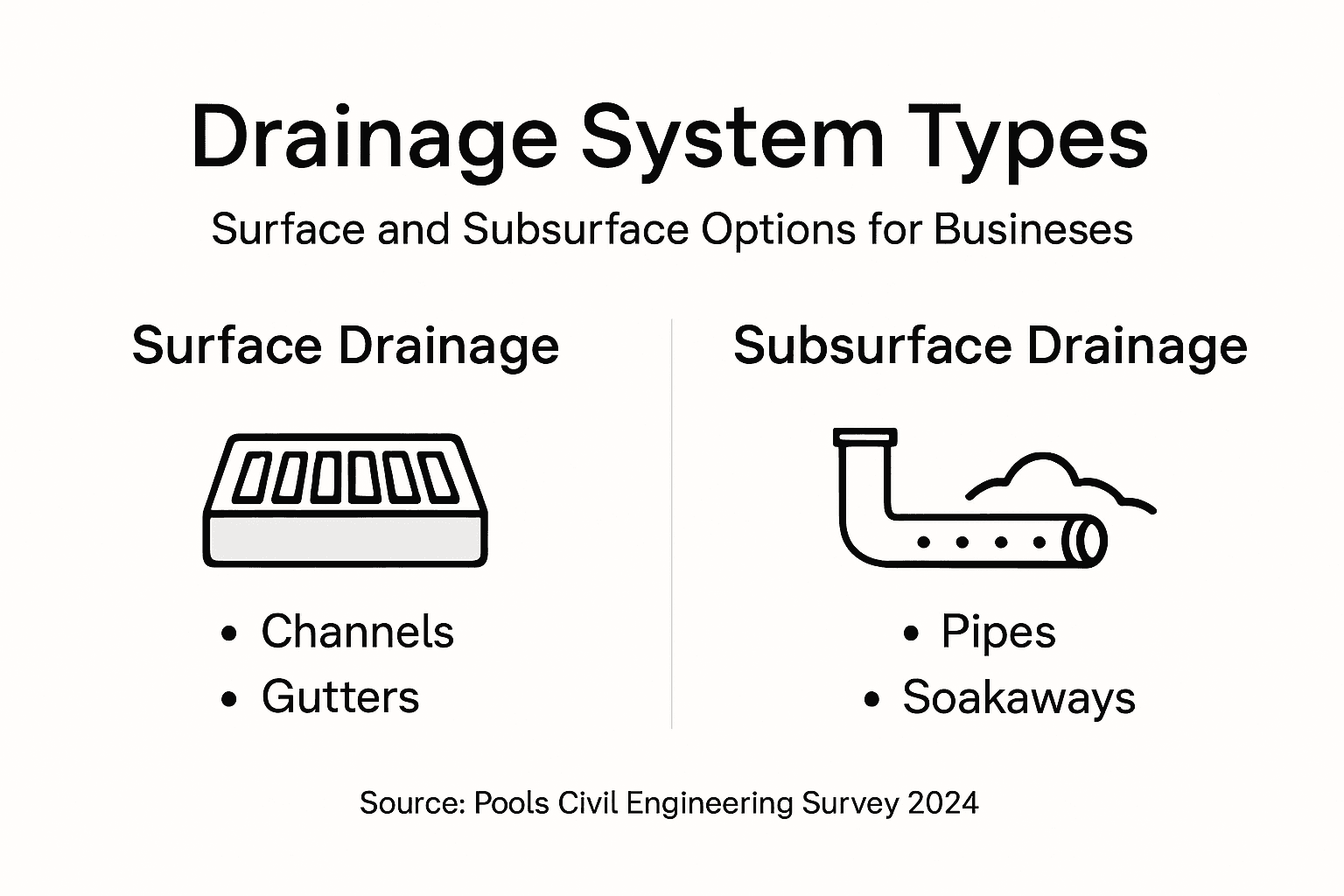
Surface drainage systems are designed to manage water at ground level, focusing on:
- Collecting rainwater runoff
- Directing water away from property foundations
- Preventing surface water accumulation
- Utilising channels, gutters, and permeable surfaces
- Minimising potential flood risks
Subsurface Drainage Components involve underground infrastructure that handles water below ground level, typically incorporating:
- Perforated drainage pipes
- Soakaways
- Underground collection systems
- Gravel or aggregate drainage beds
- Strategic water redirection mechanisms
The selection between surface and subsurface drainage depends on multiple critical factors, including site topography, soil composition, expected water volumes, and specific commercial property requirements. Each system presents unique advantages and must be carefully engineered to address potential environmental challenges.
Surface and subsurface drainage systems work together to create comprehensive water management solutions for commercial properties.
Engineers must consider site-specific conditions such as ground slope, water table levels, and potential contamination risks when designing these drainage networks. The goal is always to ensure efficient water management while protecting structural integrity and preventing potential water-related damage.
Pro tip: Conduct a thorough site assessment before selecting drainage systems to ensure optimal water management and long-term infrastructure protection.
Here’s a comparison of surface, subsurface, and sustainable drainage systems for commercial properties:
| System Type | Main Purpose | Typical Components | Key Business Advantage |
|---|---|---|---|
| Surface Drainage | Manage rainwater at ground level | Gutters, channels, grates | Reduces surface flood risk |
| Subsurface Drainage | Control groundwater below the surface | Perforated pipes, soakaways | Protects foundations, reduces seepage |
| Sustainable Drainage | Mimic natural water cycles | Swales, permeable paving, tanks | Boosts environmental compliance |
Sustainable Drainage Systems (SuDS) in the UK
Sustainable Drainage Systems (SuDS) represent a progressive approach to water management in the UK, designed to address environmental challenges while effectively managing surface water runoff. National standards for sustainable drainage have been established to ensure comprehensive and environmentally sensitive water management strategies.
The key components of SuDS typically include:
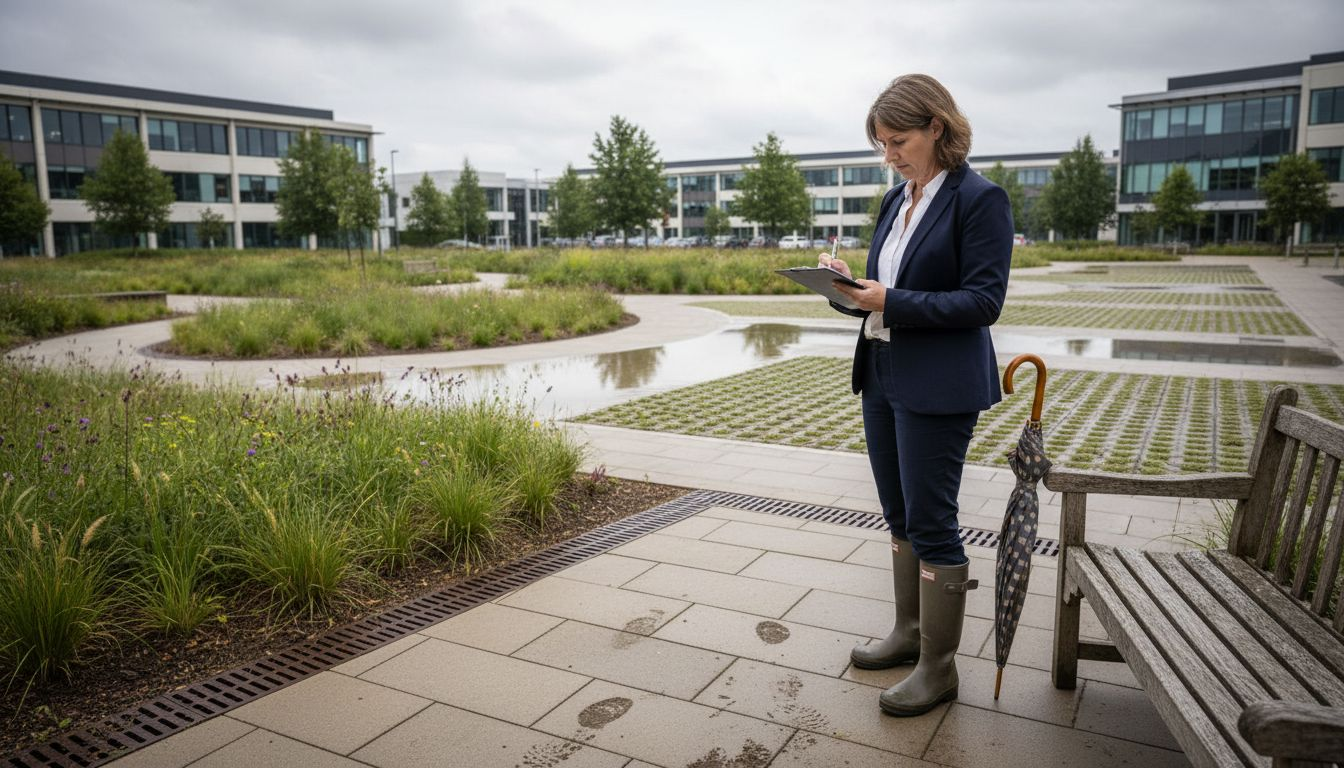
- Permeable paving systems
- Detention basins
- Swales and bioretention areas
- Underground storage tanks
- Infiltration systems
- Green roofs and rain gardens
SuDS Design Principles focus on mimicking natural water drainage processes, with multiple environmental benefits:
- Reducing flood risks
- Improving water quality
- Enhancing local biodiversity
- Managing water at its source
- Minimising impact on natural ecosystems
SuDS represent a holistic approach to water management, transforming drainage from a purely functional infrastructure to an environmental solution.
Commercial properties increasingly integrate drainage systems with green infrastructure to meet stringent environmental regulations. These systems not only manage water effectively but also contribute to urban ecological resilience by creating multifunctional spaces that support sustainable urban development.
Engineers and property managers must carefully consider site-specific conditions, including ground composition, water table levels, and local precipitation patterns when designing SuDS. The ultimate goal is to create adaptive, efficient drainage solutions that protect both built environments and natural ecosystems.
Pro tip: Consult with local environmental specialists to develop a tailored SuDS approach that meets both regulatory requirements and site-specific drainage challenges.
Choosing the Right System for Older Properties
Selecting appropriate drainage systems for older commercial properties requires a nuanced approach that balances historical infrastructure limitations with modern performance standards. Drainage systems for business properties demand careful evaluation of existing architectural constraints and potential retrofitting challenges.
Key considerations for older property drainage systems include:
- Assessing existing pipework material condition
- Evaluating structural load-bearing capabilities
- Identifying potential root ingress points
- Measuring current pipe diameter and flow capacity
- Understanding historical building construction techniques
- Checking compliance with current building regulations
Retrofitting Strategies for older commercial drainage systems often involve:
- Implementing advanced pipe relining technologies
- Installing modern interceptors and traps
- Using above-ground drainage solutions
- Upgrading materials with corrosion-resistant alternatives
- Minimising structural disruption during improvements
Successful drainage system upgrades in older properties require a delicate balance between preserving architectural integrity and implementing modern performance standards.
Engineers must conduct comprehensive site assessments to understand the unique challenges presented by aging infrastructure. This involves detailed inspections using advanced diagnostic tools like CCTV surveys to map existing pipe networks and identify potential weaknesses without invasive exploratory work.
Modern drainage solutions can be seamlessly integrated into older properties by selecting adaptable technologies that respect the building’s original design while dramatically improving water management capabilities. Careful material selection and strategic implementation are crucial to achieving optimal results.
Pro tip: Engage specialist surveyors with experience in heritage commercial properties to develop a nuanced drainage upgrade strategy that preserves architectural character.
Common Risks and Cost Considerations
Commercial drainage systems in Poole present complex financial and operational challenges that require strategic risk management. Business drainage system risks encompass multiple potential issues that can significantly impact operational continuity and infrastructure integrity.
Principal drainage system risks include:
- Structural pipe deterioration
- Root ingress and blockage formation
- Corrosion of pipework materials
- Progressive system capacity reduction
- Unexpected emergency repair requirements
- Potential environmental contamination
Cost Factors that property managers must consider involve:
- Initial installation complexity
- Material durability and replacement expenses
- Routine maintenance frequency
- Potential operational downtime during repairs
- Long-term infrastructure lifecycle management
- Compliance with current drainage regulations
Proactive drainage infrastructure management can reduce unexpected repair costs by up to 60% compared to reactive maintenance approaches.
Economic considerations extend beyond immediate repair expenses, encompassing broader operational impacts such as business disruption, potential environmental penalties, and long-term infrastructure resilience. Professional drainage assessments provide critical insights into potential vulnerabilities before they escalate into significant financial liabilities.
Key risks and potential financial impacts for commercial drainage systems are summarised below:
| Risk Type | Example Impact | Preventative Measure |
|---|---|---|
| Structural Deterioration | Costly emergency repairs | Regular CCTV surveys |
| Blockage Formation | Business disruption, flooding | Scheduled professional cleaning |
| Environmental Contamination | Regulatory fines | Use quality materials, isolation systems |
| Corrosion | Premature asset failure | Upgrade to corrosion-resistant pipes |
Engineers and property managers must develop comprehensive risk mitigation strategies that balance immediate cost constraints with long-term infrastructure sustainability. This requires sophisticated financial planning and regular diagnostic evaluations to anticipate and prevent potential system failures.
Pro tip: Implement a predictive maintenance programme that combines regular inspections with strategic infrastructure investments to minimise unexpected drainage system failures.
Expert Commercial Drainage Solutions Tailored for Poole Businesses
Managing commercial drainage systems in Poole presents unique challenges that include dealing with ageing pipework, root ingress, and the need for advanced repair techniques such as relining. If your business faces difficulties with blocked drains, corrosion, or ensuring compliance with UK commercial drainage standards, you need trusted local expertise. With Blocked Drains Poole, you gain access to a professional team experienced in handling complex commercial drainage systems and delivering reliable, long-lasting results.
Our comprehensive range of services covers everything from detailed CCTV inspections to fast, effective unblocking and repairs designed to safeguard your infrastructure against costly failures. We understand the importance of maintaining smooth operations with minimal disruption and offer transparent pricing combined with 24/7 emergency support tailored for businesses in Poole and Dorset.
Are you ready to protect your commercial property from drainage risks and ensure compliance with environmental and safety regulations?
Explore how our specialised commercial drainage services can resolve your toughest challenges today by visiting Blocked Drains Poole. Know that prompt action can prevent expensive repairs and business downtime. Get your free quote or emergency assistance now and secure peace of mind with one of Poole’s leading drainage experts.
Frequently Asked Questions
What are the key components of commercial drainage systems?
Commercial drainage systems typically include heavy-duty soil stacks, advanced trapping mechanisms for odour control, extensive vent stacks, robust guttering systems, and strategic access points for maintenance and cleaning.
How do surface and subsurface drainage systems differ?
Surface drainage systems manage water at ground level through channels, gutters, and permeable surfaces, while subsurface drainage systems handle water below ground using perforated pipes, soakaways, and underground collection systems. Both are essential for comprehensive water management.
What benefits do Sustainable Drainage Systems (SuDS) offer for commercial properties?
SuDS help in mimicking natural water cycles, reduce flood risks, improve water quality, enhance local biodiversity, and manage water at its source, contributing positively to the environment and urban resilience.
What should be considered when retrofitting drainage systems in older commercial properties?
When retrofitting, it’s important to assess existing pipework conditions, evaluate structural load-bearing capabilities, identify potential root ingress points, and ensure compliance with current building regulations while upgrading materials and technologies.