
TL;DR:
- Regular drain maintenance and annual inspections prevent costly emergencies in Poole homes.
- Indoor habits like avoiding fats, oils, grease, and cleaning pipes regularly help prevent blockages.
- Outdoor drain checks, especially in coastal areas, are crucial due to siltation, root intrusion, and debris buildup.
Neglecting your drains is one of the most expensive mistakes a Poole homeowner can make. Drain emergencies cost over £3,000 but are largely preventable with consistent upkeep and annual inspections. Poole’s mix of Victorian terraces, coastal properties, and shared drainage systems creates specific vulnerabilities that generic advice simply doesn’t address. A targeted maintenance checklist changes that. It turns reactive panic into calm, routine care, protecting your home’s structure, your wallet, and your peace of mind throughout the year.
Table of Contents
- Critical indoor drain habits to prevent blockages
- Essential outdoor drain and gully checks for Poole homes
- Annual professional drain inspection: When and why it matters
- Quick reference: Full drain maintenance checklist for Poole homeowners
- Our take: What most homeowners get wrong about drain maintenance
- Expert help for your Poole drains
- Frequently asked questions
Key Takeaways
| Point | Details |
|---|---|
| Prevent blockages at the source | Never pour fats, food waste, or wipes down your drains—bin them instead to prevent clogs. |
| Maintain outdoor drains regularly | Clear leaves, silt, and debris from outdoor drains at least monthly and after any heavy rain. |
| Invest in annual professional checks | A yearly CCTV drain survey typically costs £150-£250 and helps avoid repairs costing over £3,000. |
| Use a tailored checklist | Following a Poole-specific drain maintenance routine protects against property damage unique to the area. |
Critical indoor drain habits to prevent blockages
Let’s begin by focusing on the most common cause of blockages: what enters your indoor drains. Most drain problems start in the kitchen or bathroom, and the fix is simpler than you’d expect.
The single biggest culprit is what people pour or flush away without thinking. You should avoid fats, oils, and grease going down any sink, along with food scraps, coffee grounds, and non-flushable items like wet wipes. These materials don’t just pass through. They cool, congeal, and cling to pipe walls, building up over months into a blockage that’s genuinely difficult to shift without professional help.
Here are the key indoor habits to build into your routine:
- Fit a mesh strainer over every plughole in the kitchen and bathroom
- Scrape plates and pans into the bin before washing up
- Flush only toilet paper, nothing else
- Wipe greasy pans with kitchen roll before rinsing
- Clean plugholes and traps every two weeks to remove soap scum and hair
- Never pour cooking oil down the sink, even diluted with hot water
Slow drainage and gurgling noises are your early warning system. Don’t ignore them. A gurgling sound often means a partial blockage is forming, or that air is trapped somewhere in the system. Catching this early means you can often clear it yourself using practical unblocking steps at home rather than calling out an engineer.
Did you know? Hair is responsible for a significant proportion of bathroom drain blockages. A simple £2 drain catcher can prevent a £150 call-out.
Pro Tip: Pour a kettle of boiling water down your kitchen sink once a week. It melts soft grease deposits before they harden and accumulate. It takes 30 seconds and costs nothing.
For a broader picture of maintenance steps for Poole drains, consistency is everything. One good week followed by months of carelessness won’t protect you. Make these habits automatic, and your indoor drains will rarely give you trouble.
Essential outdoor drain and gully checks for Poole homes
Good habits indoors matter, but what about the drains outdoors, especially given Poole’s unique environment? Coastal proximity, mature trees, and ageing infrastructure make outdoor drain care particularly important here.
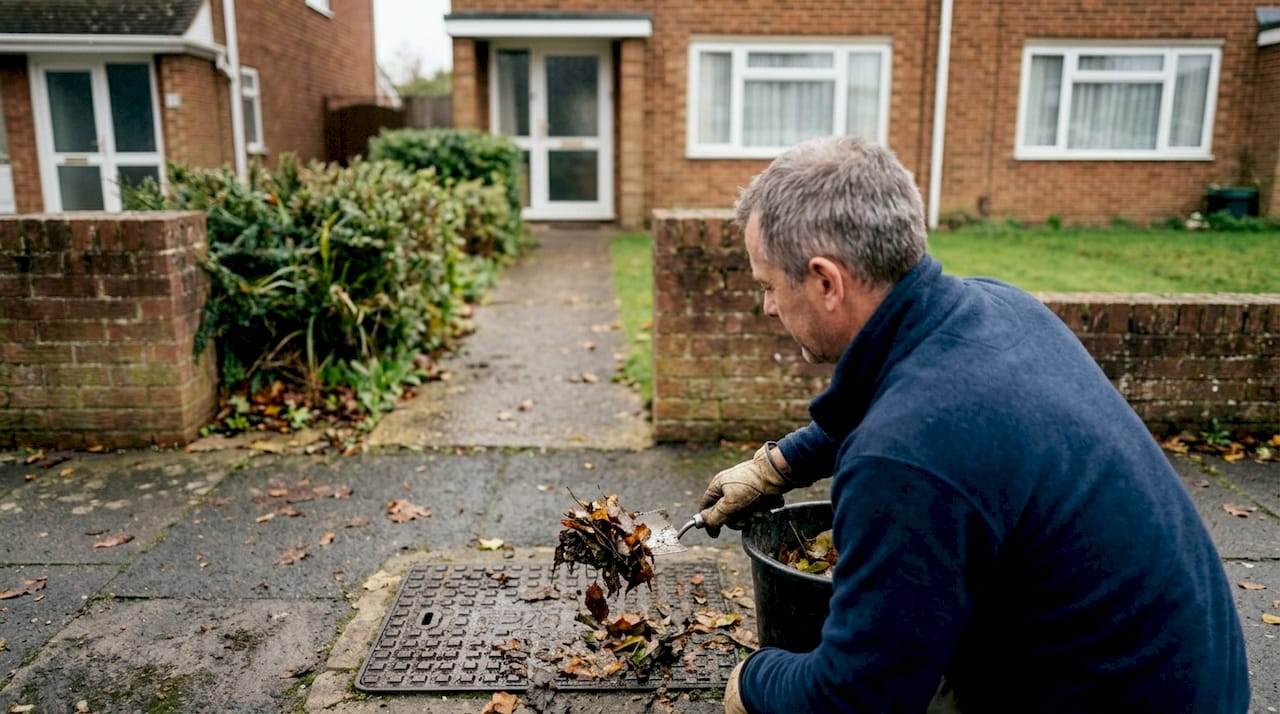
Gullies and drain grates outside your home collect everything: leaves, silt, moss, and road debris. After heavy rain or during autumn, this build-up can block a gully completely within days. A blocked gully doesn’t just smell unpleasant. It causes surface flooding, which can damage foundations and create slippery paths. Clear outdoor drains of leaves and silt regularly, especially after rain and throughout October and November when leaf fall peaks.
Here’s what your outdoor maintenance routine should cover:
- Lift and clear gully grates monthly, and after every significant rainfall
- Remove moss and algae from around drain covers to stop them washing in
- Check for visible root intrusion at ground level near large trees
- Inspect drain covers for cracks or subsidence, which can signal pipe movement below
- Keep access paths to drainage clear so engineers can reach them quickly if needed
- Check shared drains with neighbours, particularly in terraced or semi-detached Poole properties
Poole’s older neighbourhoods, particularly areas like Parkstone and the Old Town, have a high concentration of clay pipes. Clay is durable but brittle, and tree roots are drawn to the moisture inside. Once a root finds a crack, it grows quickly and can collapse a pipe entirely. This is not a theoretical risk. We see it regularly in properties with mature gardens.
“In Poole’s harbour and coastal areas, siltation is a persistent issue. Gullies near the waterfront or in low-lying streets need more frequent attention than properties further inland.”
Pro Tip: Photograph your outdoor drain covers and gullies at the start of each season. If you notice subsidence or shifting over time, you’ll have a visual record that’s genuinely useful for insurance claims or when instructing a surveyor.
Understanding responsibility for shared drains matters too. If a blockage sits in a shared lateral drain, it may be the water company’s responsibility, not yours. Knowing where your private drainage ends and the public sewer begins can save you money. To prevent outdoor drain blockages effectively, start by knowing exactly what you own.
Annual professional drain inspection: When and why it matters
Beyond your own regular checks, expert assessment can save thousands and stress. Here’s how and why professional inspections fit into a smart maintenance plan.
Poole has a large stock of Victorian and Edwardian housing, and many of these properties still have their original clay or pitch fibre drainage systems. These pipes are now well over a century old in some cases. They crack, they shift, and tree roots exploit every weakness. A visual check from the surface tells you very little about what’s happening underground.
A CCTV drain survey uses a small camera fed through your pipes to give a live view of the pipe interior. Engineers can spot root intrusion, partial collapses, offset joints, and build-up that would otherwise remain invisible until a full blockage or flood occurs. The benefits of a CCTV drain survey are substantial for any property with older pipework.
| Inspection type | What it covers | Approximate cost | Best for |
|---|---|---|---|
| Visual surface check | Covers, gullies, visible pipes | Free (DIY) | Monthly routine |
| Drain jetting and check | Clears and inspects accessible runs | £80 to £150 | Annual maintenance |
| Full CCTV survey | Complete pipe interior mapping | £150 to £250 | Older properties, pre-sale |
Annual CCTV inspections are recommended for any Poole home with Victorian or clay pipes, and the cost is modest compared to the alternative. A survey costing £150 to £250 can prevent emergency repairs exceeding £3,000.
Here’s when to book a professional inspection:
- Once per year as standard, ideally in late autumn before winter ground movement
- Before purchasing a property, to avoid inheriting hidden drainage problems
- After any significant tree removal near the property
- Following a flood or period of severe ground movement
- When selling, to provide buyers with documented drainage condition
Keeping records of inspections is genuinely valuable. Insurers increasingly ask about drainage maintenance history, and a documented survey can strengthen a claim or speed up a sale. Treat it the same way you’d treat a boiler service certificate.
Quick reference: Full drain maintenance checklist for Poole homeowners
With these tasks in mind, here’s a full checklist to post near your utility area and keep your property protected throughout the year.
Poole’s harbour and coastal location makes siltation a genuine ongoing concern, which is why this checklist is tailored specifically to local conditions rather than being a generic national template.
| Frequency | Area | Action |
|---|---|---|
| Weekly | Kitchen | Pour boiling water down sink to clear soft grease |
| Fortnightly | Bathroom | Clean plughole and trap, remove hair and soap build-up |
| Monthly | Outdoor gullies | Lift grates, clear leaves, silt, and debris |
| Monthly | Drain covers | Check for cracks, subsidence, or root signs at surface |
| Seasonally | All outdoor drains | Deep clear after autumn leaf fall and after heavy rain |
| Annually | Full system | Book professional CCTV survey or jetting service |
| As needed | Shared drains | Coordinate with neighbours and check responsibility boundaries |
Print this table and fix it inside a kitchen cupboard or utility room door. The households that avoid drain emergencies are rarely lucky. They’re consistent.
Knowing when to call a professional is just as important as knowing what to do yourself. Watch for these signs and act immediately:
- Multiple drains in the house are slow or blocked at the same time
- Sewage smell coming from drains inside or outside the property
- Water backing up in the bath or toilet when you use the sink
- Visible sinkholes or ground depression near drainage runs
- Persistent gurgling that doesn’t resolve after clearing the plughole
These signs go beyond DIY territory. If you recognise blocked drain signs like these, a professional inspection is the right next step, not another attempt with a plunger.
Our take: What most homeowners get wrong about drain maintenance
After working across hundreds of Poole properties, a clear pattern emerges. Most homeowners only think about their drains when something goes wrong. That reactive approach is understandable, but it’s also the most expensive way to manage a drainage system.
The biggest oversight we see isn’t a dramatic failure. It’s the outdoor drains. People are reasonably careful indoors, but the gullies at the side of the house, the drain behind the garage, the shared run at the back of the terrace, these get ignored for years. Then one wet autumn, they back up, and suddenly there’s surface flooding against a wall or under a door.
Professional surveys are often seen as an unnecessary expense for a problem that hasn’t happened yet. We’d reframe that entirely. For a Poole property with Victorian pipework, an annual survey is proactive drain care that functions like insurance. The properties we attend for emergency work almost never had recent inspections. The ones that avoid emergencies almost always did.
Consistency, not crisis response, is what genuinely protects a property. Small, regular actions done reliably outperform occasional deep cleans every time.
Expert help for your Poole drains
If your checks raise concerns, or you want the reassurance of a professional eye, there’s targeted help available.

Sometimes a checklist reveals something that needs more than a brush and a kettle of water. Whether it’s a recurring blockage that won’t clear, a gully that keeps silting up, or a Victorian pipe system you’ve never had surveyed, professional support makes a real difference. You can explore the full drain unblocking procedure for stubborn blockages, or book a drain inspection for your Poole home to get a clear picture of your system’s condition. The Blocked Drains Poole team operates 24/7 with no call-out fees, so help is always straightforward to access.
Frequently asked questions
How often should I clean outdoor drains in Poole?
Clean outdoor drains and gullies at least once a month, and always after heavy rain or during autumn leaf fall. Coastal and harbour areas in Poole may need more frequent attention due to siltation.
Is it really necessary to do a CCTV drain survey every year?
For Poole homes with older or clay pipes, annual CCTV surveys are strongly recommended to catch root intrusion and structural issues before they become costly emergencies.
What can I safely pour down my drain?
Only water and small amounts of biodegradable soap are safe. You should never pour fats, oils, or grease down any household drain, and food waste, coffee grounds, and wet wipes should always go in the bin.
How do I know if tree roots are damaging my drains?
Slow drainage, recurring blockages, or a sudden reduction in flow are all warning signs, particularly in older Poole properties with clay pipes where roots are drawn to moisture inside ageing pipework.