
Poole’s ageing drainage infrastructure faces mounting pressure from nearly 280,000 annual blockages costing over £100 million across England and Wales. Historic pipework, tree root ingress, and improper waste disposal combine to create serious risks for residents and businesses. Understanding these vulnerabilities and adopting preventive measures protects your property, reduces expensive emergency repairs, and safeguards local waterways from pollution.
Table of Contents
- Why Older Drainage Systems Are More Vulnerable
- Common Causes Of Drain Blockages In Poole
- Cost, Property Damage, And Environmental Consequences
- Common Misconceptions About Drain Blockages
- Preventive Maintenance And User Behaviour To Avoid Blockages
- Modern Inspection And Repair Technologies
- Conclusion: Taking Action To Protect Your Drains
- Protect Your Poole Drains With Expert Services
Key takeaways
| Point | Details |
|---|---|
| Ageing infrastructure | Poole’s older drainage pipes develop cracks and misalignments that encourage blockages and root ingress. |
| Primary causes | Fats, oils, grease, inappropriate waste, and tree roots account for most blockages in residential and commercial properties. |
| Financial impact | Blockages cause over £100 million yearly in repairs, property damage, and environmental cleanup costs. |
| Prevention works | Regular maintenance, proper disposal habits, and professional inspections significantly reduce blockage risks. |
| Modern solutions | CCTV surveys and pipe relining offer effective, minimally invasive repairs for ageing Poole drainage systems. |
Why older drainage systems are more vulnerable
Poole’s historic development means many properties rely on drainage infrastructure installed decades ago. These ageing systems face increased failure risk from climate change, urbanisation, and structural deterioration. Older pipes develop microscopic cracks that widen over time, creating entry points for tree roots seeking moisture and nutrients.
Tree root ingress represents a persistent challenge in established neighbourhoods. Roots penetrate pipe joints and fractures, expanding as they grow and creating physical obstructions. Understanding why drains get blocked in Poole helps residents recognise early warning signs before minor issues escalate.
Urbanisation compounds these structural vulnerabilities. Paved driveways, patios, and extensions reduce permeable surfaces, directing more runoff into drainage systems by approximately 50%. This increased volume overwhelms pipes designed for lower flow rates.
Common vulnerabilities in Poole’s drainage:
- Pipe materials deteriorate, developing cracks and misalignments
- Ground movement from clay soils shifts pipe positions
- Intense rainfall events exceed system capacity
- Limited maintenance access complicates inspection and repairs
“The UK faces a perfect storm of challenges: ageing infrastructure, climate change impacts, and urban development all increasing drainage system stress and failure probability.”
Climate patterns intensify these pressures. More frequent heavy rainfall events strain systems never designed for such volumes, particularly when combined with reduced drainage capacity from partial blockages.
Common causes of drain blockages in Poole
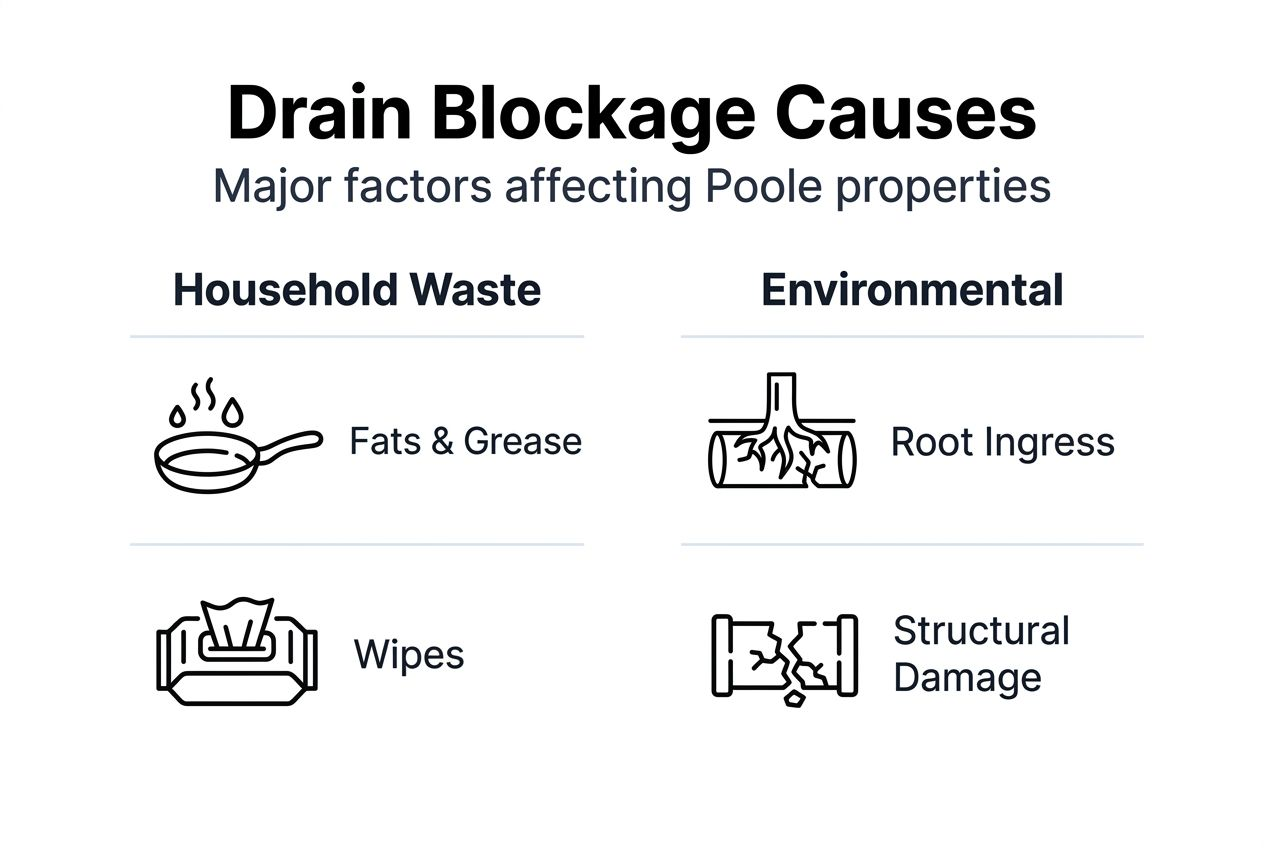
Three primary culprits dominate blockage statistics. Fats, oils, and grease cause over 37% of all blockages, solidifying inside pipes and trapping other debris. Pouring cooking oil down sinks might seem harmless initially, but these substances cool and congeal, creating stubborn obstructions.
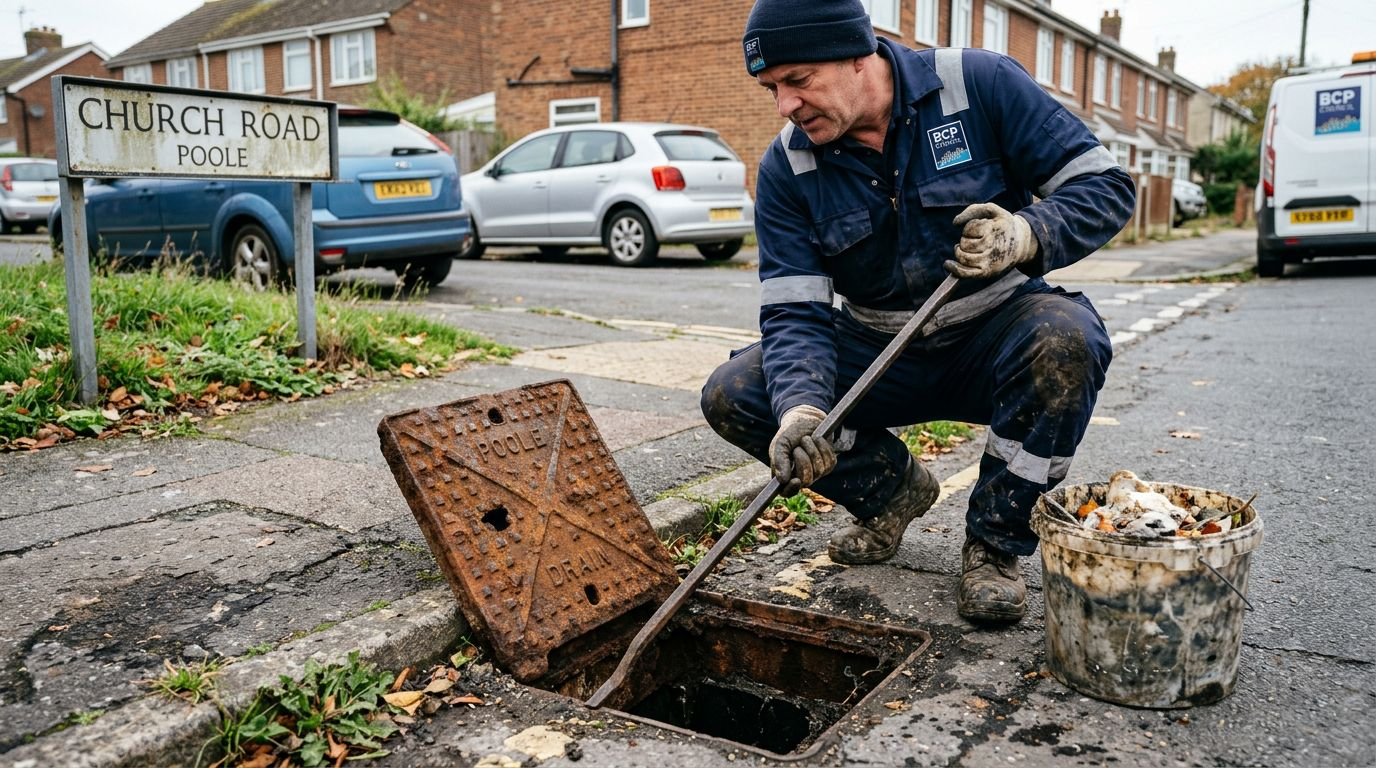
Inappropriate waste disposal ranks as another leading cause. Items marketed as flushable rarely break down quickly enough to avoid problems. Wet wipes, cotton buds, sanitary products, and nappies accumulate in pipes, combining with grease to form dense masses.
Root ingress accounts for 6.8 to 8.3% of blockages, particularly in historic areas where mature trees grow near drainage lines. Roots exploit weaknesses in older pipework, penetrating joints and expanding inside pipes as they seek water sources.
| Blockage Cause | Percentage | Prevention Method |
|---|---|---|
| Fats, oils, grease | 37%+ | Dispose in sealed containers, never pour down sinks |
| Inappropriate waste | 40%+ | Use bins for wipes, sanitary items, never flush |
| Root ingress | 6.8 to 8.3% | Regular CCTV inspections, professional root cutting |
| Broken pipes | 8 to 15% | Structural surveys, timely repairs or relining |
Structural damage from ground movement exacerbates blockage problems. Misaligned pipe sections create lips where debris catches, gradually building up until flow becomes restricted. These drain blockage examples illustrate how multiple factors often combine.
Pro tip: Keep a container under your sink for cooling cooking oils and fats. Once solidified, dispose of them with general waste rather than pouring them down drains where they cause expensive blockages.
Cost, property damage, and environmental consequences
Financial impacts extend far beyond the £100 million annual clearing costs borne by water companies and property owners. Emergency repairs typically cost three to five times more than scheduled maintenance, particularly when blockages cause flooding or structural damage.
Property damage from backed-up drains can be extensive. Sewage overflow contaminates flooring, carpets, and furnishings, requiring professional cleaning and disposal. Water damage weakens structural elements, promotes mould growth, and creates health hazards for occupants.
Environmental consequences include:
- Untreated sewage overflow into local waterways
- Pollution of Poole Harbour and surrounding marine environments
- Harm to aquatic wildlife from contaminated water
- Beach closures affecting tourism and recreation
- Long-term ecological damage to sensitive habitats
Blockages force sewage overflow into rivers and seas, threatening aquatic ecosystems. Poole’s coastal location means drainage problems directly impact cherished marine environments, affecting wildlife and water quality.
“Blocked drains create cascading environmental problems: flooding spreads contamination, overflow pollutes waterways, and untreated sewage harms fragile ecosystems that take years to recover.”
Legal responsibilities add another dimension. Property owners must maintain private drainage systems to reasonable standards. Negligence causing pollution or damage to neighbouring properties can result in liability claims and enforcement action. Understanding these blocked drains consequences motivates proactive maintenance.
Insurance implications matter too. Many policies exclude damage from poor maintenance or gradual deterioration, leaving property owners facing substantial uninsured losses when preventable blockages cause flooding.
Common misconceptions about drain blockages
The ‘flushable’ label misleads many consumers. Products marketed this way degrade slowly and contribute to 94% of sewer blockages when combined with fats. Laboratory tests show these items remain largely intact after passing through drainage systems, catching on pipe irregularities and accumulating.
Pouring hot water after fats offers no real protection. FOG solidifies regardless of initial temperature, cooling as it travels through pipes and adhering to walls. The practice simply moves the problem further downstream where blockages become harder to access and clear.
Persistent myths about drainage:
- Small amounts of grease cause no harm (accumulation happens gradually)
- Older systems need less maintenance (actually require more frequent attention)
- Clear-flowing drains indicate no problems (partial blockages often go unnoticed)
- Chemical cleaners solve all blockages (some damage pipes and harm environment)
Many assume drainage systems are maintenance-free until problems arise. This reactive approach proves far more expensive than preventive care. Blockages develop gradually, with partial restrictions worsening over months before symptoms become obvious.
Misunderstanding causes leads to harmful habits. Some believe grinding food waste in disposal units prevents drain problems, but this practice introduces organic material that decomposes and creates blockages downstream. Learning accurate information about common blocked drains myths helps residents protect their systems.
Pro tip: Test the flushability claim yourself. Place a wet wipe in a jar of water and shake vigorously for 30 seconds. Compare the result with toilet paper treated the same way. The difference reveals why ‘flushable’ wipes cause so many blockages.
Preventive maintenance and user behaviour to avoid blockages
Changing daily habits dramatically reduces blockage risk. User behaviour causes 83% of blockages, meaning simple adjustments deliver significant improvements. Proper waste disposal forms the foundation of effective prevention.
Essential prevention steps:
- Scrape plates into bins before washing, capturing food scraps
- Pour fats and oils into containers for disposal with general waste
- Use sink strainers to catch debris before it enters drains
- Flush only toilet paper and human waste, never wipes or sanitary items
- Educate everyone in the household or workplace about correct practices
- Schedule professional drain cleaning annually or biannually
Regular professional maintenance catches problems early. Annual drain cleaning workflows remove accumulated debris before it causes complete blockages, extending system lifespan and preventing emergency callouts.
Recognising warning signs enables timely intervention. Slow drainage, gurgling sounds, persistent odours, and water backing up indicate developing problems. Addressing these symptoms promptly prevents escalation into severe blockages requiring expensive emergency repairs.
Professional inspections provide valuable insights. CCTV surveys reveal hidden damage, root intrusion, and partial blockages invisible from the surface. This information guides targeted maintenance and repairs, preventing future problems. Knowing when to call a drain specialist helps property owners take action at the right time.
Pro tip: Install reminder alerts on your phone for quarterly drain maintenance checks. Pour a bucket of hot water mixed with biological washing powder down each drain to help break down minor buildups before they become problematic.
Modern inspection and repair technologies
CCTV camera technology revolutionised drainage diagnostics. High-resolution cameras mounted on flexible cables travel through pipes, transmitting real-time video to operators above ground. This non-invasive inspection method identifies blockages, structural damage, root ingress, and misalignments without excavation.
Pipe relining offers remarkable advantages over traditional replacement. Technicians insert resin-impregnated liners into damaged pipes, inflating them to create a seamless new pipe within the old structure. The process avoids digging up gardens, driveways, or flooring, dramatically reducing disruption and restoration costs.
| Repair Method | Disruption Level | Typical Duration | Pipe Lifespan | Cost Comparison |
|---|---|---|---|---|
| Traditional excavation | High (digging required) | 3 to 7 days | 30 to 50 years | Baseline |
| Pipe relining | Minimal (access points only) | 1 to 2 days | 50+ years | 60 to 70% of excavation |
| Patch repairs | Low (targeted access) | 4 to 8 hours | 20 to 30 years | 40 to 50% of excavation |
Benefits of modern technologies:
- Early detection prevents minor issues becoming major failures
- Accurate diagnostics eliminate guesswork and unnecessary work
- Minimally invasive repairs preserve landscaping and surfaces
- Extended pipe lifespan from durable relining materials
- Cost savings through reduced labour and restoration work
These innovations particularly benefit Poole’s older properties. Instead of replacing entire drainage runs through established gardens or under buildings, CCTV surveys pinpoint problem areas for targeted repairs. This precision saves money whilst addressing root causes effectively.
Investing in drain relining benefits property owners through decades of trouble-free service. Modern resin liners resist root penetration, chemical corrosion, and structural degradation far better than original clay or cast iron pipes.
Pro tip: Request video recordings from CCTV surveys for your records. These document drainage system condition, support insurance claims if problems arise, and provide valuable information for future property sales or renovations.
Conclusion: taking action to protect your drains
Preventing blockages delivers substantial benefits: reduced repair costs, avoided property damage, protected local environment, and peace of mind. Poole’s ageing drainage infrastructure demands particular attention, but modern inspection and repair technologies make maintenance more accessible and effective than ever.
Key actions for drainage health:
- Adopt proper disposal habits for fats, oils, and inappropriate waste items
- Schedule regular professional inspections to catch problems early
- Invest in CCTV surveys to understand your system’s condition
- Address warning signs promptly before minor issues escalate
- Educate household members and staff about correct drainage practices
Proactive maintenance proves far more economical than reactive emergency repairs. Early intervention prevents the cascading problems that turn simple blockages into expensive property damage and environmental hazards. Professional services offer expertise, equipment, and solutions tailored to older Poole drainage systems.
Taking prompt action when problems emerge protects your investment. Modern repair methods preserve infrastructure whilst addressing root causes, extending system lifespan for decades. Understanding drainage vulnerabilities empowers residents and businesses to make informed decisions about maintenance and when to call specialists for professional assessment.
Protect your Poole drains with expert services
When drainage problems arise, professional expertise makes all the difference. Modern drain unblocking procedures use high-pressure water jetting and mechanical cutting to clear even stubborn blockages efficiently, restoring full flow without damaging pipes.
Comprehensive CCTV drain surveys reveal hidden problems before they cause expensive failures. High-resolution cameras inspect every metre of pipework, identifying root intrusion, structural damage, and developing blockages that surface symptoms might miss. This diagnostic precision guides targeted repairs, avoiding unnecessary work and expense.
Modern drain repair methods including pipe relining offer durable solutions for ageing Poole drainage systems. These minimally invasive techniques restore structural integrity and prevent future blockages without the disruption and cost of traditional excavation. Specialist knowledge of local infrastructure challenges ensures repairs address root causes whilst preserving your property and landscape.
FAQ
What are the main causes of drain blockages in Poole?
Fats, oils, and grease represent the largest single cause, solidifying inside pipes and trapping other debris. Inappropriate waste like wet wipes, sanitary products, and nappies also contribute significantly. Tree roots penetrating older pipe joints create physical obstructions, particularly common in historic Poole properties with mature vegetation. These drain blockage examples illustrate how multiple factors often combine to create severe problems.
How can I prevent drain blockages in an older system?
Avoid flushing anything except toilet paper and human waste. Dispose of fats, oils, and food scraps in bins rather than sinks. Install sink strainers to catch debris before it enters drains. Schedule professional drain cleaning and CCTV inspections annually to remove accumulated buildup and identify developing problems. Following proper drain cleaning workflows dramatically reduces blockage risk in ageing systems.
When should I contact a drain specialist in Poole?
Call a specialist immediately if drains overflow, emit foul odours, or produce gurgling sounds. Slow drainage indicates partial blockages that will worsen without intervention. Multiple affected fixtures suggest main drain problems requiring professional equipment. Early professional assessment prevents minor issues escalating into expensive emergencies. Understanding when to call drain specialists helps you take timely action before damage occurs.
What technologies help detect and fix blocked drains?
CCTV camera surveys inspect pipes non-invasively, revealing blockages, root intrusion, and structural damage without excavation. High-pressure water jetting clears stubborn obstructions safely and effectively. Pipe relining repairs damaged sections by installing seamless liners inside existing pipes, avoiding disruptive digging. These CCTV drain surveys provide accurate diagnostics that guide targeted, cost-effective repairs for Poole’s ageing drainage infrastructure.