
Recurring drainage problems can quickly turn an older Poole property from a comfortable home into a source of constant worry. Many homeowners misunderstand the difference between foul water and surface water drainage, leading to costly mistakes and environmental risks. By arranging a reliable drain survey, you can uncover hidden issues, prevent emergencies, and keep your property and the local environment safe for years to come.
Table of Contents
- Drain Survey Basics And Common Misconceptions
- Cctv, Sonar And Homebuyer Survey Types
- How A Professional Drain Survey Is Conducted
- Key Problems Found In Older Poole Drains
- Legal Duties And Homeowner Responsibilities
- Costs, Mistakes To Avoid And Alternatives
Key Takeaways
| Point | Details |
|---|---|
| Importance of Drain Surveys | Regular drain surveys can identify potential issues before they escalate, protecting both your property’s infrastructure and the environment. |
| Differentiating Survey Types | Understanding the differences between survey methods like CCTV, sonar imaging, and homebuyer surveys is crucial for effective property assessment. |
| Legal Responsibilities | Homeowners must maintain drainage systems within their property boundaries and comply with local regulations to avoid environmental contamination. |
| Cost-effectiveness of Prevention | Investing in preventative drainage investigations can significantly reduce the risk of costly emergency repairs from undetected issues. |
Drain survey basics and common misconceptions
Drain surveys represent a critical diagnostic tool for understanding the hidden infrastructure beneath your Poole home. These comprehensive assessments reveal critical insights about your property’s drainage system, detecting potential problems before they escalate into costly emergencies.
UK drainage systems are typically designed with two distinct networks: foul water and surface water drainage systems. Separate drainage system requirements help prevent environmental pollution and manage waste effectively. Here’s what homeowners need to understand:
- Foul water drains carry sewage and contaminated waste to treatment facilities
- Surface water drains redirect uncontaminated rainwater directly to watercourses
- Misconnecting these systems can lead to significant environmental risks
Common misconceptions about drain surveys often prevent homeowners from taking proactive maintenance steps. Many residents mistakenly believe that drain surveys are unnecessary unless a severe problem is already apparent. However, identifying drainage system connections early can prevent potential environmental and structural damage.
Most drainage issues develop gradually, making regular surveys crucial for maintaining your property’s integrity. Professional drain surveys utilise advanced CCTV technology to inspect pipe conditions, detect root intrusions, identify potential blockages, and assess overall system health without invasive excavation.
Drain surveys are not just about finding problems—they’re about preventing future costly repairs and protecting your home’s infrastructure.
Key reasons to consider a professional drain survey include:
- Identifying hidden pipe damage
- Detecting potential blockages before they worsen
- Understanding your property’s drainage layout
- Assessing pipe condition and potential repair needs
- Complying with environmental regulations
Pro tip: Schedule a professional drain survey every 2-3 years, or immediately if you notice persistent drainage issues like slow water drainage, unusual odours, or recurring blockages.
CCTV, sonar and homebuyer survey types
Modern drainage investigations employ sophisticated technologies to uncover hidden infrastructure challenges that traditional visual inspections might miss. Drainage surveys have evolved significantly, offering homeowners in Poole multiple diagnostic approaches to understand their property’s underground systems.
Sonar surveying technologies provide advanced imaging capabilities that complement traditional CCTV inspections. These techniques allow professionals to assess pipe conditions below liquid levels, detecting siltation and potential defects that conventional methods might overlook. Key characteristics of these survey types include:
- CCTV drain surveys using robotic cameras
- Sonar imaging for sub-surface pipe assessment
- Detailed mapping of drainage infrastructure
- Non-invasive diagnostic techniques
- Immediate digital reporting capabilities
Homebuyer surveys represent another crucial aspect of property assessment. Homebuyer survey levels typically range from basic visual checks to comprehensive structural evaluations. While standard homebuyer surveys provide general property insights, they often do not include detailed drainage investigations.
Comprehensive property assessments require specialised drainage surveys to uncover hidden infrastructure issues that standard inspections might miss.
For Poole homeowners, understanding the differences between survey types is crucial:
- Level 2 RICS Homebuyer Survey: Visual property assessment
- CCTV Drain Survey: Detailed underground pipe inspection
- Sonar Imaging: Sub-surface pipe condition analysis
- Structural Survey: Comprehensive property evaluation
- Specific Drainage Investigation: Targeted pipe system analysis
Pro tip: When purchasing a property in Poole, always request a specific CCTV drain survey to identify potential underground drainage issues that could impact your investment.
Explore the main characteristics of popular drain survey methods for Poole properties:
| Survey Method | Technology Used | Key Diagnostic Benefit |
|---|---|---|
| CCTV Survey | Robotic cameras | Detects blockages and cracks |
| Sonar Imaging | Acoustic sensors | Reveals hidden defects below water |
| Homebuyer Survey | Visual inspection | General property overview |
| Structural Survey | Multi-tech tools | Comprehensive building health |
How a professional drain survey is conducted
Professional drain surveys represent a sophisticated diagnostic process that goes far beyond simple visual inspections. These comprehensive investigations leverage advanced technologies to uncover hidden infrastructure challenges within a property’s drainage system, providing homeowners with critical insights into their underground networks.
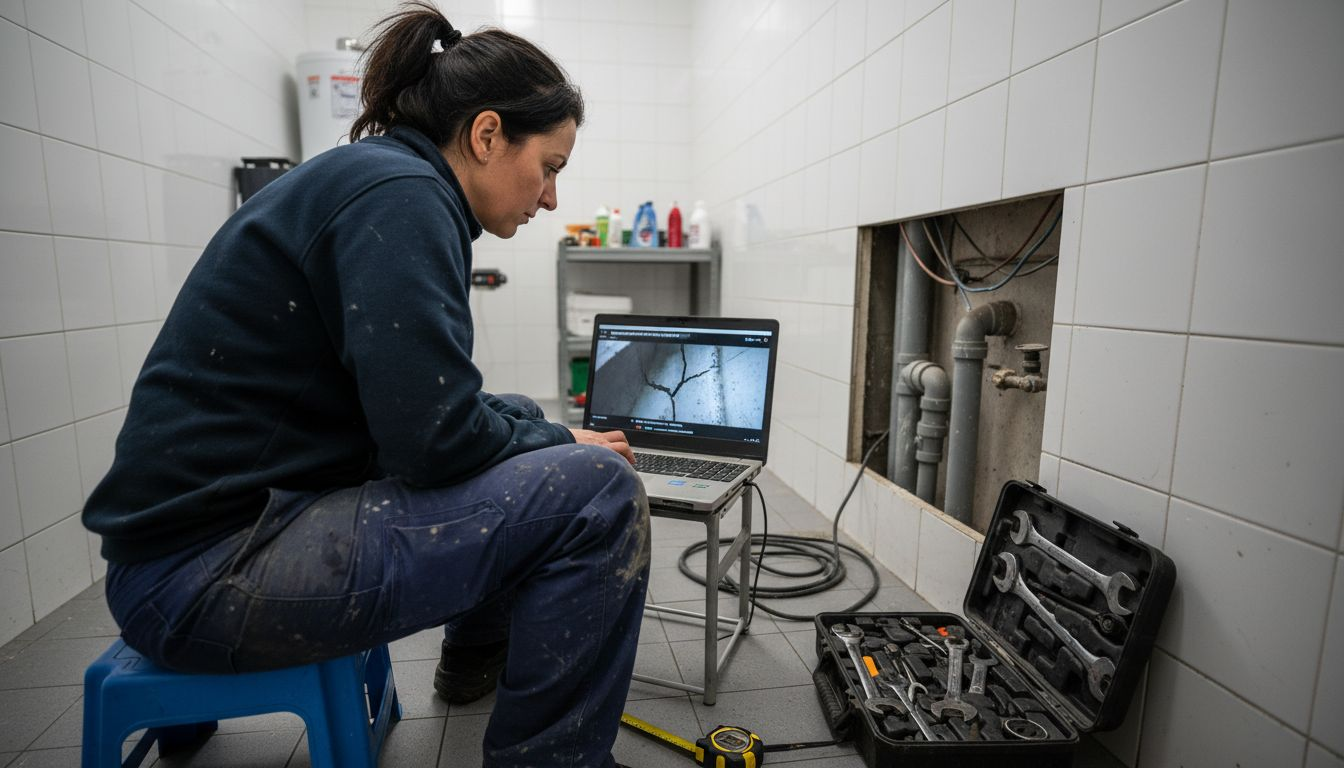
Home buyer drain surveys utilise cutting-edge CCTV technology to thoroughly examine drainage systems, capturing detailed visual information about pipe conditions, potential defects, and structural integrity. Professional technicians methodically navigate robotic cameras through complex pipe networks, documenting every aspect of the drainage infrastructure.
The survey process typically involves several critical stages:
- Initial property assessment and drainage system mapping
- Strategic camera positioning and insertion points
- Detailed visual inspection using high-resolution cameras
- Comprehensive pipe condition documentation
- Identification of potential structural issues
- Comprehensive report generation with technical recommendations
According to government building regulations, professional drain surveys must comprehensively inspect foul water drainage pipes, verify connections to public sewers, and ensure compliance with established building standards. Technicians carefully examine pipe sizes, structural conditions, and potential access points through manholes or inspection chambers.
Professional drain surveys provide a forensic-level examination of underground drainage systems, revealing issues that could remain hidden for years.
Key technical aspects of a professional drain survey include:
- Non-invasive camera technology deployment
- Precise pipe network mapping
- Defect identification and documentation
- Structural integrity assessment
- Comprehensive digital reporting
Pro tip: Request a comprehensive digital report with video footage after your drain survey, ensuring you have a permanent record of your property’s underground drainage conditions.
Key problems found in older Poole drains
Poole’s historic properties often conceal significant drainage challenges that can compromise both structural integrity and environmental safety. Older drainage systems, particularly those predating modern construction standards, are especially vulnerable to a range of complex infrastructure problems that require professional investigation and targeted remediation.
Drainage system responsibilities reveal that property owners bear critical maintenance obligations for underground networks within their boundaries. The most prevalent issues in older Poole drains include:
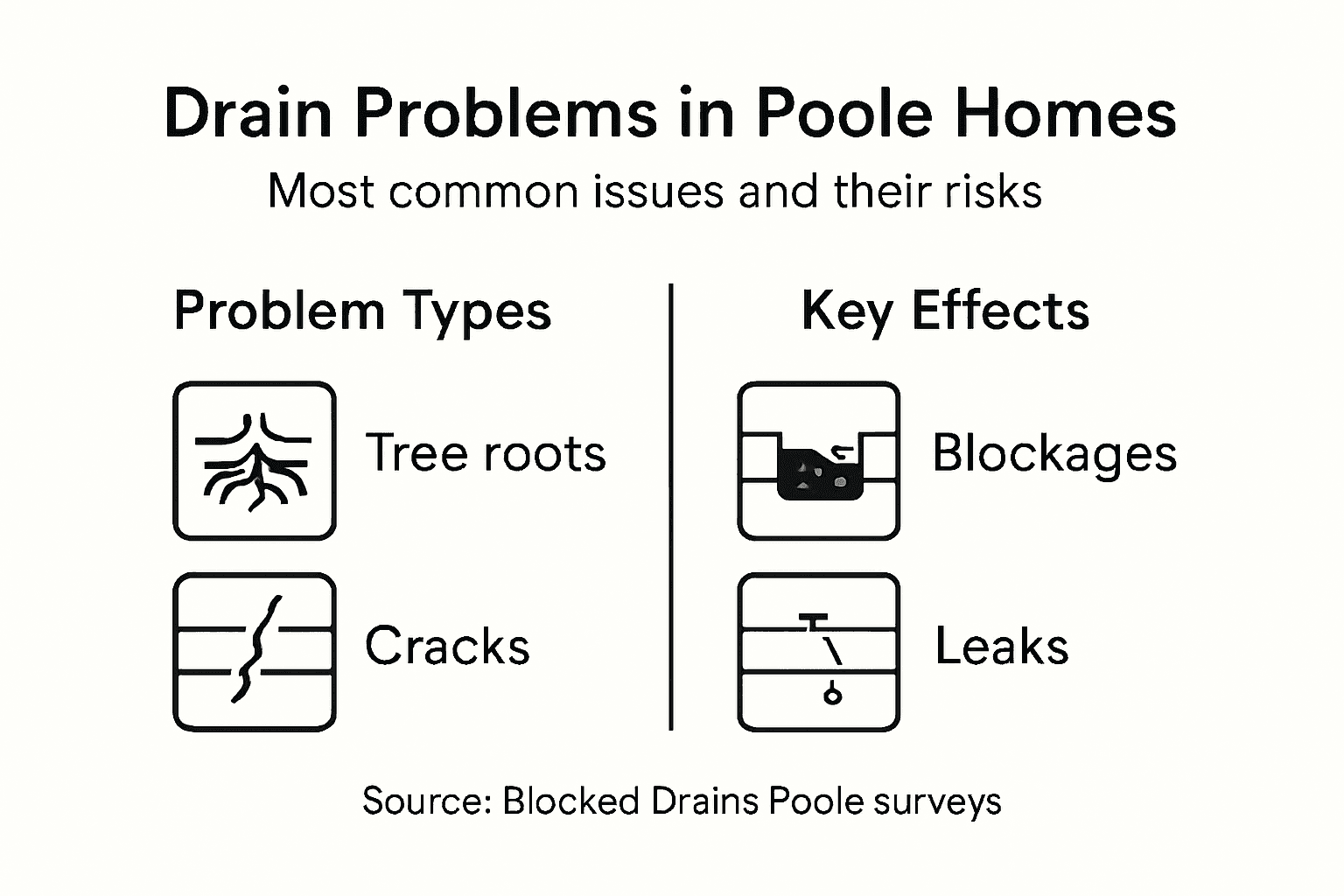
- Extensive tree root intrusion
- Structural pipe deterioration
- Silt and debris accumulation
- Potential misconnected drainage networks
- Progressive pipe material degradation
Tree roots represent a particularly insidious threat to drainage infrastructure. Tree root damage mechanisms demonstrate how even minor pipe cracks can become extensive entry points for root systems, gradually compromising pipe structural integrity. Roots seek moisture and nutrients, methodically expanding through existing pipe weaknesses and potentially causing complete blockages or catastrophic pipe collapses.
Underground drainage networks in older properties are living systems, constantly evolving and requiring vigilant monitoring and maintenance.
Critical drainage problems specific to older Poole properties include:
- Clay pipe material degradation
- Historical construction technique limitations
- Ground movement impacts
- Inadequate original drainage design
- Cumulative infrastructure stress
Pro tip: Conduct comprehensive drainage surveys every two to three years for properties over 30 years old, prioritising thorough root intrusion and structural assessments.
Below is a summary table highlighting typical issues found in older Poole drainage systems and their potential impact on property health:
| Problem Type | Likely Effect | Long-Term Consequence |
|---|---|---|
| Tree root intrusion | Blockages, pipe cracks | Structural damage |
| Pipe material degradation | Leakage, reduced flow | Total pipe failure |
| Silt and debris build-up | Slow drainage, flooding | Water damage |
| Misconnected networks | Pollution, contamination | Legal penalties |
| Outdated construction | Hard-to-access pipes | Higher repair costs |
Legal duties and homeowner responsibilities
Understanding drainage responsibilities is crucial for Poole homeowners, as legal obligations directly impact property maintenance and potential environmental compliance. The intricate landscape of drainage management requires careful navigation of both property-specific and municipal regulatory requirements.
Drainage system maintenance responsibilities create a clear framework for homeowner accountability. Property owners must maintain and repair private drainage systems located within their property boundaries, which includes:
- Underground pipework beneath gardens
- Drainage systems running through private land
- Connections between property and public sewer networks
- Maintaining structural integrity of private drainage infrastructure
- Addressing potential environmental contamination risks
Local water companies typically manage infrastructure beyond property boundaries, including main sewers and lateral drainage connections. Drain maintenance jurisdictions establish specific demarcation lines determining homeowner versus municipal responsibilities, which can vary depending on precise location and infrastructure configuration.
Proactive drainage maintenance isn’t just a legal requirement—it’s an essential strategy for protecting your property’s long-term value and structural integrity.
Key legal considerations for Poole homeowners include:
- Regular drainage system inspections
- Prompt repair of identified infrastructure issues
- Compliance with local authority drainage regulations
- Prevention of environmental contamination
- Documentation of maintenance activities
Pro tip: Maintain a comprehensive drainage maintenance log documenting all inspections, repairs, and professional interventions to demonstrate responsible property management.
Costs, mistakes to avoid and alternatives
Drainage surveys represent a critical investment in protecting your Poole property, with financial considerations and strategic decision-making playing pivotal roles in maintaining underground infrastructure. Understanding the landscape of survey options, potential costs, and potential pitfalls is essential for homeowners seeking comprehensive property assessments.
Home buyer drain survey costs vary significantly based on property characteristics, survey complexity, and selected diagnostic techniques. Typical pricing ranges reflect the depth of investigation and technological sophistication required to uncover potential drainage challenges:
- Basic visual drainage inspections
- Comprehensive CCTV pipe surveys
- Sonar imaging assessments
- Targeted problem-specific investigations
- Full property drainage system evaluations
Survey cost considerations demonstrate that mid-level homebuyer surveys typically range from £400 to £1,000, depending on property value and required detail. Mistakes to avoid include relying solely on superficial assessments or postponing professional drainage investigations.
Preventative drainage investigations are significantly more cost-effective than emergency repairs caused by undetected infrastructure problems.
Alternative survey approaches for Poole homeowners include:
- Targeted CCTV drain investigations
- Sonar pipe mapping
- Partial system assessments
- Visual surface-level inspections
- Complementary mortgage valuation reports
Pro tip: Request detailed, written survey reports and maintain digital copies to track your property’s drainage history and support future maintenance decisions.
Secure Your Poole Home with Expert Drain Surveys and Repairs
Understanding the complexities of your property’s drainage system is essential to prevent costly damage and environmental issues. This article highlights the importance of professional drain surveys using advanced CCTV and sonar technologies to uncover hidden problems such as root intrusion, pipe deterioration, and blockages that often affect older Poole homes. Homeowners face challenges including maintaining compliance with legal duties and avoiding mistakes like relying on superficial inspections. Addressing these concerns early protects your property and peace of mind.
At Blocked Drains Poole, we specialise in comprehensive drainage solutions tailored to Poole’s unique infrastructure needs. Our skilled team provides detailed CCTV surveys, effective unblocking services, and modern repair options such as pipe relining to tackle root ingress and ageing pipes. With transparent pricing, no call-out fees, and rapid 24/7 emergency response, we ensure your drainage problems are identified and resolved promptly.
Protect your home from hidden drain defects before they escalate. Schedule a professional drain inspection today and experience expert care designed for Poole residents.
Don’t wait until drainage issues impact your property value or compliance. Contact us now at Blocked Drains Poole to arrange a thorough survey and fast, reliable repairs that safeguard your home for years to come.
Frequently Asked Questions
What is a drain survey and why is it important?
A drain survey is a comprehensive assessment of your property’s drainage system, using advanced technology like CCTV to identify potential issues before they escalate into costly repairs. It’s crucial for maintaining your home’s structural integrity and preventing environmental damage.
How often should I schedule a professional drain survey?
It is recommended to schedule a professional drain survey every 2-3 years. Additionally, consider having one done immediately if you notice persistent drainage issues such as slow drainage, unusual odours, or repeated blockages.
What types of drain surveys are available for my property?
There are several types of drain surveys, including CCTV drain surveys, sonar imaging for sub-surface analysis, and specific drainage investigations targeting problem areas. Each method provides different insights depending on the needs of your property.
What problems can a drain survey uncover in older properties?
Common issues found in older properties include tree root intrusions, structural pipe deterioration, silt and debris build-up, and misconnected drainage networks. Identifying these problems early can prevent significant structural damage and environmental contamination.