
Persistent drainage issues can leave Poole homeowners frustrated, especially when traditional repairs risk tearing up gardens or driveways. Addressing these problems quickly and affordably matters when your property’s value and daily comfort are on the line. Modern drain repair techniques like trenchless technology deliver minimally invasive solutions trusted by local experts, helping you restore your home’s drainage with less stress and disruption.
Table of Contents
- Modern Drain Repair Techniques Explained
- Types Of No-Dig And Traditional Repairs
- How Cctv Surveys Guide Repair Choices
- Costs, Risks, And Property Disruption
- Comparing Relining, Patching, Excavation
- Mistakes To Avoid With Aged Pipework
Key Takeaways
| Point | Details |
|---|---|
| Minimally Invasive Repair Options | Modern techniques such as pipe relining and trenchless technology greatly reduce the need for extensive excavation, preserving landscape integrity. |
| Importance of CCTV Surveys | Comprehensive CCTV drain surveys provide critical insights into drainage issues, enabling informed decision-making for effective repairs. |
| Cost-Effective Solutions | No-dig technologies minimise property disruption and overall repair costs while maintaining aesthetic appeal and structural integrity. |
| Professional Assessments Recommended | Annual inspections and professional evaluations are essential for managing aged drainage systems and preventing costly repairs. |
Modern drain repair techniques explained
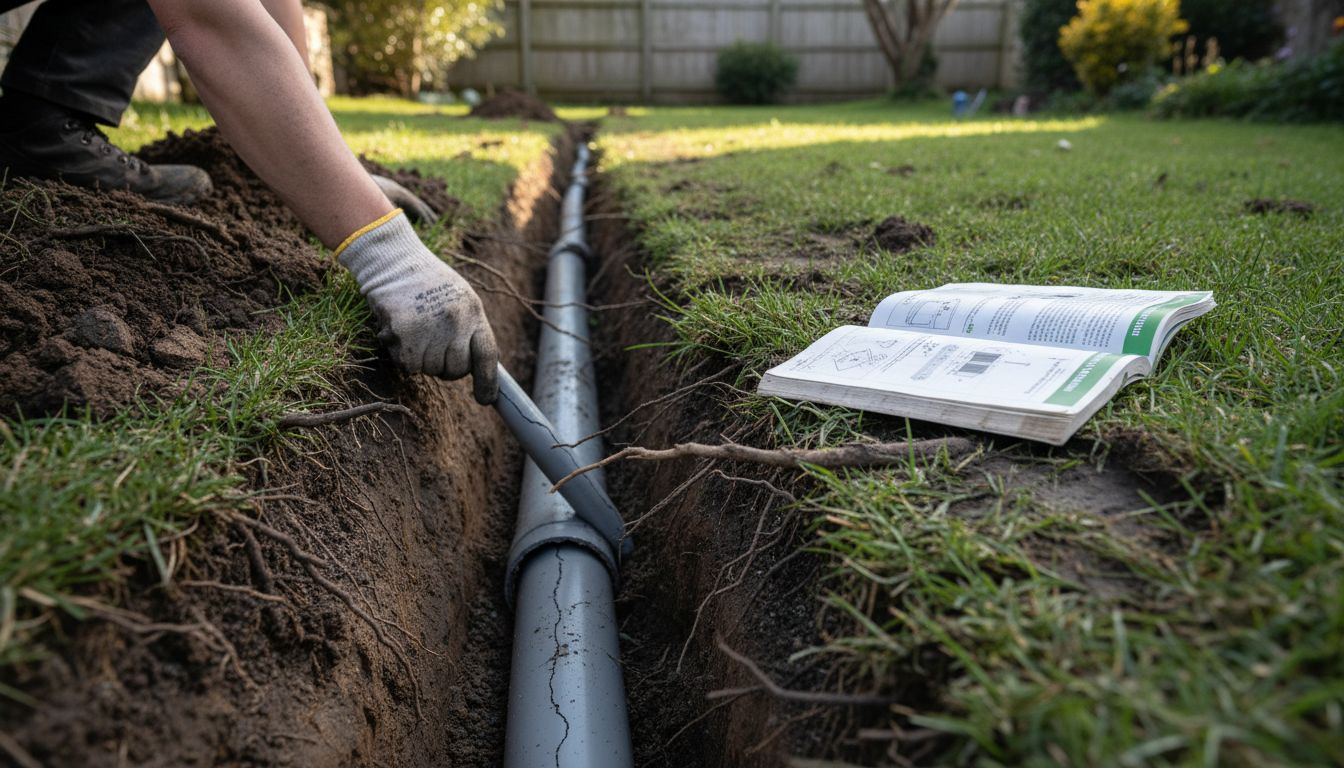
Modern drain repair techniques have significantly transformed how homeowners in Poole address pipeline challenges. Unlike traditional excavation methods that involve significant ground disruption, contemporary approaches focus on minimally invasive solutions that preserve landscape integrity and reduce repair costs.
Traditional drainage repair often required extensive digging, but now, trenchless technology offers innovative alternatives. No-dig drain repair techniques have revolutionised how drainage professionals approach pipe rehabilitation. These advanced methods include:
- Cured-In-Place Pipe (CIPP) relining
- Pipe bursting techniques
- Resin-saturated liner installations
- Hydraulic pipe replacement
One particularly effective method is pipe relining, which involves inserting a resin-coated liner inside the existing damaged pipe. Trenchless innovations allow technicians to create a seamless new pipe interior without excavating the entire drainage system. This approach offers multiple advantages:
- Minimal ground disturbance
- Faster repair times
- Reduced environmental impact
- Cost-effective solution
- Extended pipe lifespan
The process typically involves carefully measuring the pipe, preparing the surface, and inserting a custom-designed liner that hardens in place. Specialised equipment allows technicians to rehabilitate pipes of various materials and sizes, making this technique incredibly versatile for Poole’s diverse residential infrastructure.
Pro tip: Always request a detailed CCTV drainage survey before committing to any repair method to understand the precise nature of your drainage issue.
Types of no-dig and traditional repairs
Drain repairs in Poole have evolved significantly, with modern techniques offering homeowners more flexible and less invasive options compared to traditional methods. Understanding the range of available repair strategies helps residents make informed decisions about their drainage infrastructure.
No-dig drain repair methods represent a revolutionary approach to pipeline rehabilitation. These innovative techniques include several sophisticated approaches:
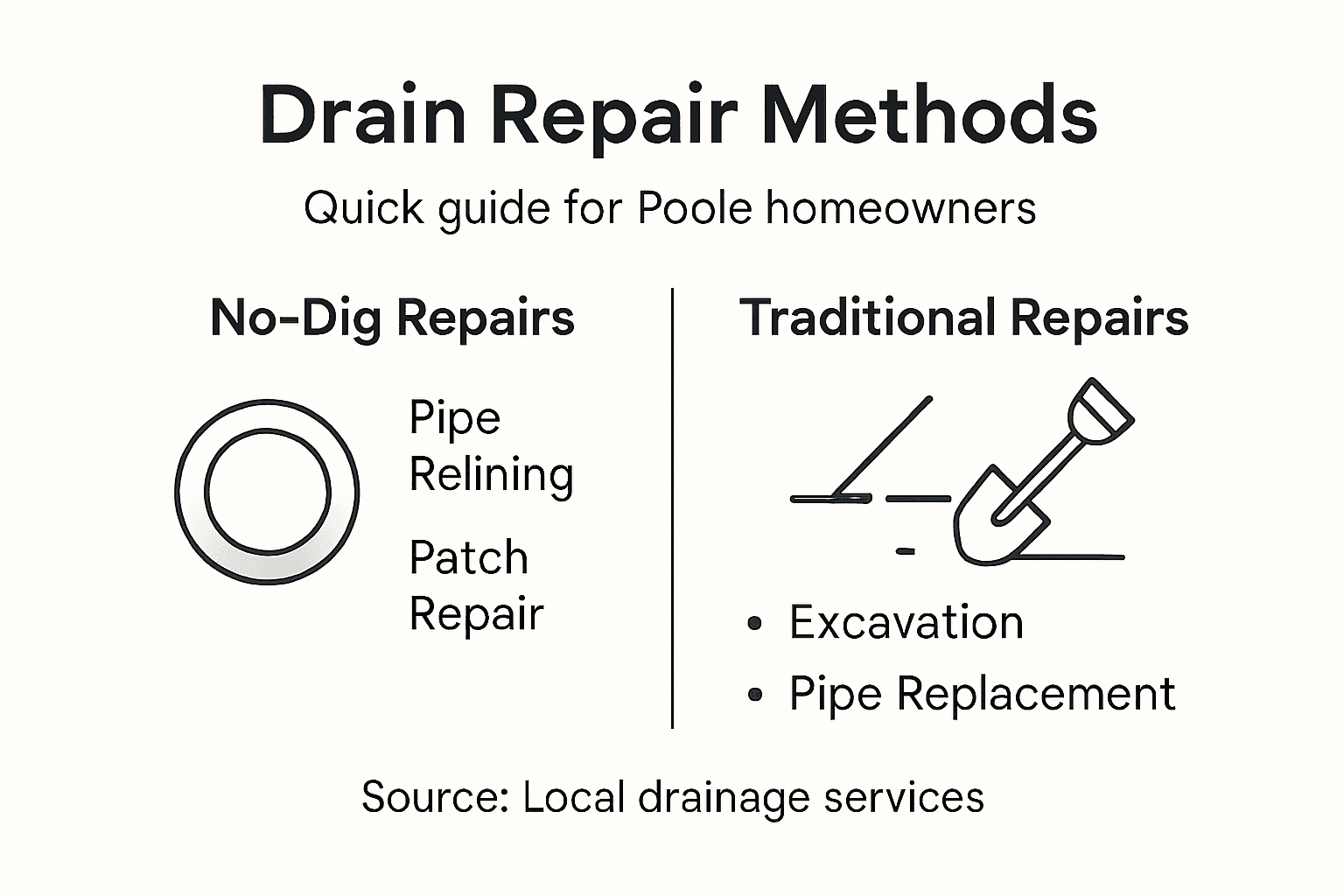
- Pipe Relining (CIPP): Inserting a resin-coated liner inside existing pipes
- Patch Repairs: Targeting specific damaged pipe sections
- Pipe Bursting: Replacing pipes without extensive excavation
- Slip Lining: Installing a smaller pipe inside the existing pipeline
Traditional repair methods, by contrast, remain more invasive and time-consuming. These conventional approaches typically involve:
- Complete pipe excavation
- Full pipe section replacement
- Extensive ground disturbance
- Higher labour and material costs
- Significant landscape disruption
Modern drain repair techniques provide substantial advantages over traditional methods. They restore structural integrity while minimising environmental impact and reducing overall repair expenses. The precision of no-dig technologies allows technicians to address complex drainage issues with minimal disruption to a property’s landscape.
Pro tip: Request a comprehensive CCTV drainage survey to determine whether no-dig or traditional repair methods are most appropriate for your specific drainage challenge.
To clarify your repair choices, the following table distinguishes no-dig and traditional drain repair techniques:
| Repair Method Type | Key Technologies Used | Typical Use Cases |
|---|---|---|
| No-dig (Trenchless) | CIPP relining, patch repairs, pipe bursting, slip lining | Repairing pipes under driveways or gardens without excavation |
| Traditional (Excavation) | Full pipe removal, open trench work, section replacement | Replacing collapsed or severely deteriorated pipes |
| Hybrid Solutions | Combination of patching, limited digging | Remediating hard-to-reach or mixed-material systems |
How CCTV surveys guide repair choices
Modern drainage diagnostics have revolutionised how homeowners in Poole understand and address their underground pipeline challenges. High-definition drain surveys provide unprecedented insights into the intricate world beneath residential properties, allowing for precise problem identification and targeted repair strategies.
CCTV drain surveys represent a technological breakthrough in drainage maintenance. These advanced inspections offer comprehensive visual documentation of pipe interiors, revealing critical information about the drainage system’s condition:
- Exact location of pipe damage
- Type and extent of structural issues
- Precise identification of blockages
- Assessment of potential root ingress
- Detection of joint misalignments
- Evaluation of pipe material degradation
The diagnostic process involves inserting a specialised camera through the drainage system, capturing high-resolution video footage of the pipe’s entire length. Technicians can then analyse this footage to determine the most appropriate repair method, whether that involves no-dig techniques like pipe relining or more traditional excavation approaches.
By providing transparent, evidence-based insights, CCTV surveys eliminate guesswork and enable homeowners to make informed decisions about their drainage infrastructure. The detailed visual documentation serves multiple purposes, including:
- Preventing unnecessary extensive repairs
- Reducing overall repair costs
- Identifying potential future maintenance needs
- Providing clear communication between homeowners and drainage specialists
Pro tip: Request a complete digital copy of your CCTV survey to maintain a comprehensive record of your property’s drainage health.
Costs, risks, and property disruption
Drain repair expenses represent a significant concern for Poole homeowners, with repair strategies dramatically impacting both financial and structural considerations. Drainage repair approaches vary considerably in terms of cost, invasiveness, and potential property impact.
Traditional repair methods often involve substantial financial and physical risks, including:
- Extensive landscaping damage
- Higher labour costs
- Potential structural disruption
- Longer repair timeframes
- Complete property area excavation
- Higher material replacement expenses
Modern no-dig technologies offer a more strategic alternative. UV lining drain repair provides a less invasive approach that significantly reduces both financial and physical risks. These innovative techniques minimise property disruption by:
- Preserving existing landscaping
- Reducing labour hours
- Minimising ground disturbance
- Lowering overall repair costs
- Preventing unnecessary property restructuring
- Maintaining aesthetic property integrity
The financial implications of drain repairs extend beyond immediate costs. Homeowners must consider long-term structural integrity, potential future damage prevention, and the overall value preservation of their property. Different repair methods carry varying levels of risk, making it crucial to understand the full spectrum of potential outcomes before committing to a specific approach.
Pro tip: Always request a comprehensive cost breakdown and risk assessment before proceeding with any drain repair method.
Comparing relining, patching, excavation
Drainage repair methods present homeowners with multiple strategic options, each carrying distinct advantages and limitations. Understanding the nuanced differences between relining, patching, and traditional excavation helps Poole residents make informed decisions about their drainage infrastructure.
The three primary repair approaches can be compared across several critical dimensions:
Pipe Relining:
- Minimal property disruption
- Relatively quick installation
- Suitable for moderate damage
- Lower overall cost
- Preserves existing pipe structure
- Reduces future leak potential
Patch Repairs:
- Targeted solution for localised damage
- Lower cost compared to full replacement
- Quick implementation
- Addresses specific pipe section issues
- Minimal excavation required
- Effective for smaller structural problems
Traditional Excavation:
- Complete pipe replacement
- Highest property disruption
- Most expensive method
- Comprehensive structural resolution
- Recommended for severely damaged infrastructure
- Allows total pipe system inspection
Each method offers unique benefits depending on the specific drainage challenge. Factors like pipe age, extent of damage, soil conditions, and budget will ultimately determine the most appropriate repair strategy for a particular property.
The selection process requires careful assessment of both immediate repair needs and long-term infrastructure integrity. Professional drainage specialists can provide detailed evaluations to recommend the most suitable approach based on comprehensive diagnostic findings.
Pro tip: Request a detailed comparative assessment from drainage professionals to understand which repair method best suits your specific drainage system’s condition.
Below is a decision support table to help you weigh the main drain repair methods for your property:
| Method | Best For | Main Limitation |
|---|---|---|
| Pipe Relining | Moderate structural damage, long-term fixes | Not suitable for major collapses |
| Patch Repairs | Localised, small cracks or leaks | Ineffective for widespread damage |
| Traditional Excavation | Severely damaged or collapsed systems | High cost and major disruption |
Mistakes to avoid with aged pipework
Aged drainage systems present unique challenges for Poole homeowners, with potential pitfalls that can lead to costly and disruptive repairs. Common drainage risks underscore the importance of understanding how older pipework deteriorates and the critical mistakes to avoid.
Homeowners frequently make several problematic errors when managing historic drainage infrastructure:
- Ignoring early warning signs of pipe degradation
- Postponing routine professional inspections
- Attempting DIY repairs without expert assessment
- Using harsh chemical drain cleaners
- Overlooking subtle moisture or soil movement indicators
- Failing to understand pipe material limitations
The most critical mistakes revolve around misunderstanding the fragility of older drainage systems. Pipes installed decades ago have different structural characteristics compared to modern installations, making them significantly more vulnerable to:
- Gradual material weakening
- Root intrusion risks
- Joint separation
- Corrosion and mineral buildup
- Ground movement impacts
- Potential structural integrity compromise
Professional intervention becomes crucial when dealing with aged pipework. Drainage specialists can conduct comprehensive assessments using advanced diagnostic technologies, identifying potential issues before they escalate into major infrastructure failures.
Pro tip: Schedule annual professional drainage inspections for properties with pipework over 30 years old to proactively manage potential infrastructure risks.
Effective Modern Drain Repair Solutions for Poole Homes
Facing drainage problems caused by ageing pipework or unexpected blockages can be stressful and disruptive. This article highlights the advantages of modern drain repair methods such as pipe relining and trenchless technology which minimise damage to your property while offering lasting solutions. At Blocked Drains Poole, we understand the unique challenges of older drainage systems common across Poole and use advanced techniques coupled with thorough CCTV surveys to diagnose and fix issues precisely.
Our professional team offers fast, reliable service without call-out fees and full transparency on pricing. Whether you need emergency drain unblocking or sophisticated repairs like pipe relining to protect your garden or driveway, we have you covered. Learn more about our comprehensive drain repair services at Blocked Drains Poole and see how we combine expertise with the latest technology to keep your drainage system running smoothly.

Don’t wait for small problems to cause major disruption. Contact us today for a detailed CCTV inspection or a tailored drain repair plan. Visit Blocked Drains Poole now and secure your property’s drainage integrity with trusted local experts. Discover how modern repair methods can save you time, money and avoid unnecessary excavation.
Frequently Asked Questions
What are no-dig drain repair methods?
No-dig drain repair methods, also known as trenchless technologies, include techniques like pipe relining, patch repairs, pipe bursting, and slip lining. These methods require minimal excavation, preserving the landscape while effectively repairing drainage systems.
How does pipe relining work?
Pipe relining involves inserting a resin-coated liner into the existing damaged pipe. Once the liner is in place, it hardens, creating a new, seamless pipe interior, which restores the structural integrity of the drainage system without extensive excavation.
What are the advantages of using modern drain repair techniques?
Modern drain repair techniques offer several advantages, including minimal ground disturbance, faster repair times, reduced environmental impact, cost-effectiveness, and an extended lifespan for the drainage system.
Why is a CCTV drainage survey important before repairs?
A CCTV drainage survey provides a comprehensive visual assessment of the pipe’s condition, identifying the exact location and extent of damage. This information helps determine the most appropriate repair method, preventing unnecessary repairs and costs.