
Persistent drainage problems can disrupt daily operations and leave tenants frustrated in Poole’s older commercial buildings. As a property manager, finding reliable answers is crucial, especially with strict UK regulations demanding robust wastewater systems to prevent pollution and legal trouble. This guide breaks down what commercial drainage truly means, why legal compliance and targeted solutions matter so much for heritage sites, and how you can tackle common risks before costly damage occurs.
Table of Contents
- What Commercial Drainage Means In Practice
- Main Types Of Commercial Drainage Systems
- How Drainage Works In Older Buildings
- Legal Duties For Commercial Drainage Management
- Common Risks, Costs And Mistakes To Avoid
- Modern Solutions For Persistent Drainage Issues
Key Takeaways
| Point | Details |
|---|---|
| Importance of Compliance | UK businesses must adhere to strict regulations like the Environmental Protection Act 1990 to maintain efficient drainage systems. |
| Challenges of Older Infrastructure | Older commercial buildings require specialised maintenance due to legacy systems that often lack modern engineering standards. |
| Proactive Maintenance Strategies | Regular professional assessments and comprehensive documentation are essential to prevent costly emergency repairs and ensure regulatory compliance. |
| Modern Technological Solutions | Implementing innovative drainage technologies can enhance operational efficiency and effectively manage surface water and waste. |
What Commercial Drainage Means In Practice
Commercial drainage represents a comprehensive system managing wastewater and surface water flow for business premises across Poole’s complex infrastructure. Unlike residential systems, commercial drainage involves intricate networks handling significantly higher volumes and more diverse waste types from industrial, retail, and service environments.
The legal framework surrounding commercial drainage is rigorous. UK businesses must adhere to specific regulations including the Environmental Protection Act 1990 which mandates strict pollution prevention and proper sewerage connection standards. For commercial property managers in Poole, this means maintaining drainage systems that not only function efficiently but also comply with statutory requirements.
Specific sectors face unique drainage challenges. Restaurants and food service businesses, for instance, require specialised grease traps to prevent blockages and meet discharge regulations. Manufacturing facilities must manage trade effluent carefully, ensuring chemical and industrial waste does not contaminate public sewerage systems. Professional drainage assessments become critical, helping identify potential risks before they escalate into expensive infrastructure failures.
Pro tip: Schedule annual professional drainage surveys to proactively identify potential system weaknesses and prevent costly emergency repairs.
Main Types Of Commercial Drainage Systems
Commercial drainage systems are complex networks that manage wastewater and surface water flow across various business environments in Poole. These systems are fundamentally categorised into two primary types: above ground and below ground drainage networks.
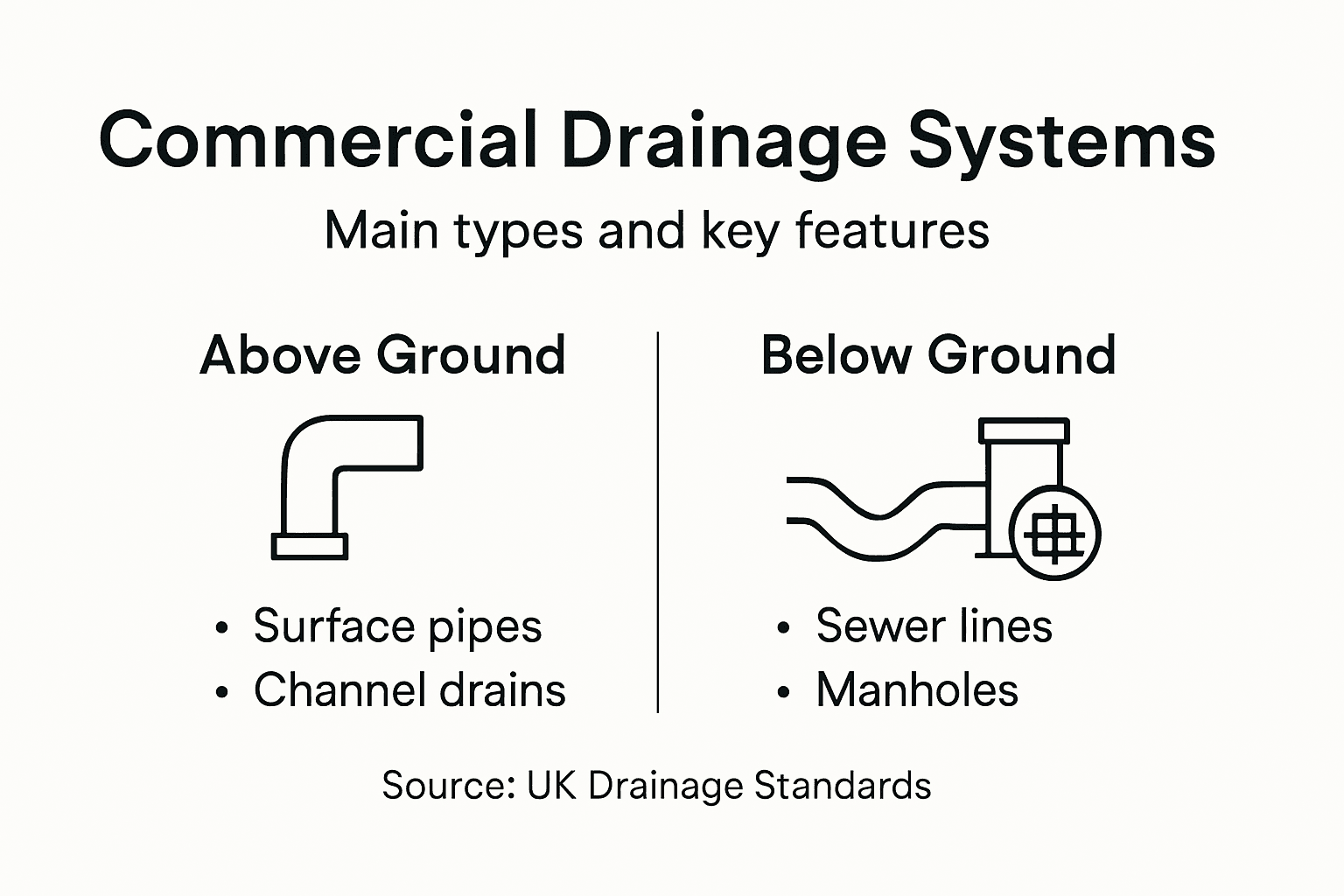
Above ground drainage systems are intricate configurations designed to handle wastewater removal through specialised components like soil stacks, branch pipes, traps, and ventilation systems. These networks are engineered to meet stringent Building Regulations Part H standards, ensuring efficient water management for diverse commercial settings including offices, retail spaces, hotels, hospitals, and industrial facilities. Their design allows for rapid fault detection and simplified maintenance, which is crucial for businesses seeking minimal operational disruption.
Below ground drainage systems complement above ground networks by managing underground water flow, handling sewerage, surface water, and trade effluent. These systems require sophisticated engineering to prevent contamination, manage high-volume waste, and ensure compliance with environmental regulations. For commercial properties in Poole, this means implementing robust underground infrastructure that can handle complex waste streams from different business sectors.
Pro tip: Conduct periodic drainage system mapping to understand the interconnected nature of your above and below ground drainage networks and identify potential vulnerability points.
Here is a comparison of above and below ground commercial drainage systems:
| Aspect | Above Ground Drainage | Below Ground Drainage |
|---|---|---|
| Primary Function | Removes wastewater internally | Manages sewage and surface water |
| Typical Components | Soil stacks, traps, vents | Sewers, manholes, inspection chambers |
| Maintenance Accessibility | Easy, quick fault detection | Challenging, needs specialised tools |
| Key Compliance Requirement | Building Regulations Part H | Environmental regulations |
| Example Business Sectors | Hospitals, hotels, offices | Industrial parks, warehouses |
How Drainage Works In Older Buildings
Older commercial buildings in Poole present unique challenges for drainage infrastructure, often featuring legacy pipework that predates modern engineering standards. These historical structures typically have drainage systems constructed with materials and techniques that differ significantly from contemporary design principles, requiring specialised understanding and maintenance approaches.
The primary complexity in older buildings stems from their original drainage configurations, which frequently lack the sophisticated design of modern sustainable systems. Sustainable drainage systems (SuDS) retrofitting becomes critical for managing surface water, controlling pollution, and reducing potential flood risks. This process demands meticulous assessment to balance preservation of historical architectural integrity with essential infrastructure improvements.
Typical drainage challenges in historic commercial properties include deteriorating clay or cast-iron pipework, inadequate gradient slopes, limited pipe diameters, and potential structural misalignments. Root intrusion, sediment accumulation, and corrosion can compromise system functionality, making regular professional inspections paramount. Commercial property managers must understand that these older systems require more frequent monitoring and potentially more invasive maintenance interventions compared to newer constructions.
Pro tip: Conduct comprehensive drainage surveys using advanced CCTV technologies to map existing pipeline networks and identify potential structural weaknesses before they escalate into significant infrastructure failures.
Legal Duties For Commercial Drainage Management
Commercial property managers in Poole face a complex landscape of legal obligations surrounding drainage infrastructure. Environmental Protection Act 1990 regulations establish critical standards for preventing pollution, managing wastewater, and ensuring responsible drainage system maintenance across commercial premises.
The legal framework encompasses multiple statutory requirements that demand comprehensive compliance. Under the Water Industry Act 1991, businesses must ensure correct sewer connections, control trade effluent discharge, and maintain drainage systems that meet stringent environmental and public health standards. The Workplace (Health, Safety and Welfare) Regulations 1992 further mandate that drainage systems protect staff and tenant safety, with non-compliance potentially resulting in significant financial penalties, enforcement notices, and potential operational disruptions.
Statutory responsibilities extend beyond mere maintenance. Commercial properties must prepare and implement Drainage and Wastewater Management Plans (DWMPs) that demonstrate proactive infrastructure management. These plans require detailed assessments of existing systems, potential environmental impacts, and strategies for sustainable drainage practices. Property managers must document their drainage management approaches, maintain comprehensive records of inspections and repairs, and be prepared to demonstrate regulatory compliance during potential official reviews.
Pro tip: Maintain a comprehensive digital archive of all drainage system documentation, including inspection reports, repair records, and compliance certificates to streamline potential regulatory audits.
Common Risks, Costs And Mistakes To Avoid
Commercial drainage systems in Poole represent significant financial and operational vulnerabilities that demand strategic management. Drainage management mistakes can rapidly escalate from minor issues into catastrophic infrastructure failures, potentially costing businesses thousands in emergency repairs and operational disruptions.
The primary risks encompass multiple critical areas of potential failure. Blocked drains, environmental pollution, structural damage, and improper trade effluent management can trigger severe consequences including substantial regulatory fines, insurance claim rejections, and extended business interruptions. Specific risks include undetected pipe deterioration, inadequate grease trap maintenance in food-related businesses, and failure to implement comprehensive monitoring protocols that could prevent incremental system degradation.
Financial implications extend far beyond immediate repair costs. Businesses may face compounding expenses through regulatory penalties, potential legal actions, reputational damage, and prolonged operational downtime. Neglecting routine drainage maintenance can transform a relatively minor £500 inspection into a £50,000 comprehensive infrastructure replacement project. Commercial property managers must adopt proactive strategies that prioritise regular professional assessments, comprehensive documentation, and systematic preventative maintenance approaches to mitigate these substantial financial risks.
Below is a summary of risks and costs linked to commercial drainage mismanagement:
| Risk Area | Potential Consequence | Typical Cost Impact |
|---|---|---|
| Blocked Drains | Overflow, building damage | £500 for minor remedy, much higher for major damage |
| Trade Effluent Mismanagement | Regulatory fines, pollution | Fines may exceed £10,000 |
| Pipe Deterioration | Unexpected collapse, emergency repairs | Up to £50,000 for full replacement |
| Poor Maintenance Records | Insurance rejections, audit failure | Loss of cover, compliance penalties |
Pro tip: Implement a quarterly professional drainage assessment programme to identify potential issues before they transform into expensive infrastructure failures.
Modern Solutions For Persistent Drainage Issues
Commercial drainage management in Poole has evolved significantly, with innovative technologies addressing long-standing infrastructure challenges. Sustainable drainage systems (SuDS) represent a groundbreaking approach to managing surface water through intelligent, environmentally responsive design.
Modern drainage solutions incorporate advanced technologies that transform traditional infrastructure limitations. Cutting-edge components include noise-reducing acoustic drainage systems, intelligent grease interceptors, and adaptable above-ground drainage configurations that dramatically improve maintenance efficiency. These systems comply with rigorous British Standards (BS EN) and UK Building Regulations Part H, offering unprecedented operational flexibility and rapid fault detection capabilities that minimise potential business disruptions.
The technological landscape now enables precise, data-driven drainage management. Innovative approaches such as permeable pavements, detention basins, green roofs, and strategically designed rain gardens provide multifaceted benefits. These solutions simultaneously control flooding, reduce pollution, enhance urban biodiversity, and create more resilient commercial infrastructure. Commercial property managers can now implement drainage systems that are not just functional, but intelligent and environmentally responsive.
Pro tip: Invest in comprehensive drainage mapping and monitoring technologies that provide real-time insights into your infrastructure’s performance and potential vulnerability points.
Expert Commercial Drainage Solutions Tailored for Poole Businesses
Managing commercial drainage in Poole comes with unique challenges from ageing pipework to strict legal duties highlighted in this article. Whether you face blocked drains, complex grease trap issues, or need reliable CCTV inspections to prevent costly infrastructure failures, specialised expertise is essential. At Blocked Drains Poole, we understand the complexities of commercial drainage systems and the urgent risks poor management can cause your business.
Don’t wait for minor problems to become expensive disasters. Our comprehensive services offer fast, 24/7 emergency response without call-out fees, transparent pricing, and expert solutions including inspection, repair, and professional relining techniques designed for Poole’s historic drainage network. Take control of your commercial drainage management with trusted local specialists who prioritise compliance with UK regulations and sustainable infrastructure improvements.
Ready to safeguard your business and reduce costly drainage risks?
Discover how our expert team can protect your commercial property today by visiting Blocked Drains Poole. Book your professional drainage survey or emergency service now and experience peace of mind backed by proven local expertise.
Frequently Asked Questions
What is commercial drainage?
Commercial drainage refers to the comprehensive systems that manage wastewater and surface water for business premises, addressing higher volumes and diverse waste types compared to residential drainage.
What are the main types of commercial drainage systems?
The primary types of commercial drainage systems are above ground drainage systems, designed for internal wastewater removal, and below ground drainage systems, which manage sewage, surface water, and trade effluent.
What specific challenges do older commercial buildings face regarding drainage?
Older commercial buildings often have outdated drainage infrastructure, including legacy pipework that can present issues such as inadequate slopes, root intrusion, and deteriorating materials, necessitating more frequent maintenance and inspections.
What legal responsibilities do commercial property managers have for drainage systems?
Commercial property managers must comply with regulations such as the Environmental Protection Act 1990 and the Water Industry Act 1991, ensuring proper maintenance, pollution prevention, and the management of trade effluent discharge.