
Blocked drains can quickly turn a normal day in your Poole home into a stressful mess. When water refuses to flow and unpleasant odours creep in, knowing how to respond can save you time and protect your property. With the right approach to tools, safety, and inspection, you can handle most blockages confidently and recognise when help from a local drainage professional is the safest solution. For urgent issues, understanding essential drainage tools and safety tips is your first step.
Table of Contents
- Step 1: Gather Essential Drainage Tools and Safety Kit
- Step 2: Inspect the Blockage and Identify the Cause
- Step 3: Apply Mechanical or Chemical Drain Clearance Techniques
- Step 4: Flush the System and Check For Free Flow
- Step 5: Monitor Drainage and Prevent Future Blockages
Quick Summary
| Main Insight | Explanation |
|---|---|
| 1. Gather essential tools first | Assemble a good plunger, gloves, safety glasses, and a torch for effective blockage handling. |
| 2. Inspect the blockage thoroughly | Identify the blockage’s cause to choose the right clearing method and avoid ineffective attempts. |
| 3. Try mechanical methods first | Use a plunger or plumbing snake to clear blockages safely before considering chemical treatments. |
| 4. Flush the system after clearing | Run hot water for several minutes to confirm that drainage has returned to normal and avoid regrowth of blockages. |
| 5. Establish regular maintenance habits | Use strainers and monthly hot water flushes to prevent future blockages and identify issues early. |
Step 1: Gather Essential Drainage Tools and Safety Kit
Before you tackle that blocked drain, you need to assemble the right equipment. Having the proper tools and safety gear on hand makes the difference between a manageable task and a messy disaster. What you gather in this step determines whether you can safely handle the blockage yourself or recognise when you need professional help.
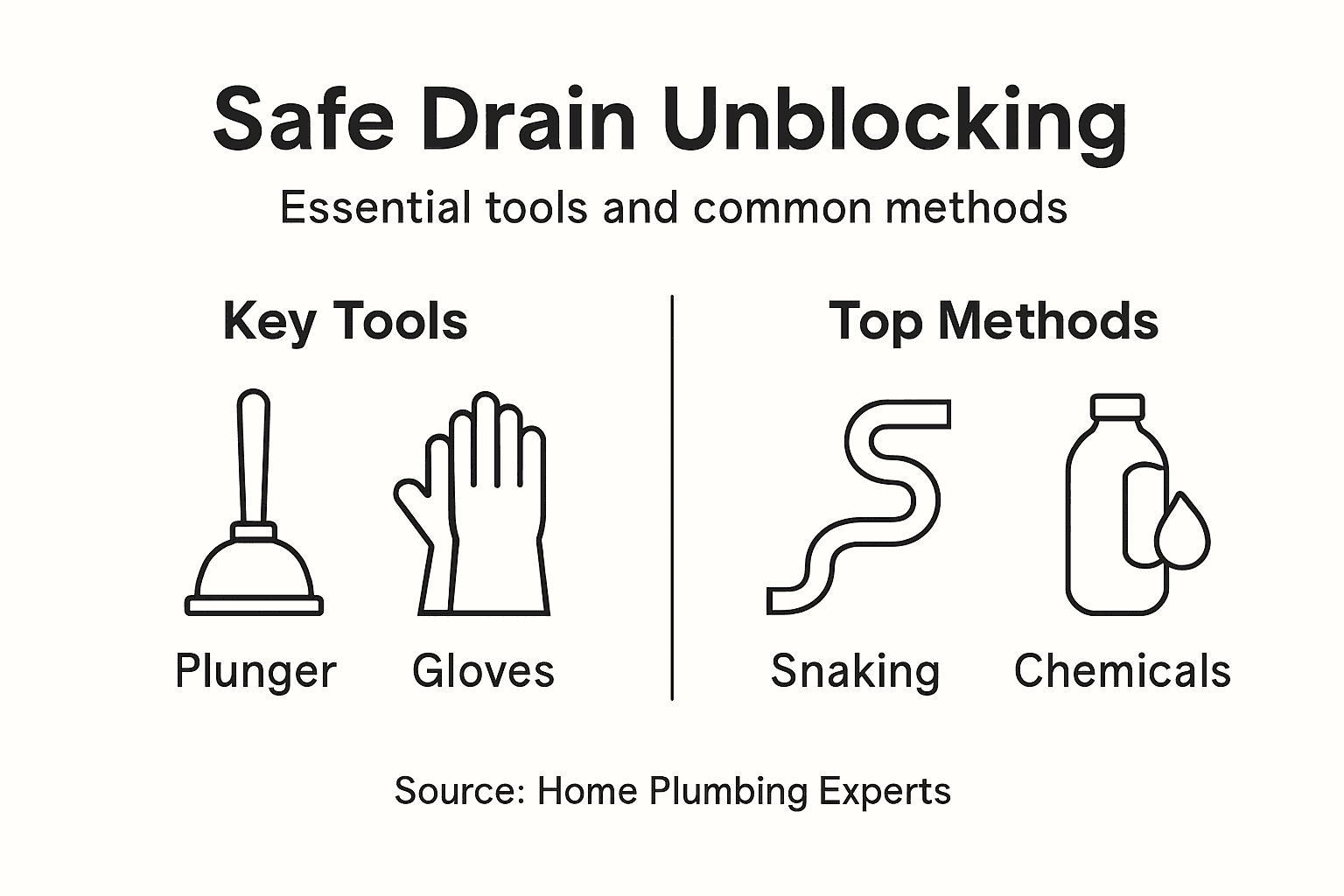
Start with the basics that work for most household drain issues. A good quality plunger designed specifically for sinks and drains is your first line of defence, though you probably already have one under the kitchen sink. Grab a pair of heavy-duty rubber gloves that extend past your wrists because you’ll be reaching into pipes and encountering unpleasant materials. Safety glasses protect your eyes from splashes, especially if you’re dealing with any chemical treatments. A torch or headlamp helps you see what you’re working with, whether that’s hair, grease, or debris blocking the pipe. Drainage rods and high-pressure water jetting equipment represent the professional approach, though these are less common in home toolkits. For many Poole homes with older Victorian and Edwardian pipework, you might also consider having a plumbing snake or auger on hand, which can reach deeper blockages that a plunger cannot shift.
Beyond the tools themselves, your safety kit matters just as much. Old drains sometimes contain unpleasant bacteria and gases, so adequate ventilation is essential when you’re working. Wear eye protection without fail, and consider a dust mask if you’re dealing with dried debris. Keep old towels or a bucket nearby to catch water and waste, and have a hose connected and ready to flush the drain once you’ve cleared the blockage. Understanding what caused your blockage in the first place helps you choose the right approach. Cooking oil, hair caught in soap residue, and wet wipes are common culprits in Poole homes, and each requires slightly different handling techniques.
Professional tip Keep your safety equipment organised in a small bucket or caddy so everything is ready when you need it, and always test your plunger on a clear drain first to ensure you have a proper seal before attempting a blocked one.
Step 2: Inspect the Blockage and Identify the Cause
Before you start clearing anything, you need to understand what you’re actually dealing with. Identifying the cause of your blockage is critical because different blockages require different approaches. A grease buildup needs different treatment than hair, and structural issues demand professional intervention. Taking time to inspect properly now saves you from wasting effort on the wrong technique.
Begin your inspection at the most accessible point. Check your sink, toilet, or shower drain visually if you can see where the water is backing up. Look for obvious signs like hair wrapped around the drain opening or visible debris. Pour some water down the drain slowly and watch how quickly it empties or if it pools. If water drains away but slowly, you’ve likely got a partial blockage from accumulated material. If water doesn’t drain at all or backs up, the blockage is more severe. The most common culprits in Poole homes include grease buildup, hair, and wet wipes, along with food waste that’s congealed in older pipes. For deeper investigation, you might use a plumbing snake to probe the blockage, which can tell you whether you’re hitting solid debris or something that feels soft like hair and grease combined. Some blockages you can feel with the snake, which helps you understand what you’re working with before you attempt clearance.
Consider whether the blockage is widespread or isolated to one fixture. If only your kitchen sink is slow but the bathroom drains fine, the problem is localised to that sink’s pipe. If multiple drains throughout your home are backing up, you’ve got a deeper issue, possibly in your main drainage line or caused by structural problems like misaligned pipes or root intrusion from trees outside. This is the moment to recognise your limits. Structural damage and blockages in your main line require professional equipment and expertise that you cannot safely replicate at home. Understanding what you’re facing helps you decide confidently whether to proceed or call in professionals who have the right tools and experience with Poole’s complex, aged drainage systems.
Professional tip Take a photograph of the drain area and any visible blockage before you start work, as this documentation helps professionals diagnose the issue if you later need to call them in.
Step 3: Apply Mechanical or Chemical Drain Clearance Techniques
Now that you understand your blockage, it’s time to choose your clearing method and apply it safely. You have two primary approaches: mechanical methods that physically remove or push through the blockage, and chemical treatments that dissolve organic matter. The right choice depends entirely on what’s blocking your drain and how confident you feel tackling it yourself.
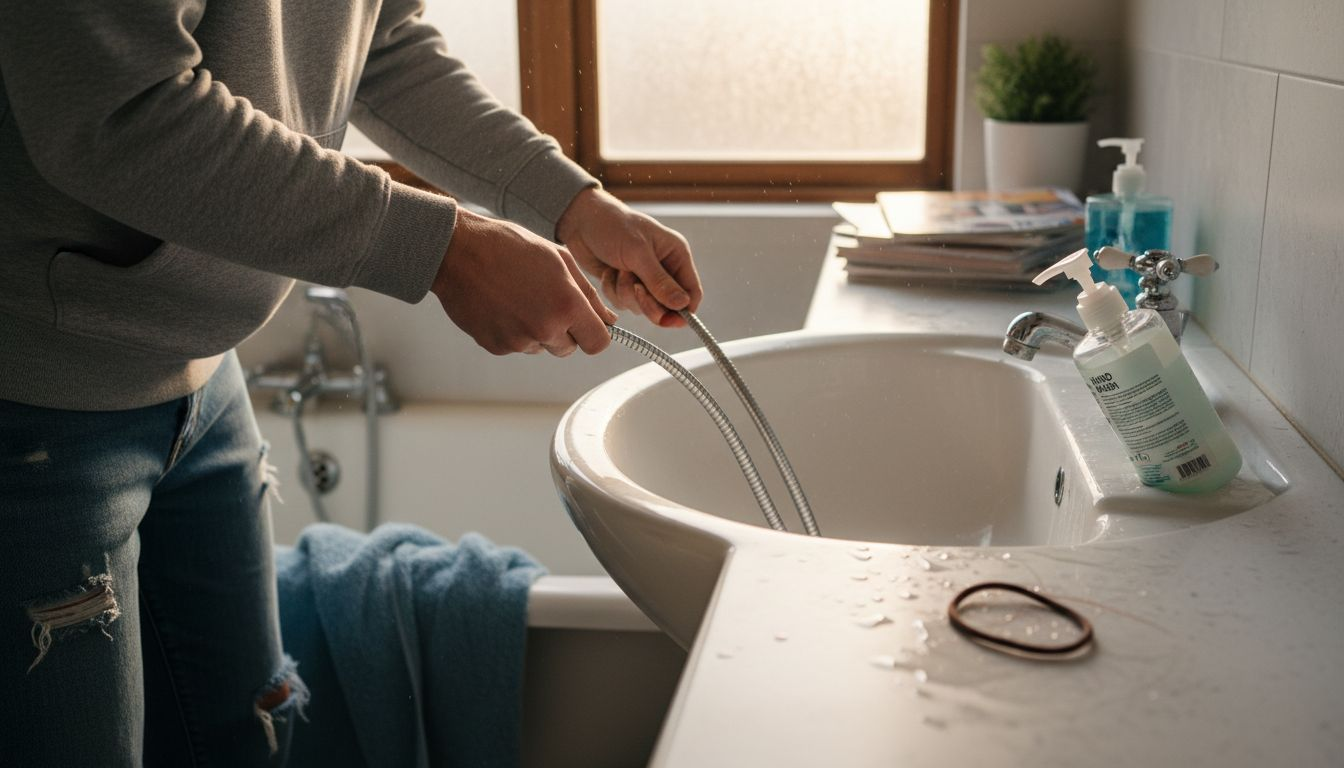
Start with mechanical methods first, as they’re generally safer and more effective for most household blockages. Your plunger is the simplest mechanical tool, but use it correctly. Fill your sink with enough water to cover the plunger cup completely, then push down and pull up vigorously about twenty times. The goal is to create pressure that dislodges the blockage. If your plunger doesn’t work, a plumbing snake or drain rod becomes your next option. Push the snake down the drain slowly, twisting it as you go, and feel for resistance. When you hit the blockage, work the snake back and forth to break it up or hook hair and debris so you can pull them out. Mechanical clearance such as rodding follows standard practice outlined in Building Regulations for safe drainage work. Take your time with mechanical methods; rushing often just pushes the blockage further down rather than clearing it properly.
Chemical drain cleaners enter the picture only when mechanical methods fail, and they require extreme caution. These products dissolve grease and organic matter but can be hazardous to you and potentially damaging to your pipes if used incorrectly. Always wear your gloves and eye protection, never mix different chemical products, and follow the manufacturer’s instructions precisely. Pour the chemical slowly down the drain, let it work for the time specified, then flush thoroughly with hot water. Chemical cleaners work best on grease blockages but can damage older pipework if left too long or if you use excessive quantities. If you’re unsure whether your pipes can handle chemical treatment, avoid them entirely. For Poole homes with Victorian era plumbing, mechanical methods are usually your safest bet. Chemical treatments should only be a last resort before calling professionals who have safer, high-pressure alternatives.
Here is a comparison of mechanical and chemical drain clearing methods:
| Method Type | Typical Use Cases | Safety Considerations | Best for Blockages Caused By |
|---|---|---|---|
| Mechanical | Everyday clogs, visible | Minimal risk, protective | Hair, food particles, debris |
| blockages or debris | gear recommended | ||
| Chemical | Stubborn grease or | Hazardous chemicals, | Grease, organic build-up |
| organic build-up | requires gloves and goggles |
Professional tip If a blockage resists both your plunger and snake after genuine effort, stop and call a professional rather than escalating to chemicals or force, as this often signals a deeper structural issue that requires specialist equipment.
Step 4: Flush the System and Check For Free Flow
You’ve cleared the blockage, but your work isn’t finished yet. Now you need to flush the system thoroughly and verify that water flows freely without backing up. This step confirms your efforts worked and helps clear any remaining debris that might cause problems later.
Start flushing immediately after you’ve removed the blockage. Use the hottest water your tap can produce, as heat helps dissolve residual grease and pushes loose debris further through the pipes. Let hot water run for at least three to five minutes continuously. If you used a plumbing snake or drain rod, the water will help flush away any material you’ve dislodged. Listen to the sound of the water draining. A healthy drain makes a pleasant gurgling sound and empties quickly. If you treated a grease blockage with chemicals, this hot water flush is particularly important because it helps complete the dissolving process and carries the chemical safely through your system. Watch the drain opening closely as water flows. Does it disappear rapidly into the pipe or does water pool around the drain? Pooling water indicates the blockage isn’t fully cleared. Once the water drains freely, test multiple fixtures if the blockage affected more than one drain. Run water in your kitchen sink, bathroom basin, shower, and toilet. Each should drain without hesitation. Checking for free flow involves observing water drainage at outlets to confirm the blockage is cleared and your system is functioning properly.
If water still drains slowly or backs up after flushing, the blockage has either not been fully removed or you’re facing a deeper problem. Don’t keep trying the same technique repeatedly. Instead, stop and reassess. You might need a stronger approach, or you might need professional help. Standing water in your drains can create health hazards and damage your property over time. Homeowners are generally responsible for maintaining their drains, and when your efforts haven’t resolved the issue after genuine attempts, calling a drainage specialist in Poole is the sensible next step. They have equipment and expertise to handle problems you cannot safely manage alone.
Professional tip After flushing, run a final test by pouring cold water down the drain and timing how long it takes to disappear completely; if this happens within two to three seconds, your drain is operating normally.
Step 5: Monitor Drainage and Prevent Future Blockages
Cleaning one blockage is satisfying, but preventing the next one is far better. Now that your drains flow freely, it’s time to establish habits and routines that keep them that way. Regular monitoring and preventative maintenance protect your property, save money on repairs, and keep your Poole home running smoothly.
Begin with simple daily practices that reduce blockage risk dramatically. Install strainers in all your sinks, showers, and baths to catch hair and food particles before they enter your pipes. Empty these strainers regularly without rinsing the caught material down the drain. Never pour cooking fats, oils, or grease down your sink, no matter how hot the water is. These substances solidify as they cool inside your pipes, creating sticky blockages that get worse over time. Instead, wipe greasy pans with paper towels before washing them, or let the grease cool and solidify, then bin it. Preventing blocked drains involves avoiding pouring fats or oils down your drains, which is one of the most effective prevention strategies you can adopt. Similarly, treat your toilet as a toilet, not a waste bin. Only human waste and toilet paper should go down there. Wet wipes, nappies, cotton buds, and feminine hygiene products cause serious blockages even when they claim to be flushable. Your bathroom habits directly affect your drainage health.
The following table summarises common drain blockage sources and their prevention strategies:
| Source of Blockage | Typical Warning Sign | Prevention Approach |
|---|---|---|
| Hair | Slow draining in shower | Install drain strainers, remove hair |
| Cooking oil/grease | Gurgling, slow kitchen | Never pour down sink, bin grease |
| Wet wipes/hygiene items | Toilet backups | Dispose in bin, use only toilet paper |
| Food waste | Foul odours, pooling | Scrape plates, use strainer |
Beyond daily prevention, establish a monitoring routine. Once monthly, run hot water through all your drains for several minutes and listen for any changes in drainage speed or sound. Slow draining or gurgling noises often signal a partial blockage developing, giving you time to address it before it becomes a complete blockage. Check under sinks periodically for leaks or damp patches that might indicate pipe problems. For Poole homes with older plumbing, consider scheduling professional inspections every two years. Drainage professionals can spot problems invisible to your eye, such as tree roots beginning to penetrate pipes or structural shifts affecting your system. Regular maintenance and professional inspections support long-term drainage health and prevent costly emergency repairs. Being proactive now saves you thousands in repairs later and keeps your family safe from contaminated water backing up into your home.
Professional tip Keep a simple maintenance log noting when you last flushed your drains hot, emptied strainers, and had professional inspections, making it easy to spot patterns and schedule preventative work before problems develop.
Expert Help for Safe and Lasting Drain Unblocking in Poole
Blocked drains can disrupt your daily life and cause stress with unpleasant smells or flooding. This article highlights key challenges such as identifying the type of blockage, safely using mechanical or chemical methods, and knowing when to stop and seek specialised assistance. If you have struggled with stubborn blockages caused by grease, hair, or ageing pipework unique to Poole’s historic homes, we understand the frustration and urgency you feel.
Blocked Drains Poole offers trusted solutions tailored for every challenge in your drainage system. Our team uses advanced inspections including CCTV surveys and modern repair techniques like pipe relining to address difficult blockages or structural issues beyond simple home fixes. With no call-out fees, upfront transparent pricing, and fast 24/7 emergency response, you can trust us to protect your home or business and restore free flow quickly and safely.
Ready to move beyond trial and error with home remedies? Take action now to safeguard your drainage and prevent costly damage. Visit Blocked Drains Poole to explore our comprehensive services and book a professional unblock today.

Experience peace of mind with expert care in your local area. Contact Blocked Drains Poole for fast, reliable help that keeps your drains flowing freely. Don’t wait until a minor blockage turns into an emergency. Act now and protect your property with proven drainage specialists who know Poole’s pipes inside and out.
Frequently Asked Questions
What tools do I need to unblock drains safely at home?
To unblock drains safely at home, gather essential tools such as a quality plunger, heavy-duty rubber gloves, safety glasses, and a plumbing snake. Start by ensuring you have a clean workspace and wear your safety gear to protect yourself from any unpleasant materials.
How can I identify the cause of a blocked drain?
To identify the cause of a blocked drain, inspect the area visually for signs of blockage, such as hair or debris. Pour some water down the drain to observe the flow; if it pools or drains slowly, you likely have a partial blockage caused by common issues like grease or hair.
What mechanical methods can I use to clear a drain blockage?
You can use mechanical methods like a plunger or plumbing snake to clear a blockage effectively. Begin with the plunger by creating pressure to dislodge the blockage, and if that fails, use the plumbing snake to break up or retrieve debris from within the pipes.
When should I consider using chemical treatments for blocked drains?
Consider using chemical treatments only as a last resort when mechanical methods have failed. Follow the manufacturer’s instructions carefully, and wear protective gear, as these chemicals can be hazardous and may damage older pipes if not used correctly.
How do I ensure my drain is fully cleared after unblocking?
To ensure your drain is fully cleared, flush the system with hot water for several minutes after removing the blockage. Observe the drainage speed; if water disappears rapidly, your drain is functioning normally, but slow drainage may indicate a remaining blockage or deeper issue.
What preventative measures can I take to avoid future blockages?
To avoid future blockages, regularly install strainers in all sinks and baths to catch hair and debris, and never pour grease or oils down the drain. Establish a routine of running hot water through your drains monthly to help clear any developing blockages and keep your drainage system healthy.